EDIT - [Fading Advertisements] Grammer’s TEST LINK
I moved to Northern Kentucky in 2010, the same year that I turned 21. Despite living on the southern side of the river, however, my attention was firmly on Cincinnati. I’d started Queen City Disco(very) just a few years prior and all I wanted to do was be in the city. Thanks to friends with similar civic interests, I was Introduced to several of the urban core’s well-known watering holes at a time after “the riots,” but before the pedal wagons. Places like Arnold’s, O’Malley’s, Milton’s, MOTR, and Neon’s (after it was “unplugged,” but before it was Rosedale).
Never made it to Grammer’s, though.
Didn’t have much of an interest, to be honest. From the outside looking in—the place seemed like it was geared towards people who listened to bands I’d never be cool enough to have heard, let alone heard of. And if I was going to subject myself to the philosophical musings of mid-20s chain smokers wearing leather jackets in unseasonable weather, well, that was an experience I was already reserving exclusively for the Waffle House.
I’m not saying that my perception was a definitive reality or that my opinions are divine (a former reader of this here website once referred to me as “Smug Ronny Disco”), but as my friend Jenny Kessler put it in 2011: “[Grammer’s] recent history is one of hipsters and late night dance parties.”
Such Portlandia-esque pageantry wasn’t necessarily a bad thing, but it was a departure from what Grammer’s historically had a well-earned reputation for.
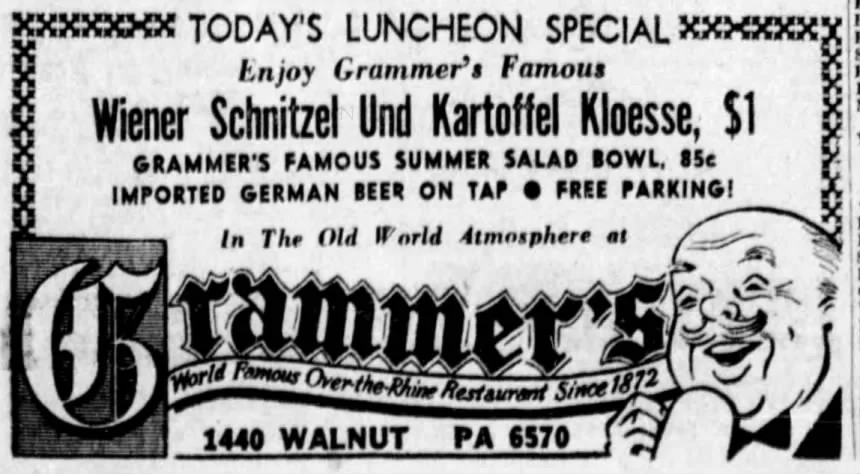
Advertisement for Grammer’s “World Famous Over-The-Rhine Restaurant” in the September 3, 1953 edition of “The Cincinnati Enquirer.”
The place dated back to 1872 and had been birthed by the city’s large population of German immigrants. A group who’d long settled in, and subsequently dubbed their neighborhood as: “Over-The-Rhine” due to it being separated from downtown via the Miami-Eerie canal.
Grammer’s was able to weather both the passing of time and Prohibition, eventually coming under the ownership of Jim Tarbell in 1984.
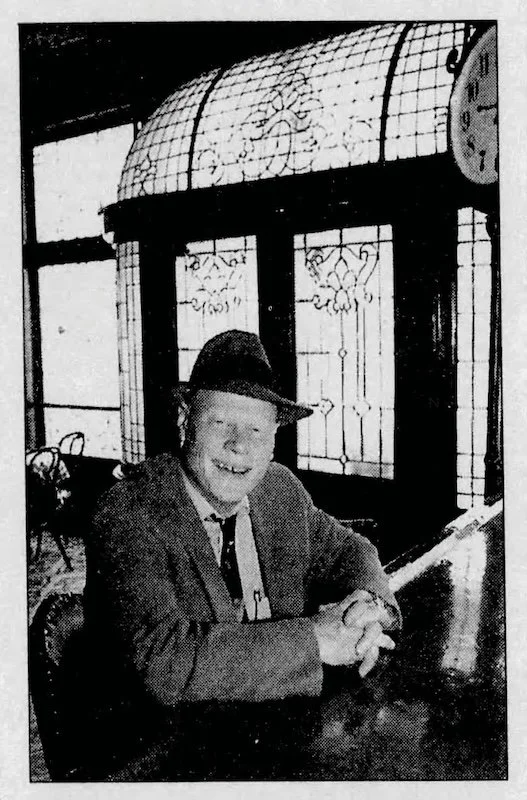
Jim Tarbell sitting at the bar near Grammer’s iconic entryway as seen in the May 2, 2001 edition of “The Cincinnati Post.”
Tarbell himself was a well-known, local personality. He’d started the original Ludlow Garage music venue in the late 60’s and also owned Arnold’s (the city’s oldest bar). Under his tenure, Grammer’s would continue to be a dining destination.
Eventually, Jim would enter local politics and become not only a well-respected leader, but would also be appointed Vice-Mayor. After his political and business careers wound down, he’d continue to be an active voice and familiar face about the city. Someone who never met a stranger and was always offering a handshake (unless his hands were too busy with an impromptu harmonica performance).
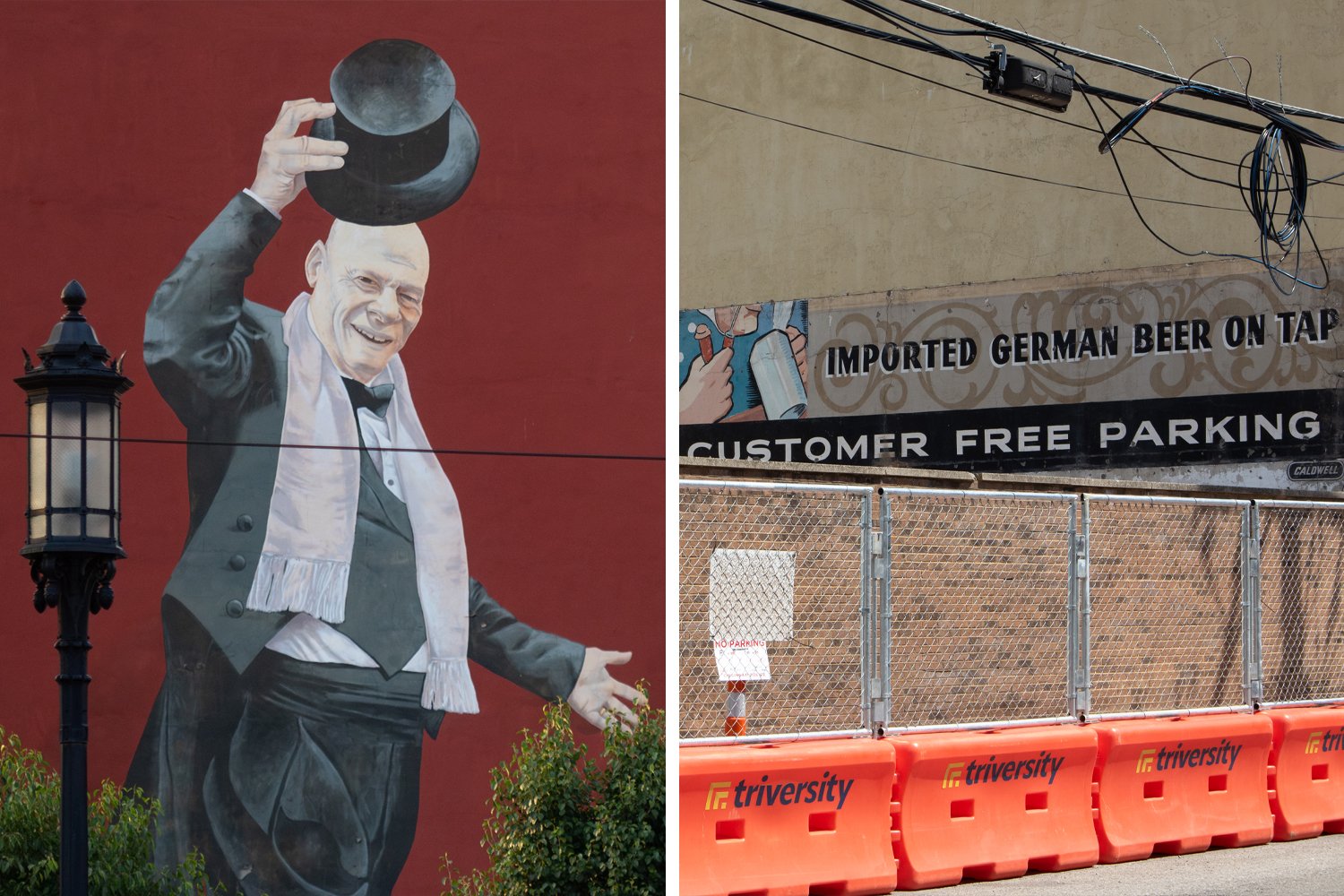
In 2016, a tribute to Tarbell was unveiled in the form of a multi-story mural at the gateway to the neighborhood he’d long loved and advocated for—right along the street (and above the abandoned subway tunnels) that had previously been the canal which had inspired the neighborhood’s name.
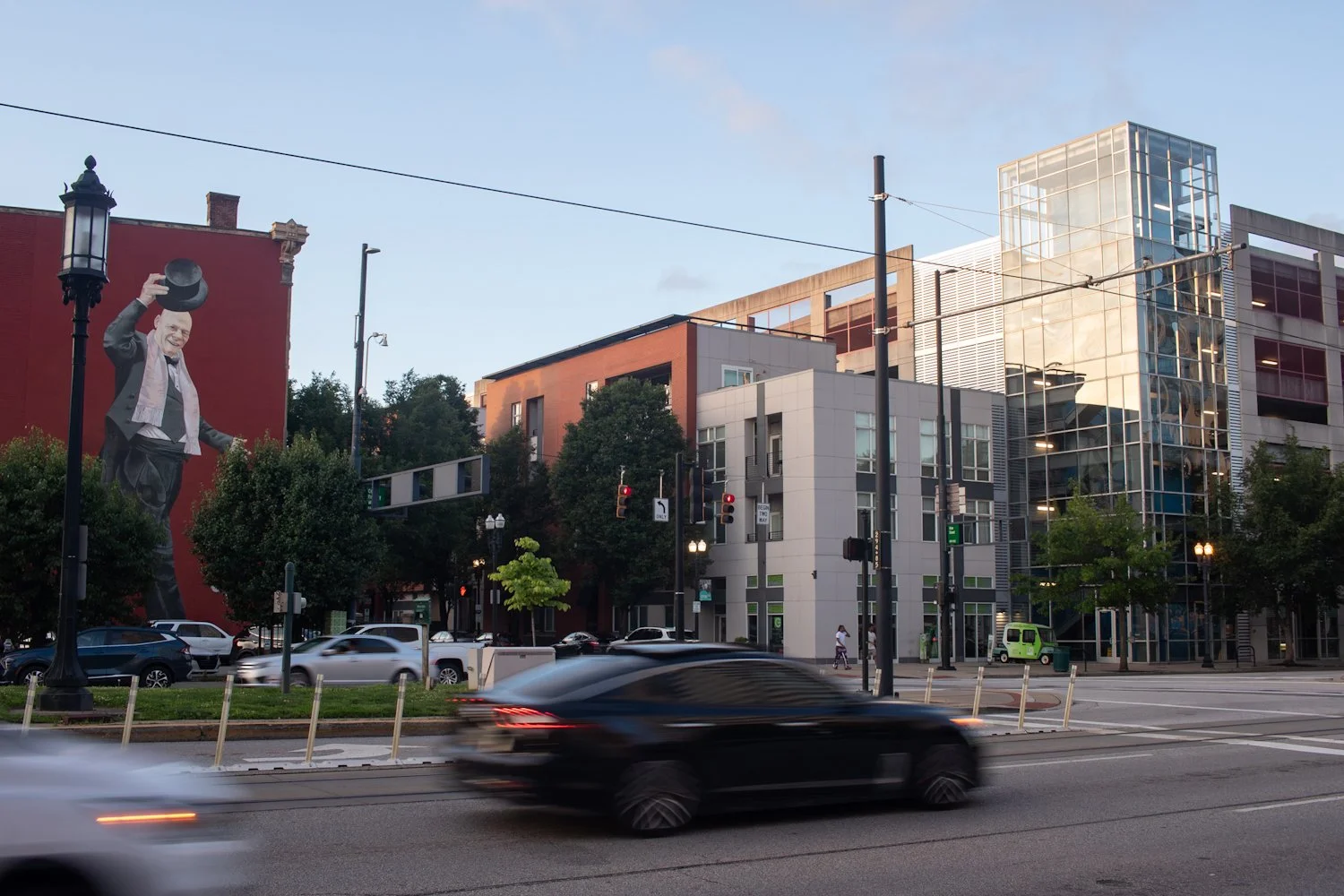
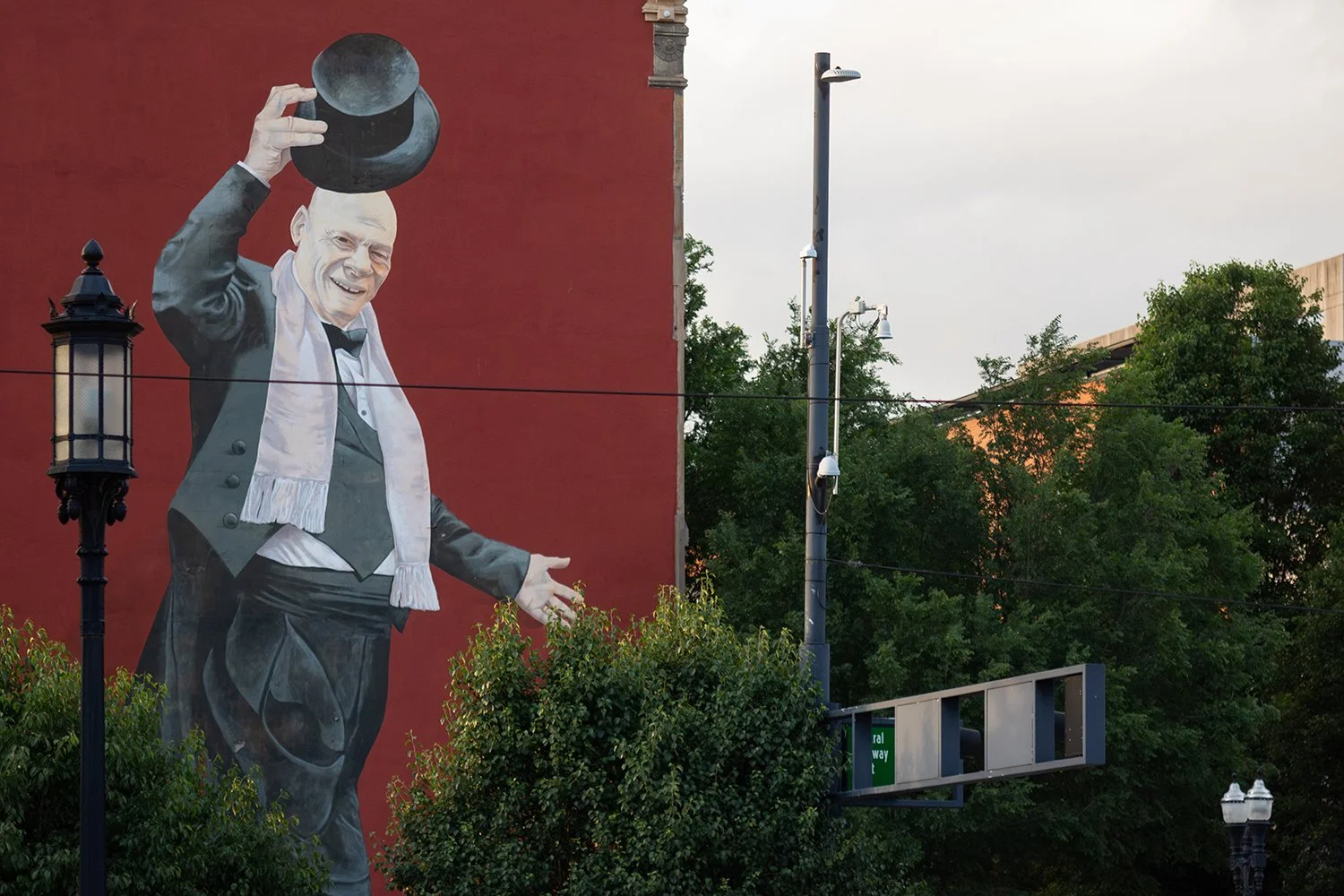
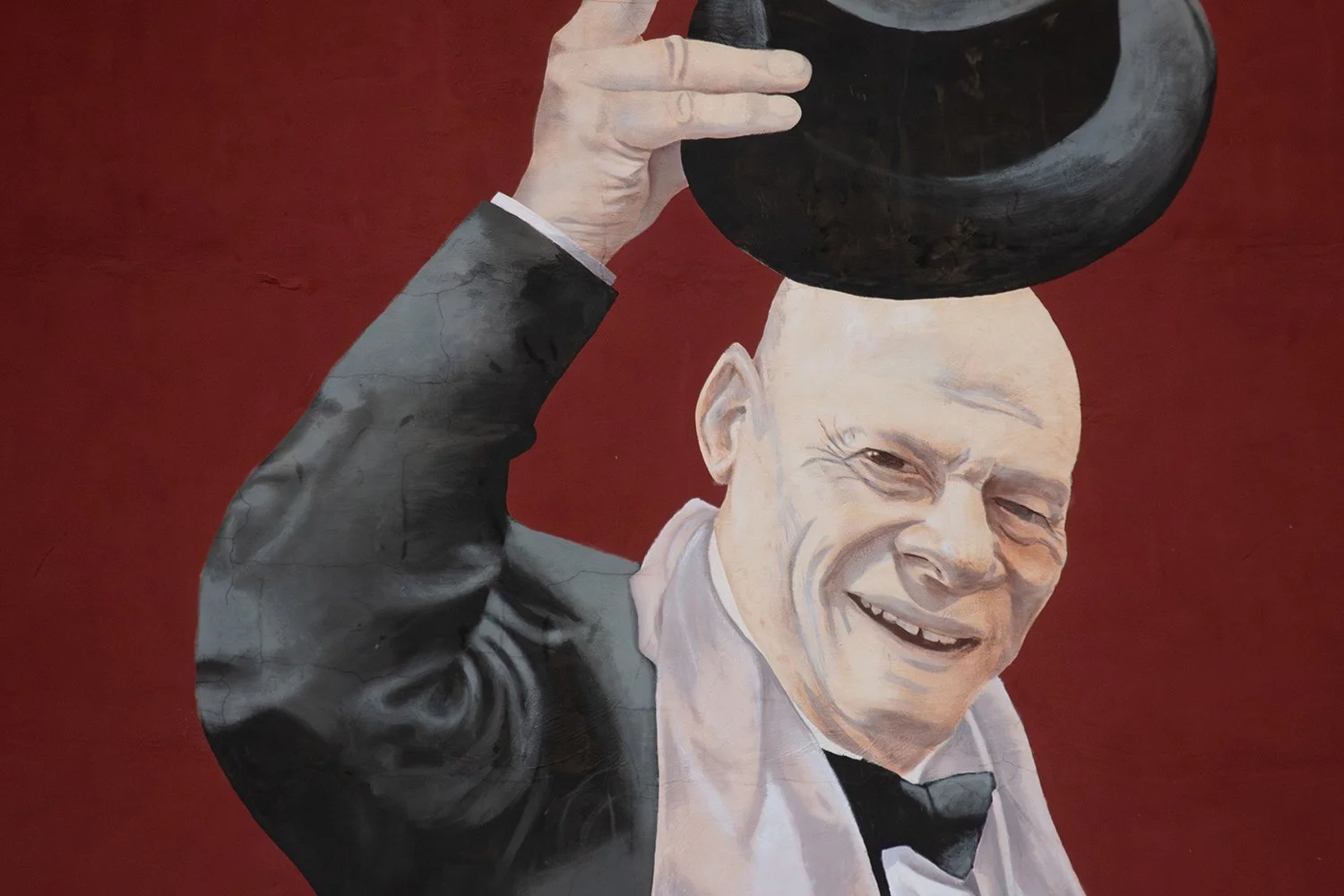
“Mr. Tarbell Tips His Hat” by Artworks at the corner of Vine St and Central Parkway.
Grammer’s had an eight-year run under Tarbell. In 1992, it closed for “regular business” and by 2001, was still shuttered. In an interview with The Cincinnati Post’s Bob Driehaus, Tarbell stated that his goal was to get the place reopened, but the surrounding city and neighborhood were just beginning to grapple with the fallout of recent civil unrest.
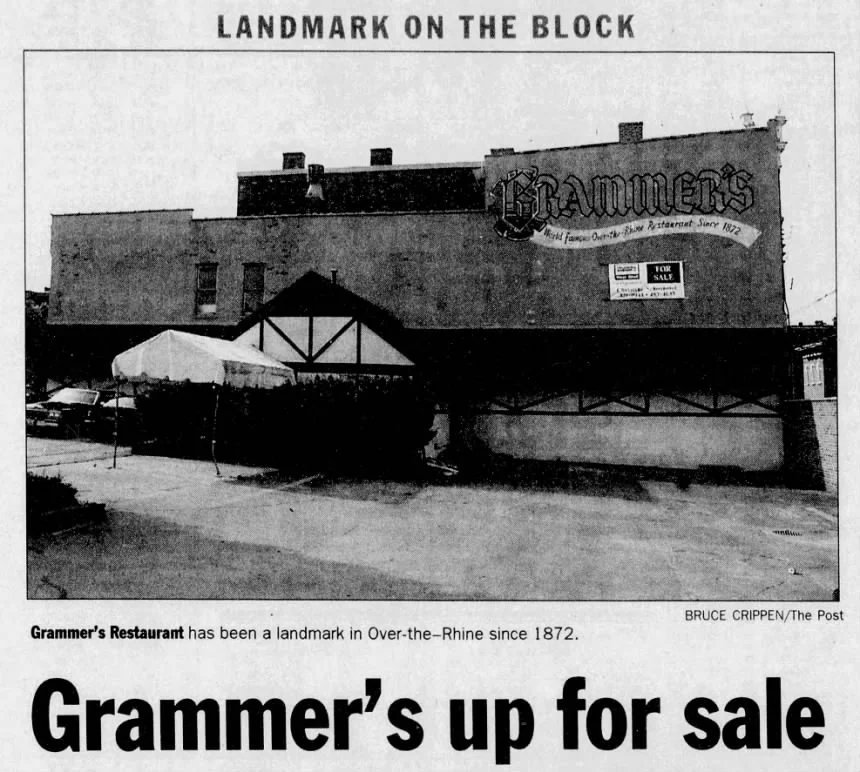
Grammer’s as seen in the “Cincinnati Post” on May 2, 2001. Note the painted sign on the right.
Grammer’s continued to sit quietly until 2007 when Tarbell sold the business to Marilyn and Martin Wade. They’d have the place open by February of 2008, but eventually a fire sparked by the windy remnants of Hurricane Ike in September would cause significant damage. Still, the place managed to bounce back and embarked on an era that would further develop its relatively newfound “hip” identity.
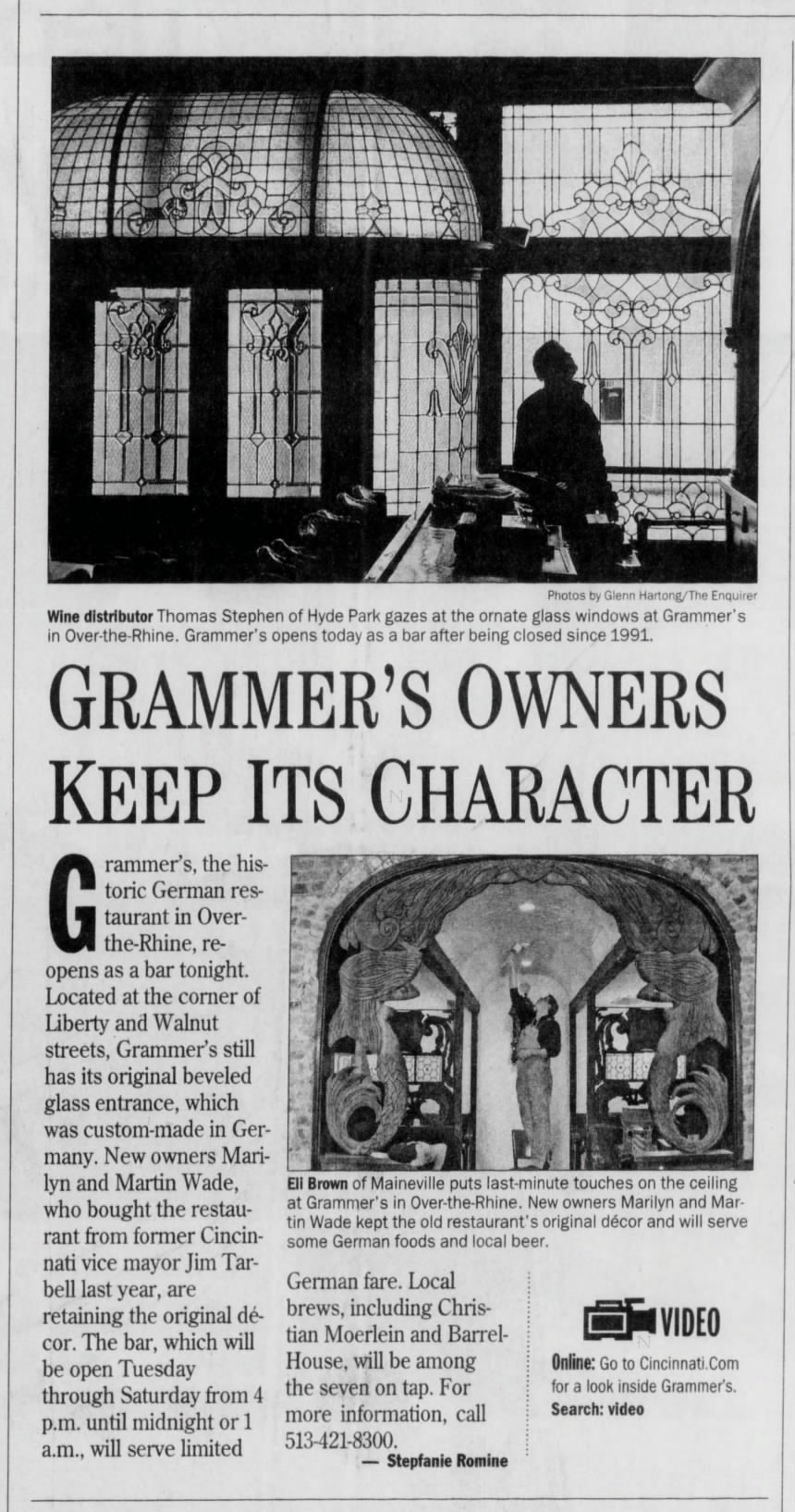
A feature on Grammer’s reopening as seen in the February 28, 2008 edition of the “Cincinnati Enquirer.”
A key participant in local events such as the former Midpoint Music Festival, Grammer’s continued to be a mainstay in the neighborhood. An area that was becoming a renewed nightlife destination, as well as, the focus of increased investment, redevelopment, political machinations, and tourism.
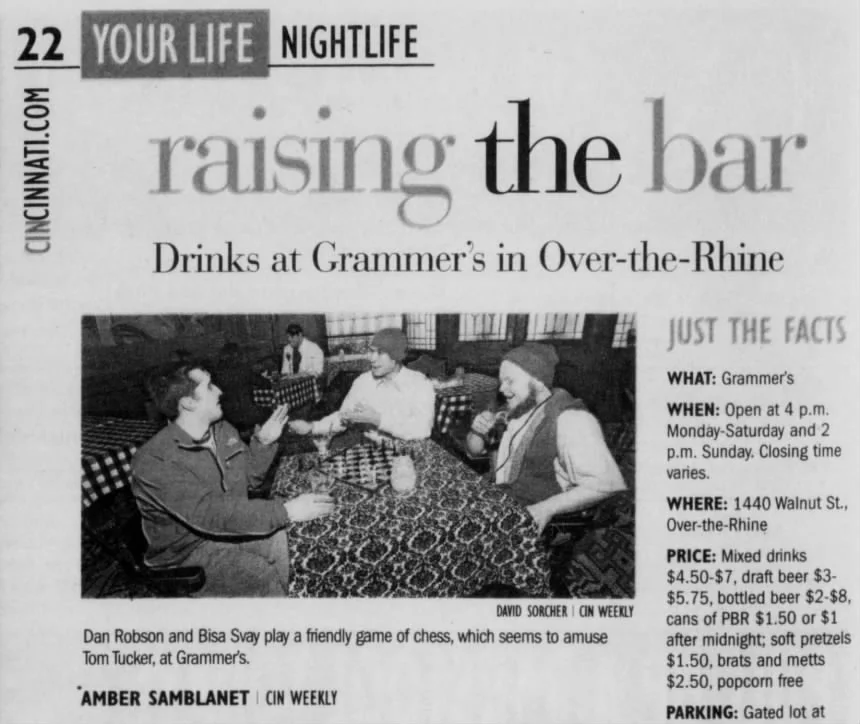
Grammer’s highlighted in the “Nightlife” section of the April 9, 2008 edition of the “Cincinnati Enquirer.”
Things took a turn In 2011, however, when the place closed just one day after its participation in the annual German-themed Bockfest. A representative of the shocked staff would tell the Cincinnati Enquirer:
“I thought we were all going to be congratulated. Instead, we were laid off.”
- Recently fired Grammer’s Sales and Marketing Manager, Gavin Richardson, to the Cincinnati Enquirer on March 9, 2011.
Despite letting their staff go without notice following a busy weekend, the Wade’s Relish Restaurant Group would eventually release a statement saying they planned to make some renovations and reopen the place as a restaurant. This work would be completed in June with Grammer’s returning and advertising “a light menu.”
Unfortunately, though, about a month later—three men stood up from their drinks at the bar and robbed the place at gunpoint. No shots were fired and no one was physically harmed, but the incident highlighted the ever-evolving identify and perceptions of Over-The-Rhine. A place described by The Cincinnati Enquirer at the time as: “a neighborhood that has seen an influx of new businesses and young residents even as it continues to battle a reputation as a hub of criminal activity.”
The incident promoted Relish Restaurant Group to again close the bar, with Grammer’s then-general manager telling the press:
“We determined there’s no safe way, at least at this time, to operate in that location.”
- Grammer’s general manager Tom Smith to The Cincinnati Enquirer on August 13, 2011.
However, ownership would later walk back their planned closure:
“We closed after the robbery, based on fear and frustration. But after thinking about it, we felt determined not to let the bad guys win.”
- Chief Executive of the Relish Restaurant Group, Dan Wade, to The Cincinnati Enquirer on August 25, 2011.
Grammer’s would once again transition back into infrequent operation, however, while the Relish Restaurant Group exited the industry entirely. Although the building would still occasionally participate in neighborhood events, it was was primarily marketed as a private event space. Still, the Wade’s were eying plans for the business’ future, envisioning it as the centerpiece of an ambitious $70 Million mixed-use development that would spring up around—and above—the historic property. Those bold plans never came to fruition, however, and it would take around ten years for another proposal to truly get moving.

Rendering of an unrealized redevelopment plan as seen in the December 2, 2014 edition of “The Cincinnati Enquirer.” The Grammer’s building would’ve had new construction both around and above it in this iteration.
After purchasing the land in 2024, Urban Sites and Triversity Construction announced “The Lockard” (originally branded as “The Lockhart”). Per a press release from the developers, the construction “will offer 129 attainable housing units and nearly 3,500 square feet of commercial space with a mix of office, retail and restaurant space.”
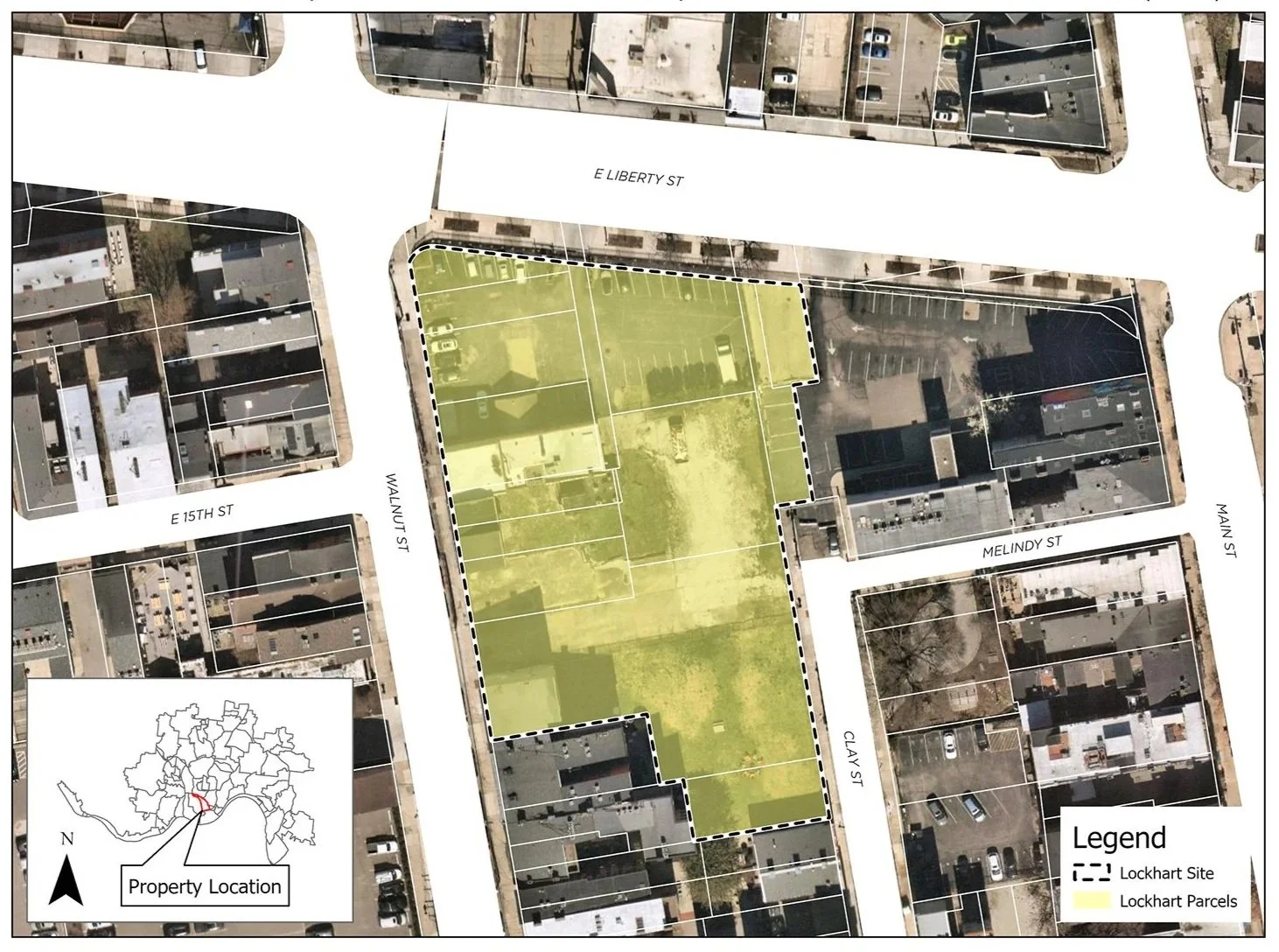
Site of the currently under construction Lockard development. Located along Walnut St, the historic Grammer’s building in intended to be a commercial anchor.
Graphic from the City of Cincinnati.
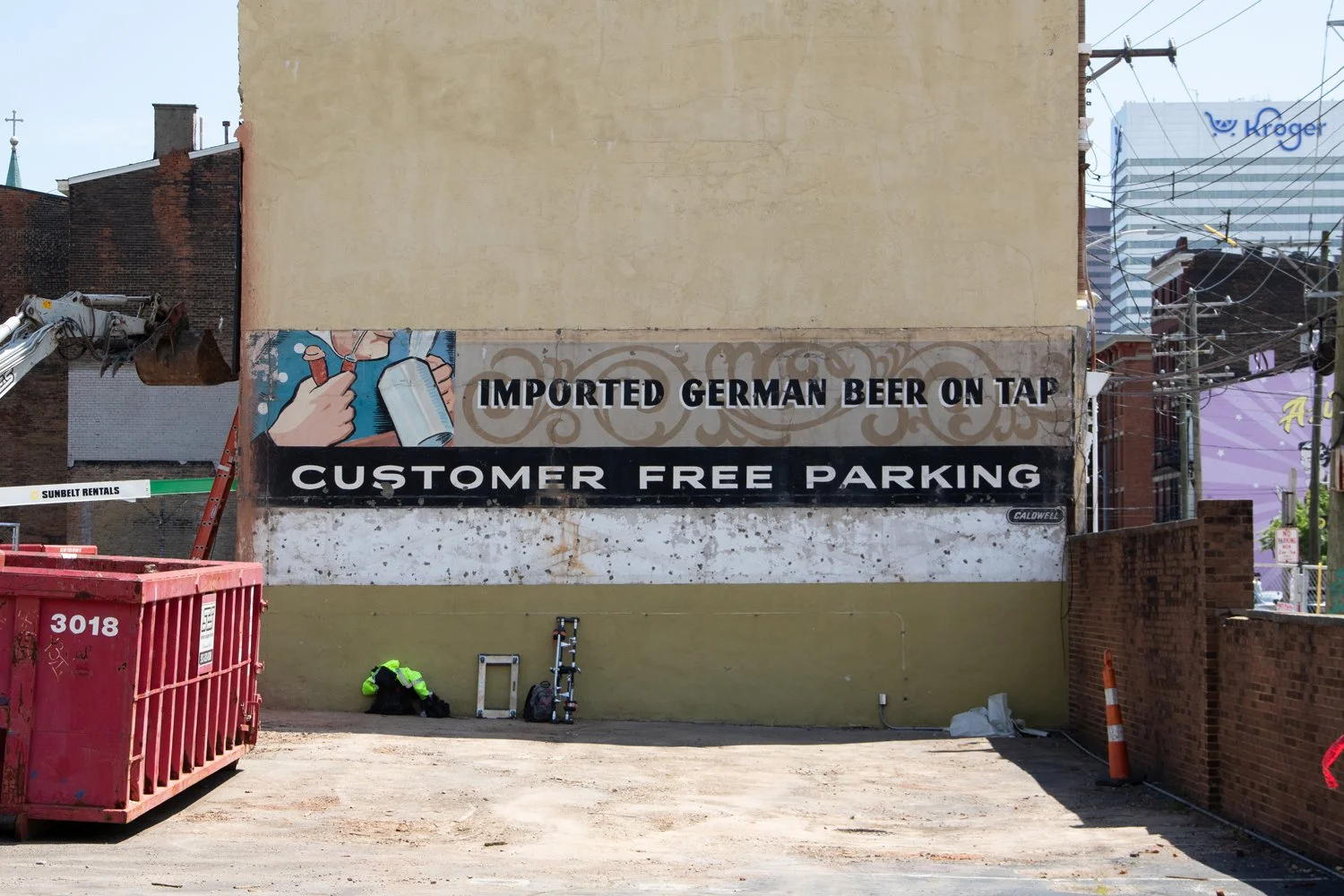
Following an April 2026 groundbreaking, site work revealed an old sign highlighting two things Cincinnatians truly love: German beer and free parking:
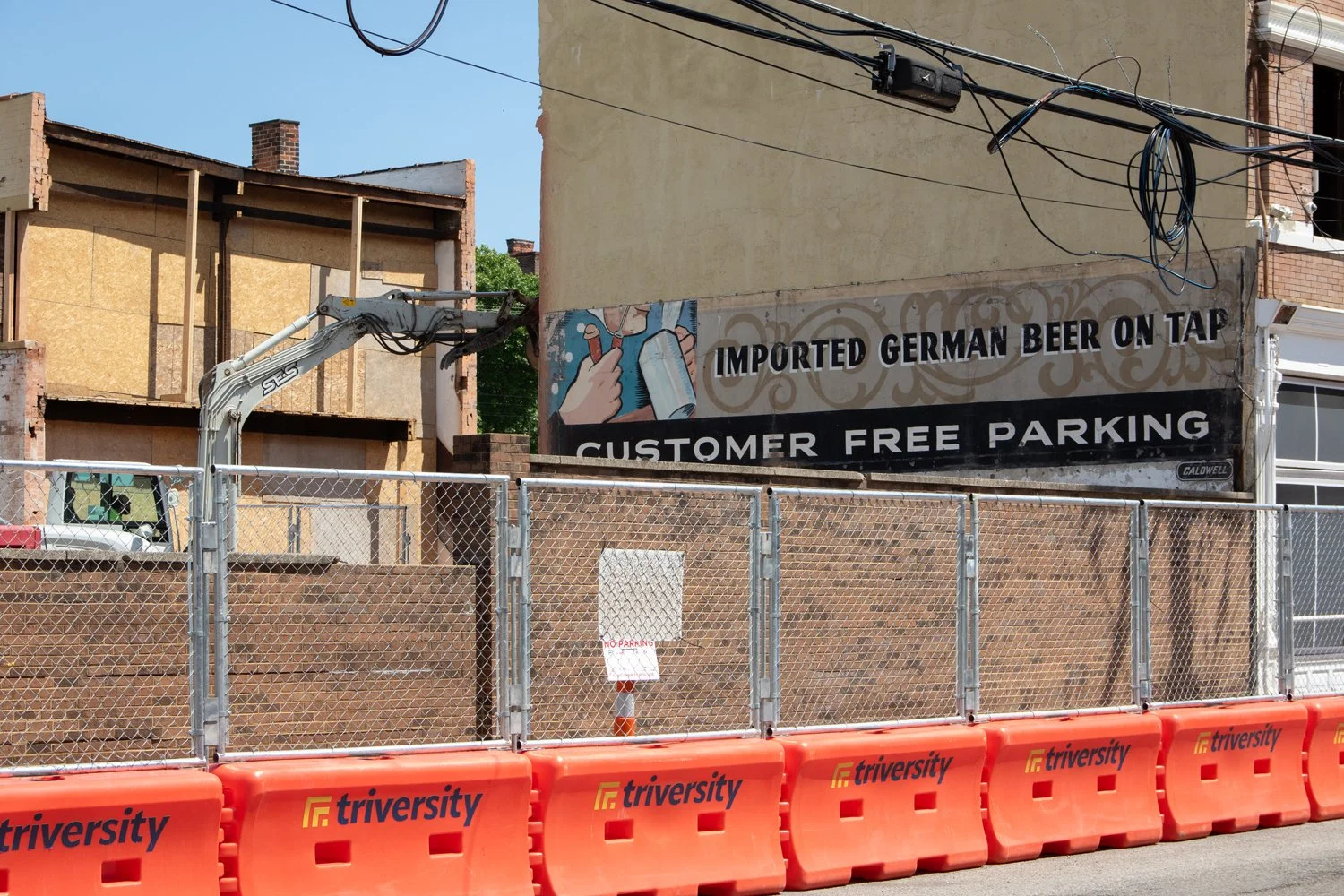
At the bottom, you can see the signature of the Caldwell company:
And at the top, you can still make out the faint outline of the old Grammer’s logo:
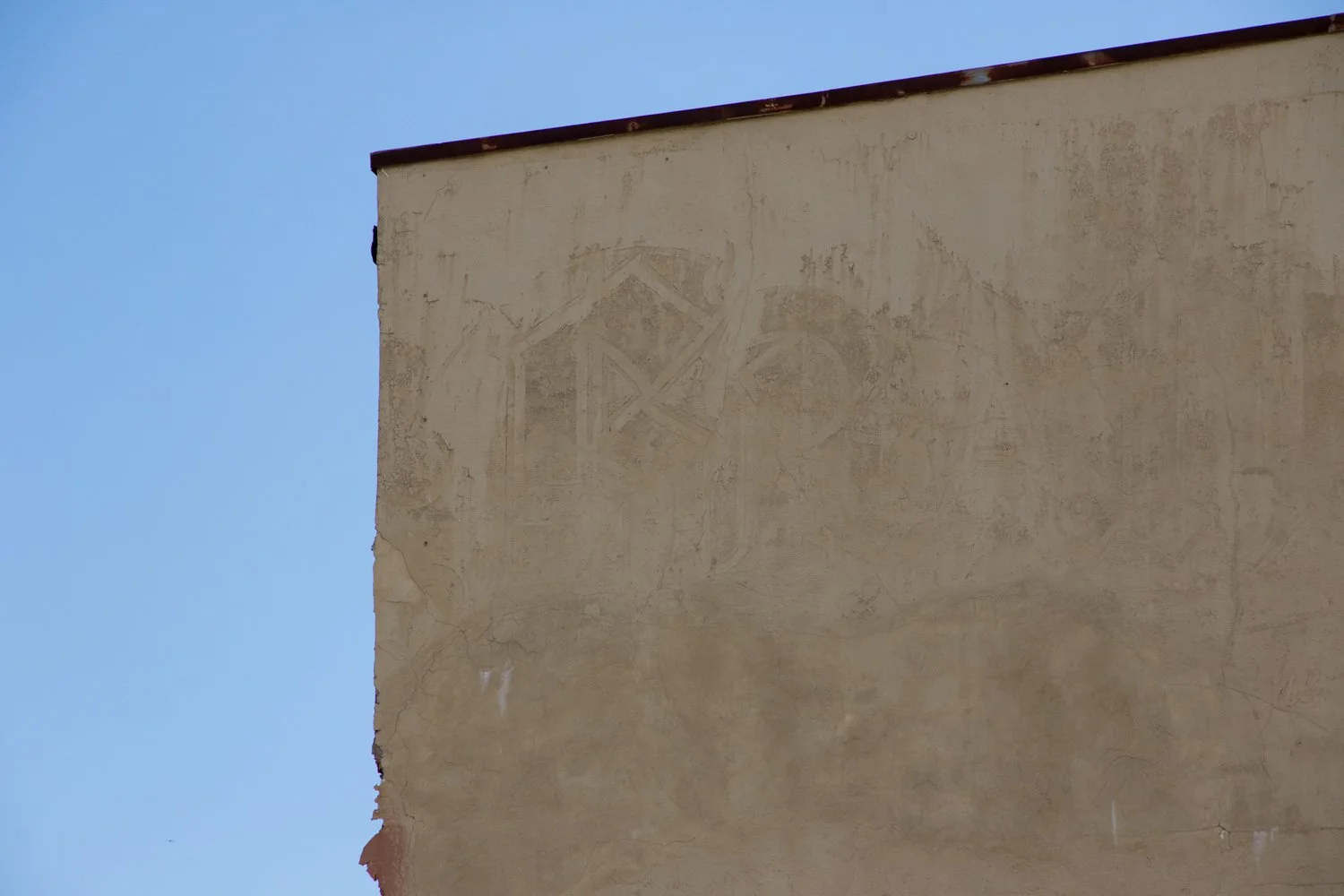
A faint, stylized “G” can still be seen on the side of the building. This is where the once iconic, landmark sign had been painted.
For years (and as seen in some of the newspaper clips above), the business had advertised their location along one of the building’s walls, utilizing their longstanding logo which touted “Grammer’s World Famous Over-The-Rhine Restaurant Since 1872.”
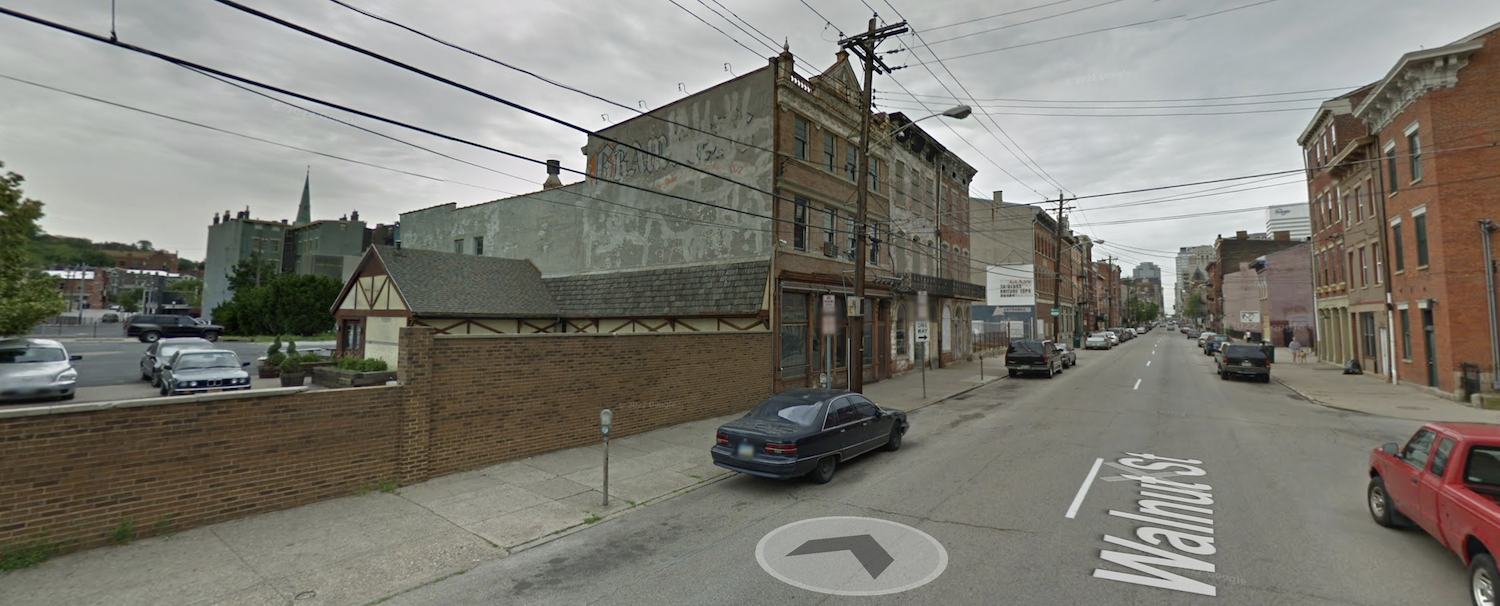
The Grammer’s logo seen fading in this June 2011 image from Google Street View.
The building would eventually get repainted and the fading logo would be replaced with a vinyl banner that amended the tagline to “World Famous Over-The-Rhine Bar Since 1872.”
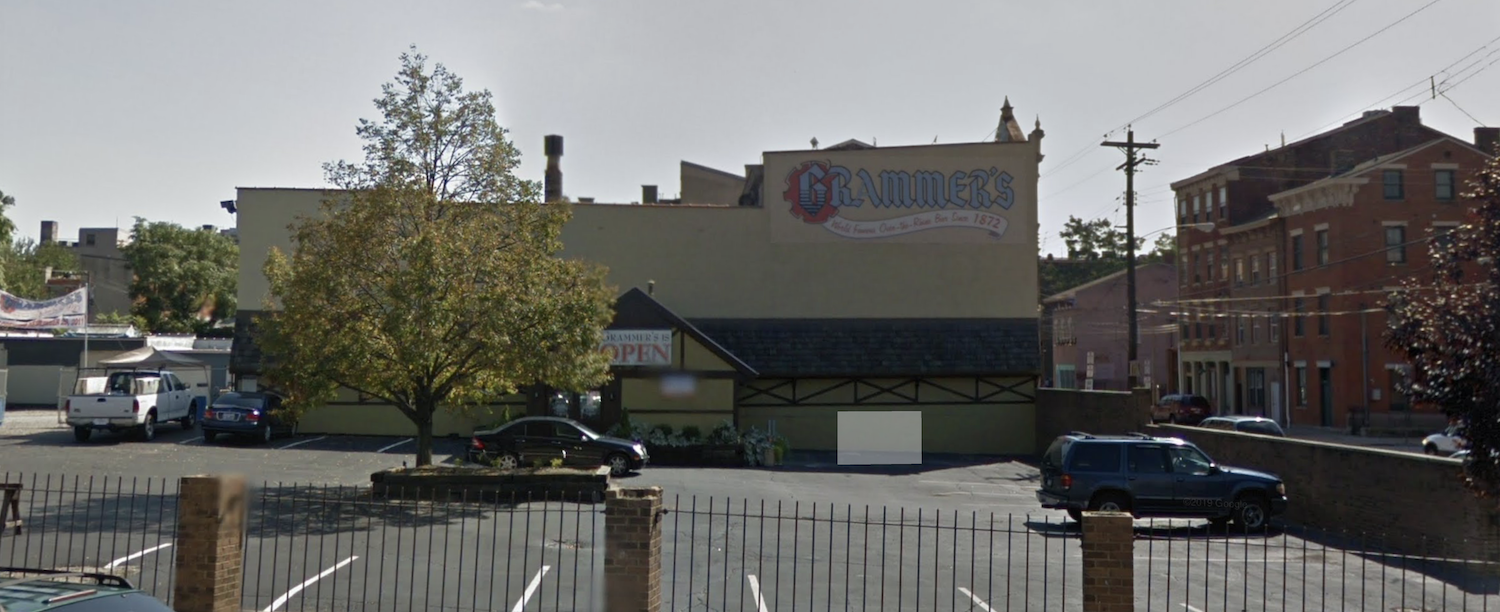
A repainted Grammer’s affixed with a banner as seen on Google Street View in September 2011.
By 2019, however, the banner was gone:
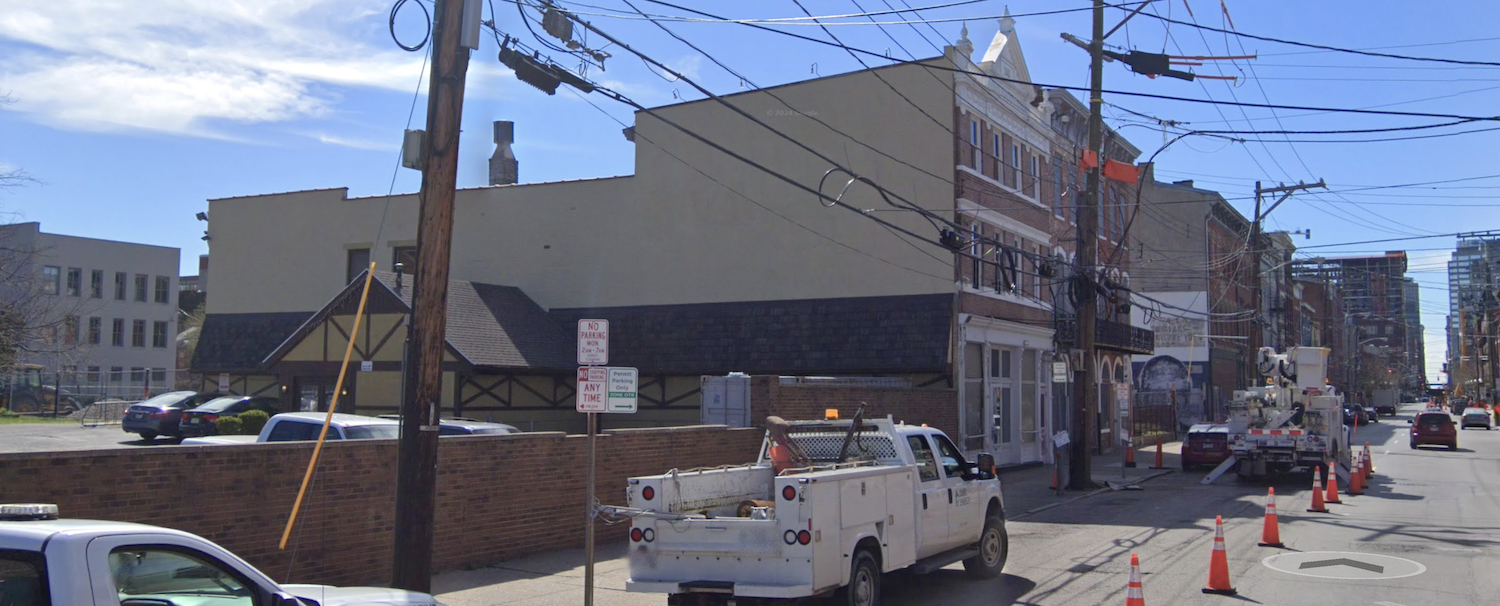
Grammer’s, closed and without branding, as seen on Google Street View in April 2019.
On the bus home from my day job a couple weeks ago, a mother was pleading with her three kids to quiet down, but as we rambled on—the little ones had very little interest in listening. Then, Jim Tarbell boarded. I hadn’t seen him in a while, but recognized that friendly face captured in the aforementioned mural. After paying his fare and taking a seat, he looked right at those kids and waved; entertaining them and making them laugh so that their mom could catch a small break. Mr. Cincinnati, indeed.
Although I never made it Grammer’s, I hope that when/if it again reopens that I’ll be able to raise a glass to Jim.
• • •
Special thanks to the talented Bill of The Writing on the Walls for tipping me off about the Grammer’s sign and sending me down a rabbit hole of hipster bar history. If you like “ghost signs,” be sure to check out his site, as well as, these other fading advertisement posts.
Since 2007, the content of this website (and its former life as Queen City Discovery) has been a huge labor of love.
If you’ve enjoyed stories like The Ghost Ship, abandoned amusement parks, the Cincinnati Subway, Fading Ads, or others over the years—might you consider showing some support for future projects?