[Test Link] The Results of the Effort I Could Exert Within the Time I Had to Devote to a Topic Already Too Obscure
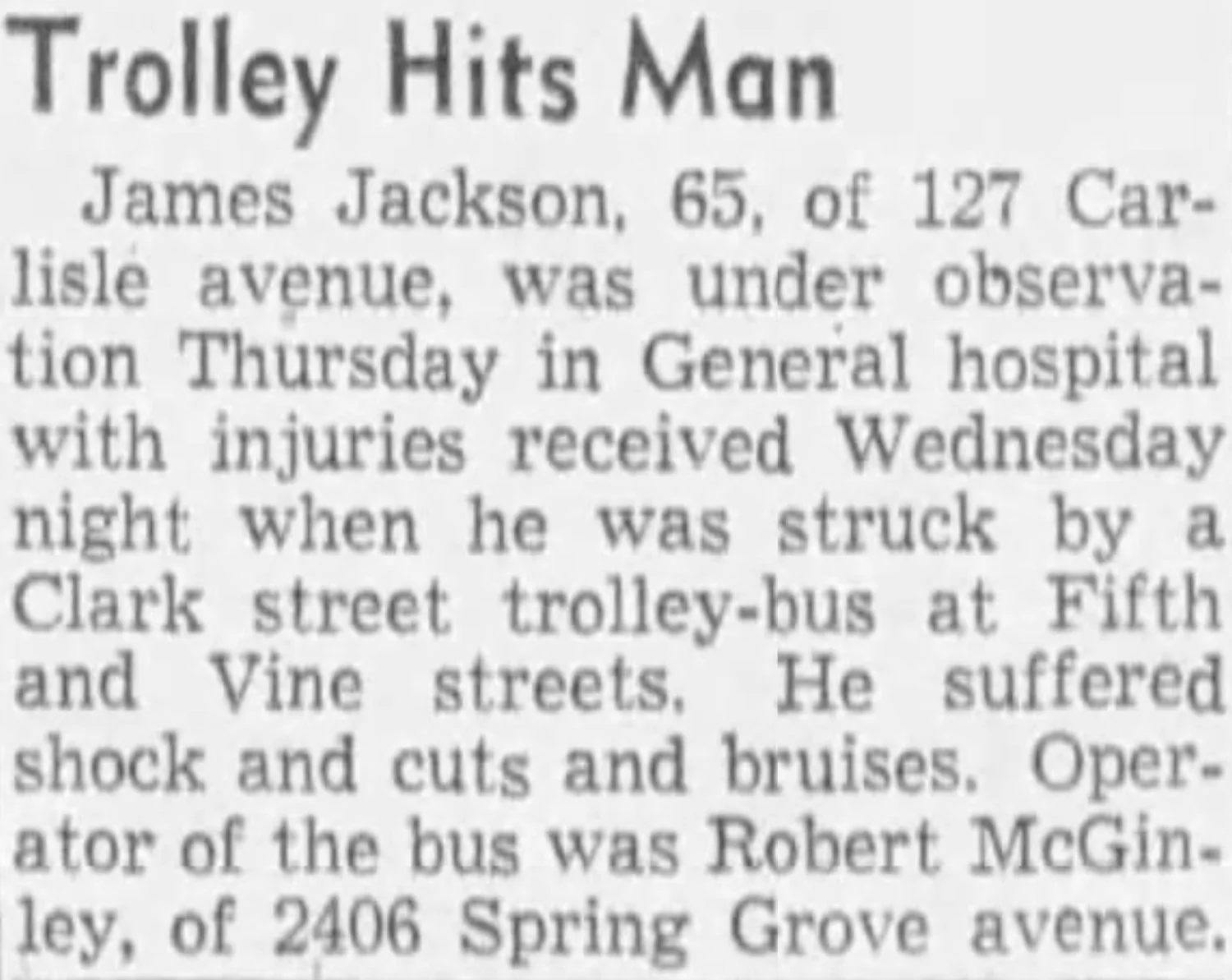
“Trolley Hits Man.”
I was looking for something else entirely when I came across that matter-of-fact headline, one followed by three equally direct sentences:
“James Jackson, 65, of 127 Carlisle avenue, was under observation Thursday in General hospital with injuries received Wednesday night when he was struck by a Clark street trolley-bus at Fifth and Vine streets. He suffered shock and cuts and bruises. Operator of the bus was Robert McGinley, of 2406 Spring Grove avenue.”
The pedestrian-versus-public-transit story sat unattributed amongst a sea of text and advertisements on the eighth page of a 1947 edition of the Cincinnati Post. A typical “police blotter” paragraph, it was the inclusion of the addresses that piqued a particular interest.
Source.
Granted, featuring such specific information wasn’t necessarily surprising for a publication of the era. These types of anecdotes were sourced from publicly-accessible police reports and such details also provided a sort of clarity. This wasn’t just any of the city’s James Jacksons who’d been hit after all, it was “James Jackson, 65, of 127 Carlisle avenue.”
Perhaps he was returning home from a long day at work or maybe he was just out for an evening stroll—either way, the poor guy had a brush with fate right around the corner from where he lived. At least, where I think he lived.
Source.
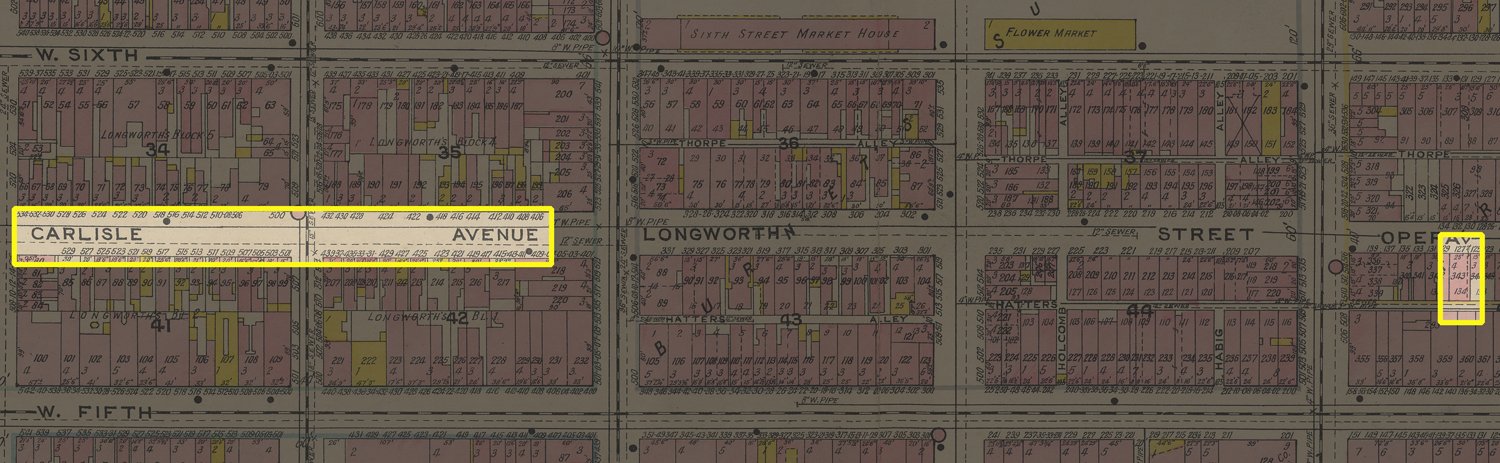
Carlisle Ave doesn’t exist anymore, a fact that would send me further down the rabbit hole when Google Maps™ returned zero results. Best as I could tell—Mr. Jackson’s domicile had been on a block surrounded by Fifth, Sixth, Elm & Race streets with Carlisle having once cut across the middle. The area’s now a quasi-public/private event plaza adjacent to the convention center.
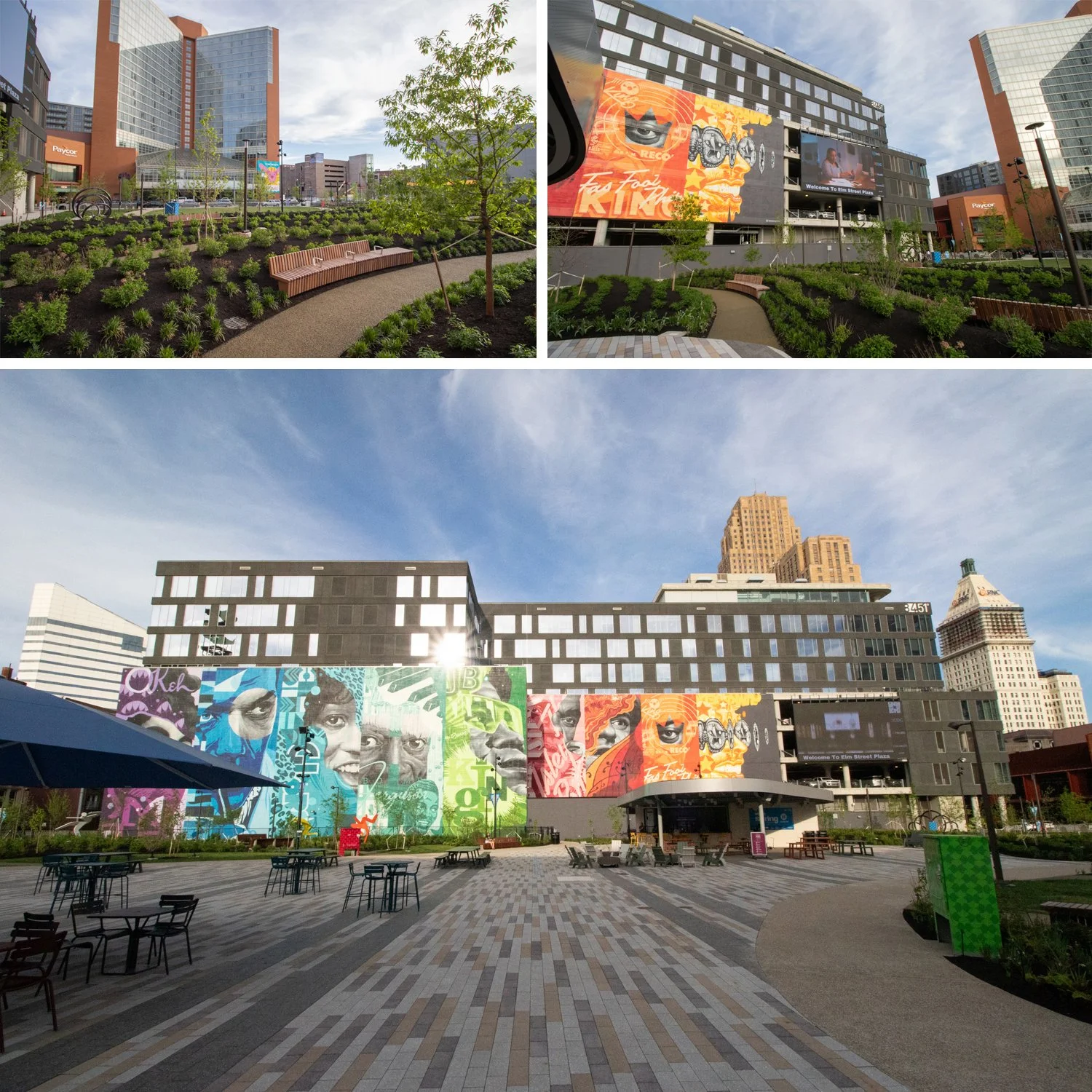
Modern day context of what I believe to have been James Jackson’s former address and Carlisle Ave.
The incident itself had occurred about two blocks away at the intersection of Fifth & Vine streets, an area that’s still a busy transit corridor adjacent to Fountain Square today. You won’t see a “trolley-bus” roll through there anymore, though, as Cincinnati’s contemporary bus fleet is powered by diesel fuel and hybrid-electric batteries free from the confinement of overhead wires.
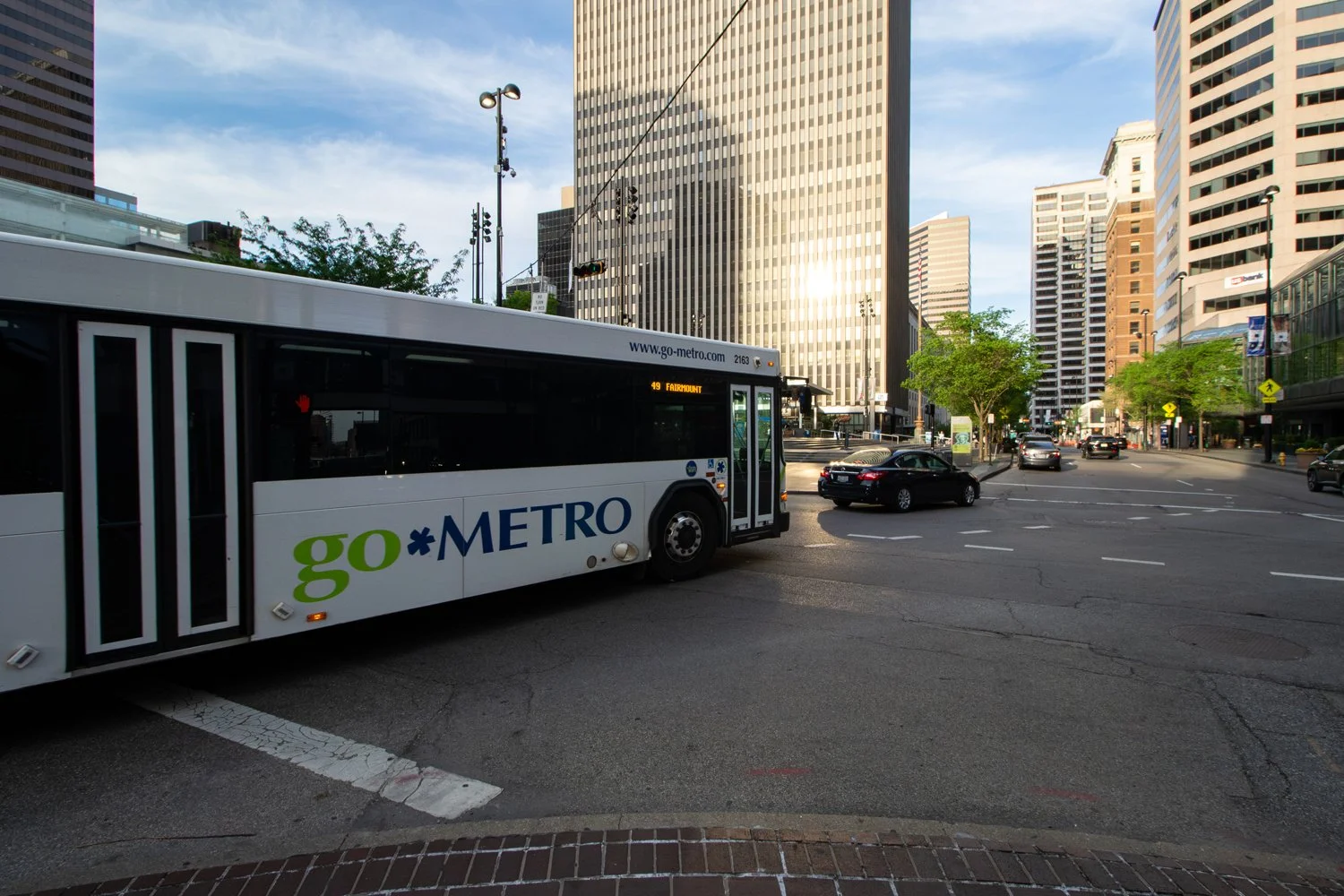
Intersection of Fifth & Vine Streets in downtown Cincinnati.
And that’s what I’d originally been trying to figure out: when did the city stop using the “trolleybus?”
Or, rather: “trolley bus.”
Maybe “trolley-bus.”
All these arrangements of the phrase had been used interchangeably throughout the records I was browsing, the hyphenated variant being the Post’s preference in this specific instance.
For what it’s worth, the Associated Press says to use “trolleybus” as one word in modern parlance.
Trolleybuses had originally been introduced to complement the city’s extensive network of traditional streetcars. By 1951, however, all of the rail vehicles would be retired—and eventually, so too were the trolleybuses.
A new streetcar system would debut in 2016, but that’s a whole other story.
Beast as I can tell, the “Clark street trolley-bus” that had “struck” the unlucky Mr. Jackson would’ve likely nearing the end of a run. Also known as the No. 15, the route connected downtown to Northside and points between. A good portion of it ran not just along the eponymous Clark St, but Spring Grove Ave, as well. Coincidentally, right past the home of the trolleybus operator named in the accident: “Robert McGinley, of 2406 Spring Grove avenue.”
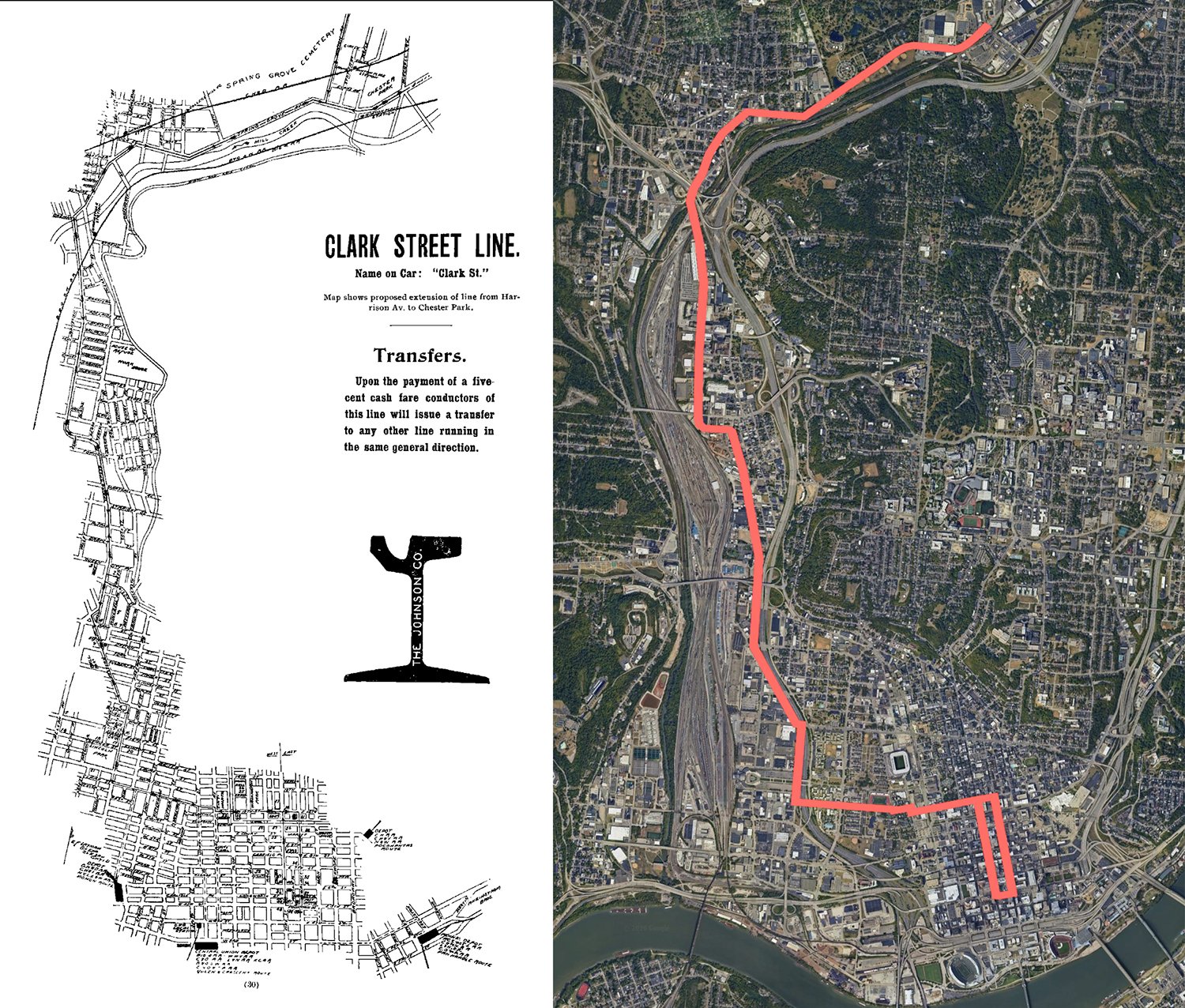
Source/Explainer.
These days, the present-day equivalent to that former 15 line is METRO’s Route 16 which still runs by Mr. McGinley’s address from 79 years ago. Except, there’s no physical home there any more, just a metaphorical one: a familiar sight that made me audibly laugh when it came up on Google Street View™.
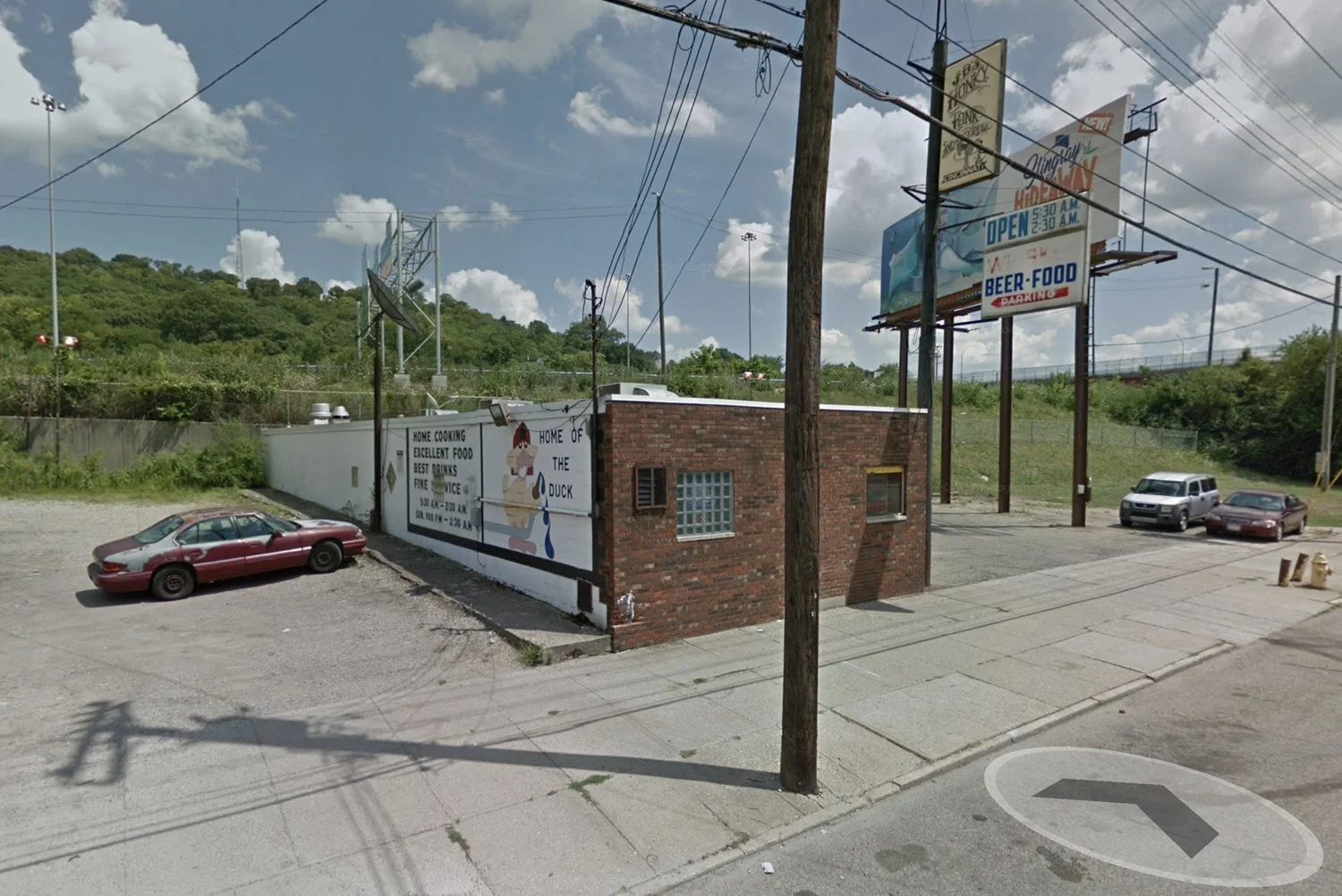
Source/Explainer.
A longstanding dive that’d once been known for its fried bologna sandwiches and posted warnings against wearing biker colors, what’s now called “Cousin Jeffrey’s Honky Tonk” is a delightful watering hole beneath the viaduct that I’ve ventured to many times via the 16.
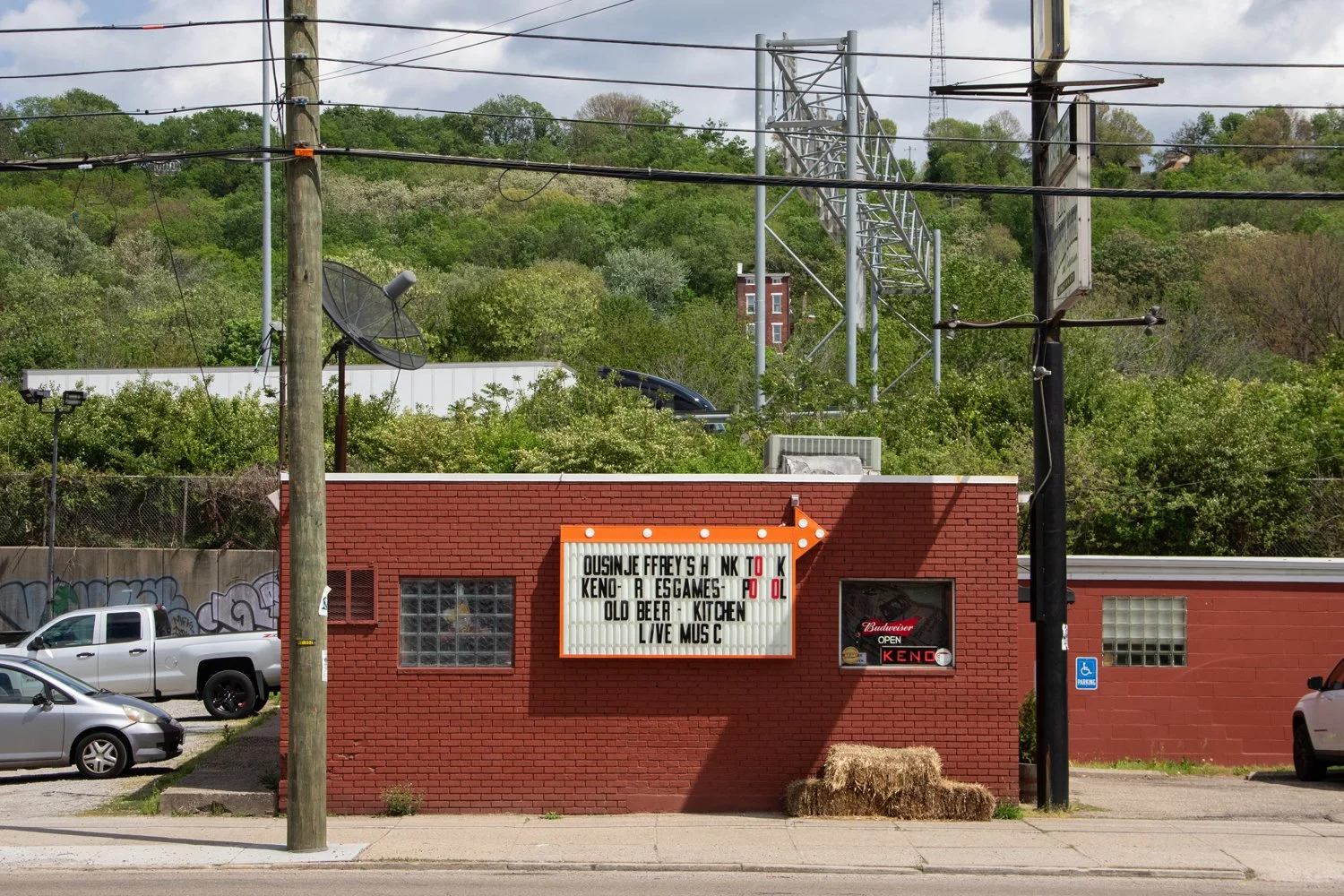
Counsin Jeffrey’s Honky Tonk at 2406 Spring Grove Ave.
Who knew just how many High Life’s had been consumed on the spot where Mr. McGinley once rested his head, let alone how many more would be required to follow this guy’s family tree like a strung-out, red-eyed detective scarfing down Chinese takeout and staring at a murder board.
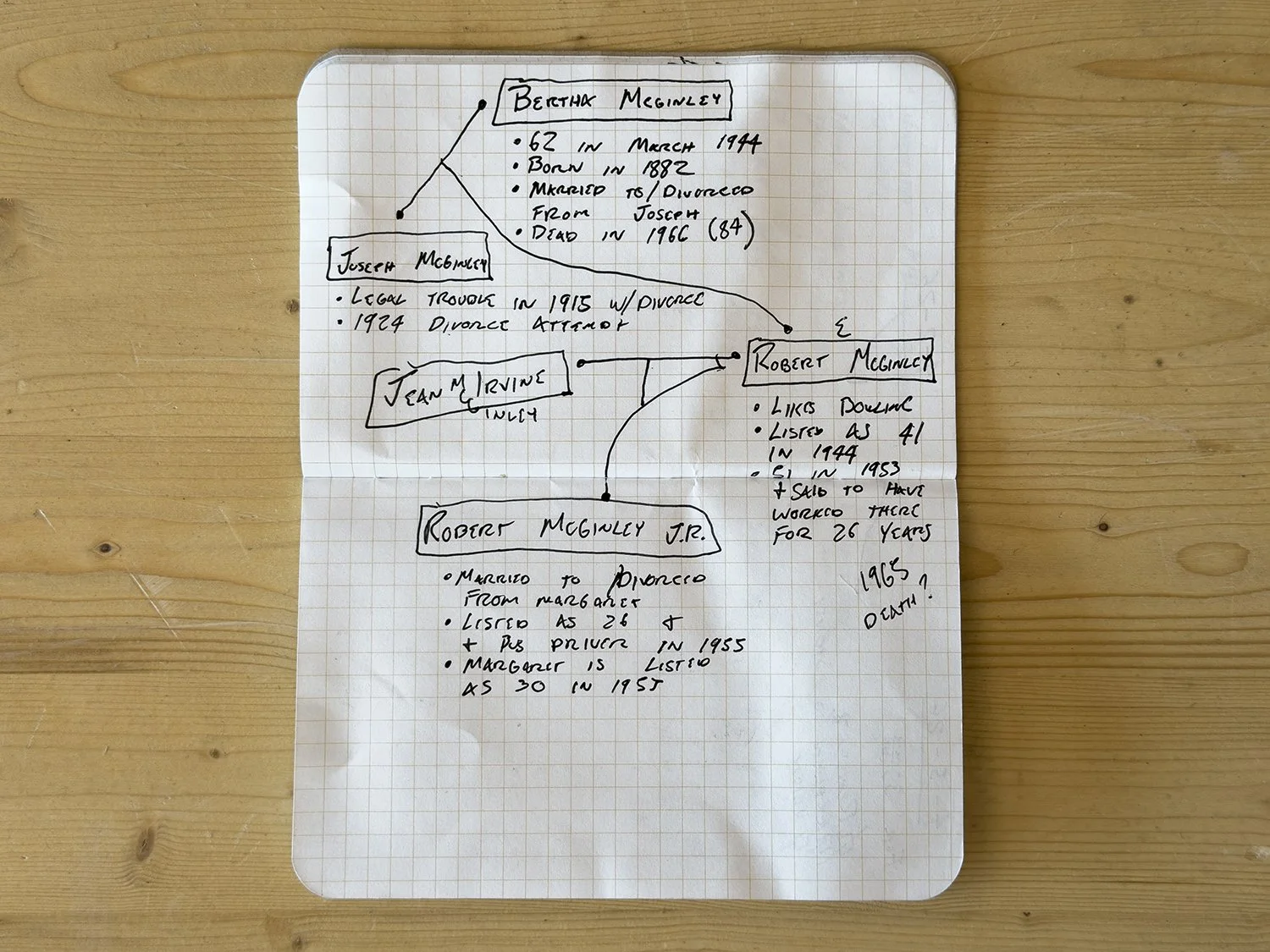
That was the unavoidable side-effect of my self-imposed search. In order to ensure I had the correct Robert McGinley, I needed to cross-reference and piece together details from not only his life, but also that of his extended family.
There were birth proclamations, announcements of marriage, and a seemingly decades-long divorce dispute. All of it mixed in with the story of another Robert McGinley—the local Procter & Gamble employee who’d been working in the Philippines during the Second World War. He was held by the Japanese, alongside his wife and kids, until the Americans retook the islands.
Should probably look into that too, eventually.
I’m not sure if the prime timeline’s Robert McGinley served in the military—and it certainly wouldn’t have been uncommon for the era—but I found him listed as being 41 in 1944. Probably a bit too young and too old, respectively, to have been drafted into World Wars One and/or Two.
Something I know for sure, however, was that the guy liked bowling.
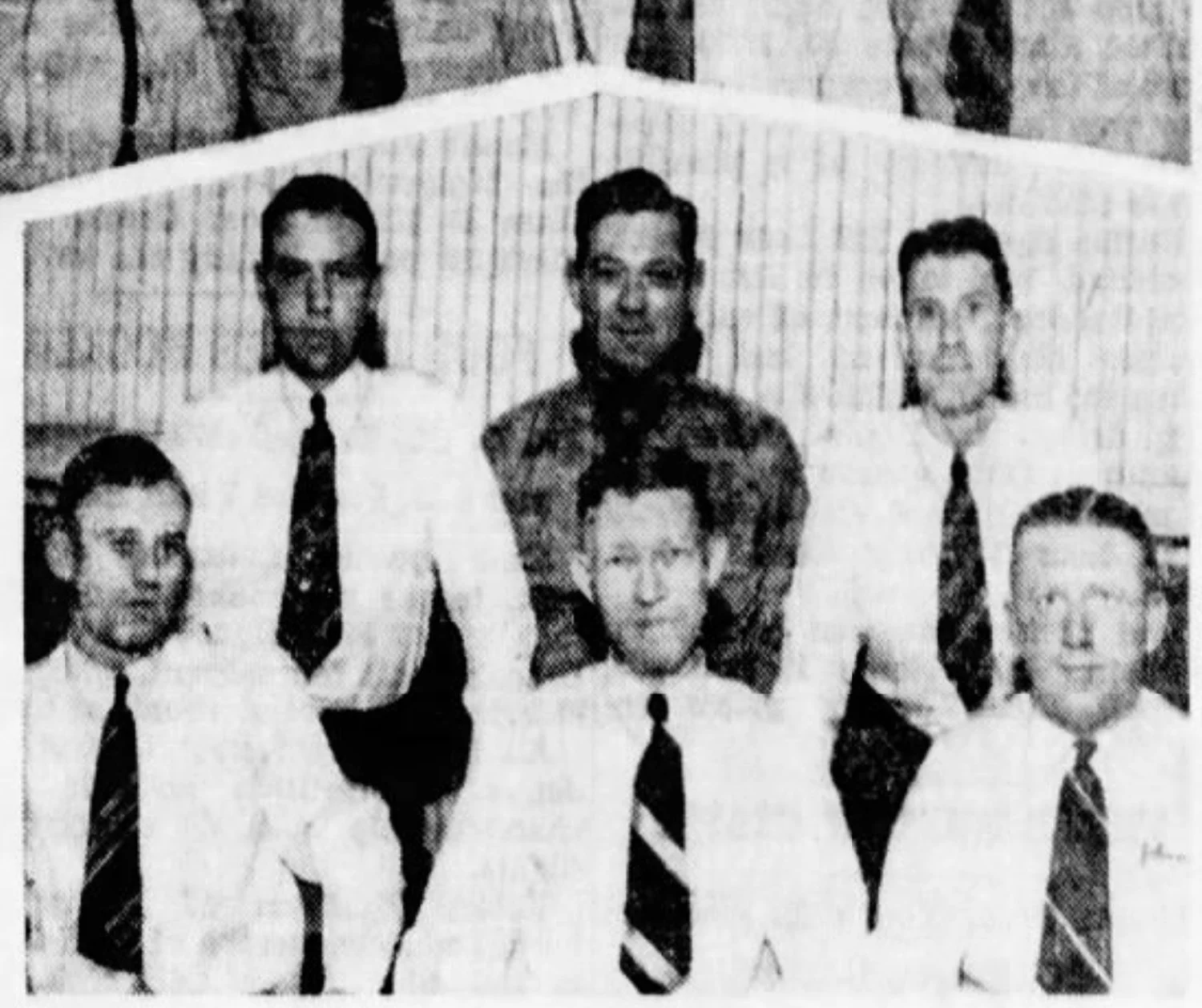
Source/Explainer.
In 1932, Robert represented his employer—the Cincinnati Street Railway—in the annual, triangular bowling tournament against the all-stars of the local phone and power companies. I couldn’t find the results of that particular Friar’s Club bout, but Mr. McGinley must’ve rolled ok for himself as he was still on the team in not only 1938, but 1940 as well.
“Fuck it, Dude Bob, let’s go bowling.”
Despite his proclivity for the lanes, however, Robert appeared most often in the newspapers of record due to work-related incidents. A fact that wasn’t necessarily reflective of his competency as a transit employee, but rather the nature of his work and a historic media’s commitment to informing the general populace.
While operating public transit vehicles between 1939 and 1944: Robert McGinley was involved in a workplace accident, had hit a parked car due to wet streets, and was once “struck head-on” while disembarking passengers. His encounter with James Jackson (of “127 Carlisle avenue”) occurred on the eve of All-Hallows Eve 1947, but there’d be another similar striking of pedestrians in 1951.
Robert did have at least two instances where he was heralded as a hero, however. In 1946, he was commended for not running over a child, and in 1953 he saved several passengers from being hit by a freight train.

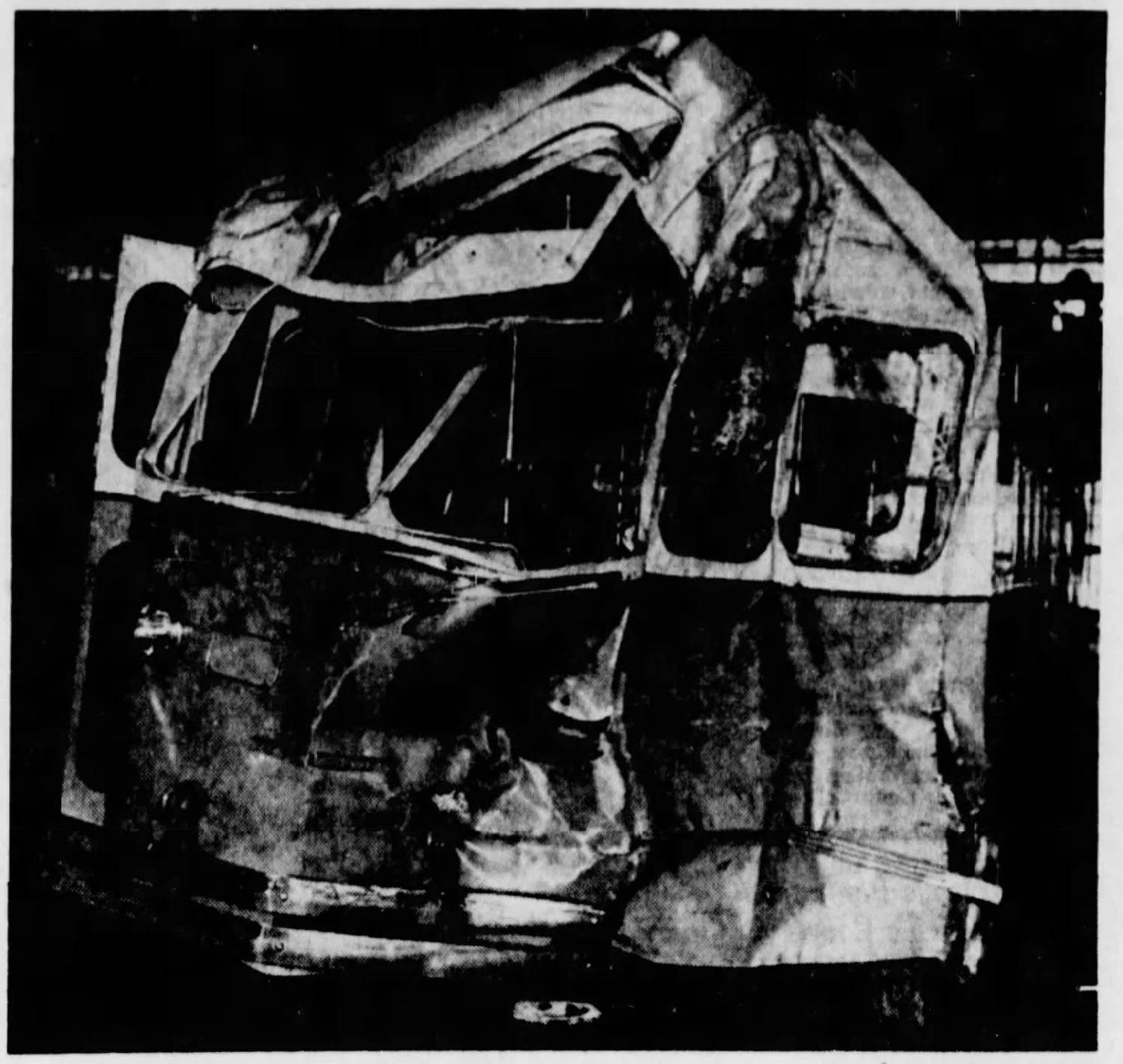
The story goes that his trolleybus became disconnected from the overhead wires and stalled upon some railroad tracks. Packed with “forty-two homeward bound high school boys and a lone woman,” Robert McGinley (“51, 2406 Spring Grove Ave”) ushered most of his passengers to safety before making one last attempt at restarting the bus. Although the approaching “double-diesel, 90 car” freight train had thrown its emergency break, the locomotive would still strike the stalled public transit vehicle.
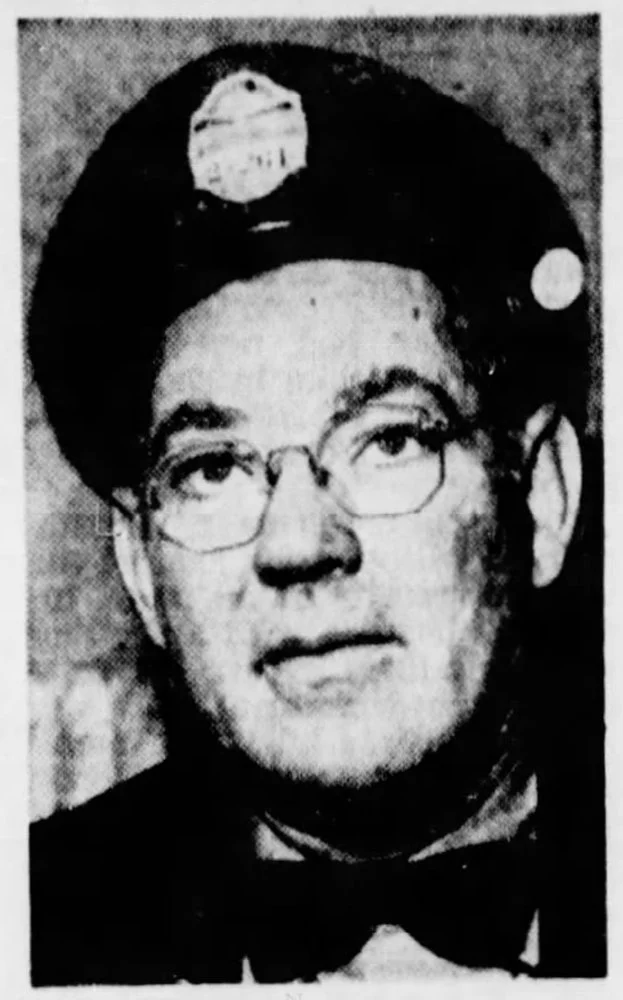
Yet, like an action hero, Robert had leapt back onto the bus and “remained in it until the last instant” before escaping. While all the students of nearby Roger Bacon High School had heeded Mr. McGinley’s orders to run, the “lone woman” had “apparently felt that she could not leave the bus in time.” She ended up staying onboard as the vehicle was “pitched about 30 feet” into a fleeing Robert who was “knocked down.” Still, no serious injuries were reported.
There’s not much that I managed to find about Robert after that except for his obituary. He was only 61 years old and listed as having died “suddenly” at a new address in a different neighborhood.
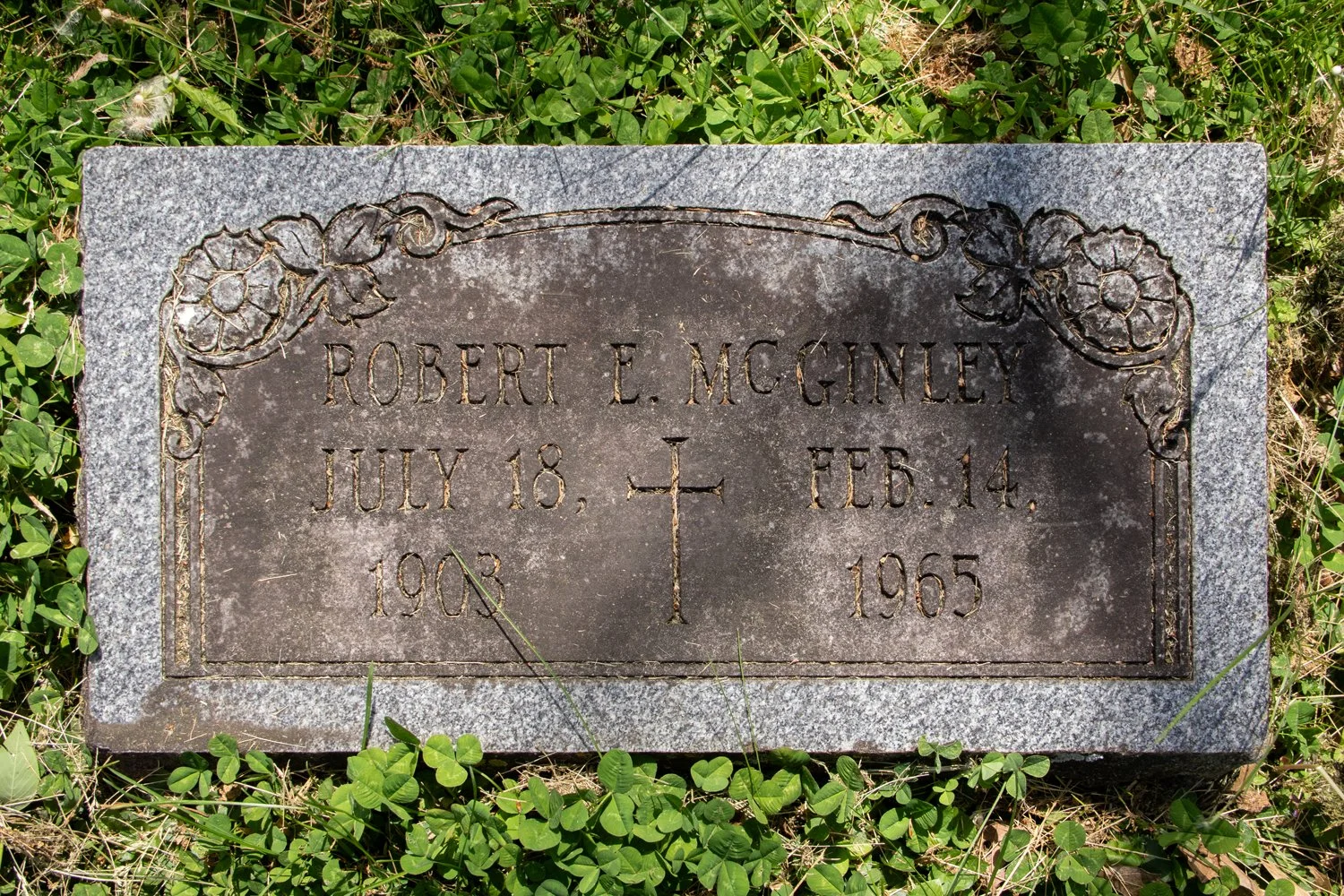
And at this point, you may be wondering (as I was): what about “James Jackson, 65, of 127 Carlisle avenue?”
Unfortunately, he was as much as much a ghost as the street he lived on. A man with a name a bit too generic who existed at a time when records could be detailed, yet doubtful. I say that not to dismiss his time on this earth, but to emphasize that there was nothing definitive I’d been able to find. Even the location of his long-lost address was my “best guess,” or realistically: “the results of the effort I could exert within the time I had to devote to a topic already too obscure.” Which, of course, calls this whole endeavor into question.
“Why?”
The trivial truth is simply that I enjoyed the happenstance of Mr. McGinley’s address having being the exact same as a bar I appreciate. There were a few other coincidences on the same newspaper page, but such occurrences don’t necessarily translate into meaning. Ultimately, this was just an impulsive desire to chase down some random piece of information that culminated in me riding a public bus to St. Joseph’s Cemetery…
Which wouldn’t be the first time I’ve chased down a final resting place..
…before riding back to the city and past the intersection of Fifth & Vine streets to make a transfer to the 16.
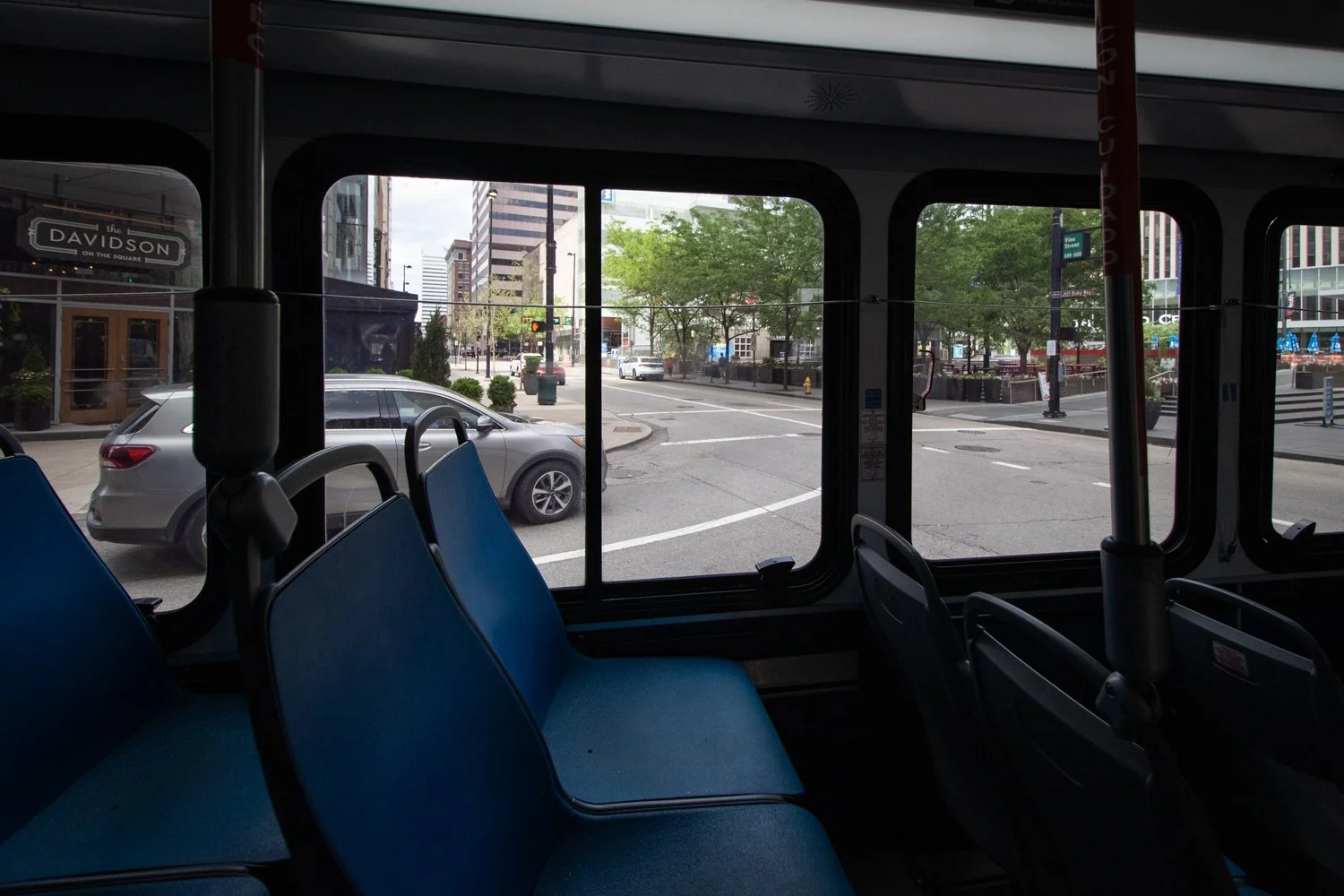
The intersection of Fifth & Vine as seen from a METRO bus.
All so I could go finish writing this story and offer up a toast to both Robert McGinley and James Jackson on what happened to be my 37th birthday.
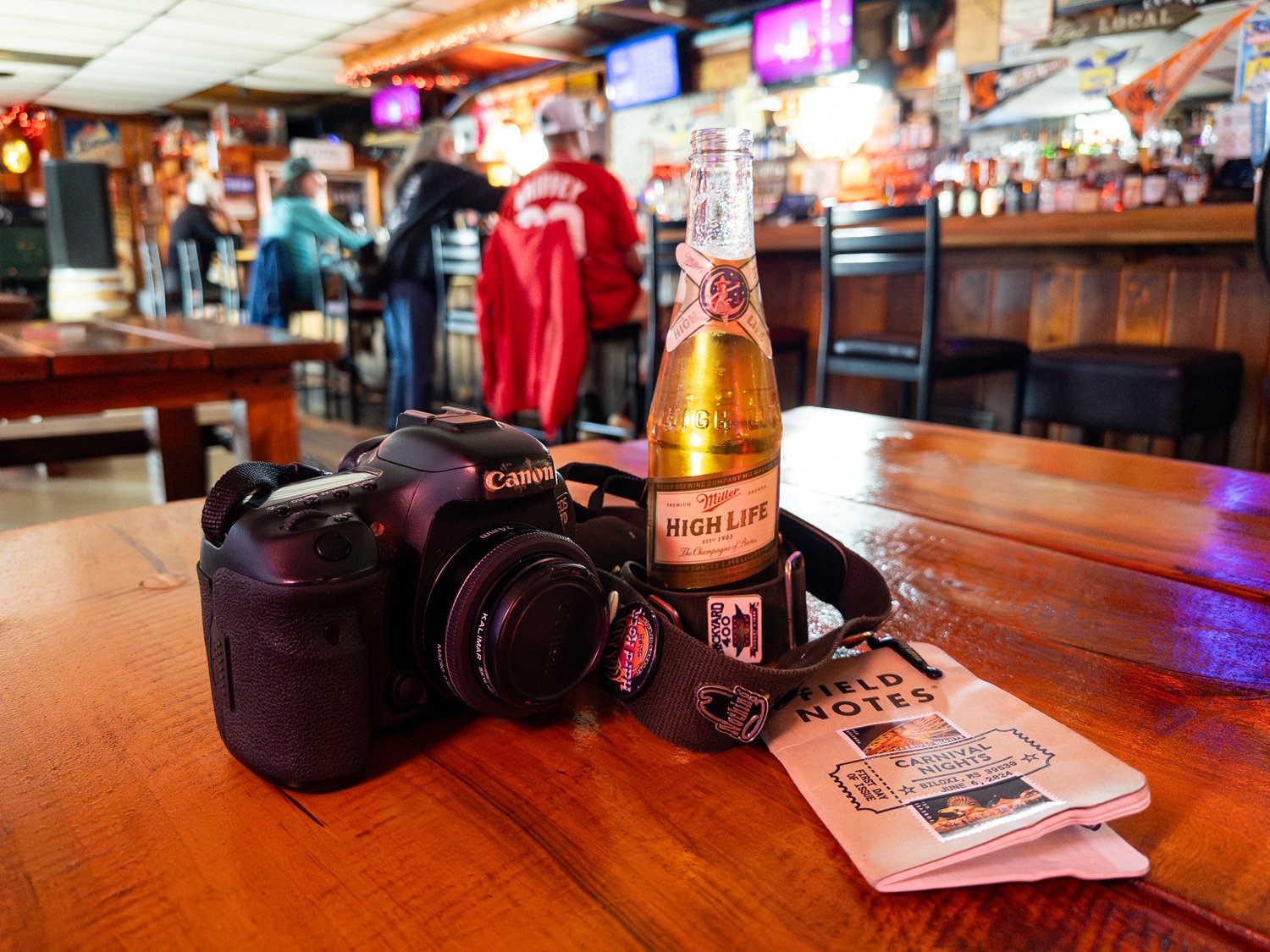
2406 Spring Grove Ave.
And it’s not lost on me that this “town” is small, that I just spent a bunch of time digging up the details of a man who could potentially be a neighbor’s relative. I promise, though, this was pursued with positive intent. Should any great-grandkids come across this and want to chat—I’d be more than happy to buy you a beer at 2406 Spring Grove Ave.
Also: if anyone happens to know when exactly the City of Cincinnati stopped using trolleybuses—please tell me as I still haven’t figured that out.