The Medium is the Message
This story is part 5 (of 9) that ultimately connects with “A Field Guide to Street Tiles and Other Literal Street Art of the Queen City.”
It was bad enough that my alleyway already looked like the one where Bruce Wayne’s parents were killed, but now it’d also taken on the villainous vibes of Mr. Freeze’s lair—the one seen in the 1997 blockbuster known as Batman & Robin and home to Arnold Schwarzenegger’s pun-flinging version of the character. Just a comical amount of ice hanging from every fire escape, gutter, and balcony. And while it’s never completely silent down here, as far as quiet nights go: this one was downright serene. Which made the sudden, violent crack overhead and the accelerating friction echoing off the snow all the more dramatic. In that brief moment before impact, the dog and I simply—froze—in place.
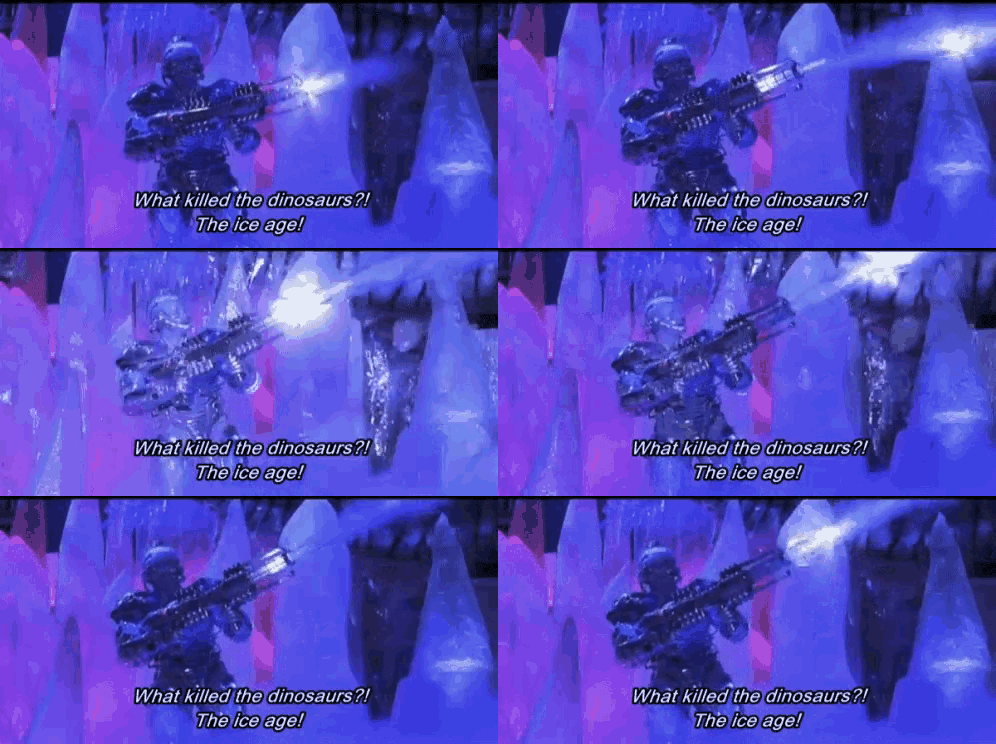
We locked eyes—not in terror, but the morbid acceptance that there was really nothing we could do except hope the odds were on our side. Relief came, however, after the ice missed us by a few feet and scattered into pieces around her paws and my boots.
This was a far more dangerous one, but it wasn’t the only problem the weather was causing me. In addition to being an aerial threat, all of the snow and ice were covering up roads that I needed to both see and photograph. Having put this particular chapter of the “street tile” story off long enough, I was finally ready to pick it back up right as Winter Storm Blair rolled in.
And all that would’ve been a great excuse for not just my delay, but also as a reason to reference Batman & Robin, if I’d actually published this once the snow melted.
Yet, life did as life does, and before I knew it: it’d been nearly a year since I started working on this particular post.
Listening back to an interview I conducted under possible heatstroke got me re-inspired, though. I realized that I wanted to get the overall story organized, bring the information up to date, and while I was going about all that—I figured I might as well present it all as yet another tribute to the halcyon days of the internet.
So, 435 days later, here we are
• • •
The Dayton Tile

In 2023, fresh House of Hades tiles began curing and revealing themselves in Cincinnati. 5chw4r7z and I would end up documenting ten new tiles, as well as, the status of the city’s older examples. We weren’t the only ones to chase these latest developments, however. Reports of fresh tiles were coming in from cities across the country, one of them being nearby Dayton, Ohio. (thank you, Ethan, for the tip!).

I don’t personally know if tiles of any type had existed in The Gem City before, but as far as I’ve heard: the one seen here is Dayton’s first, and currently only, example. I drove up to see it not just because it was fairly close, but because it bore a specific message:
TOYNBEE IDEA
IN MOVIE 2001
RESURRECT DEAD
ON PLANET JUPITER
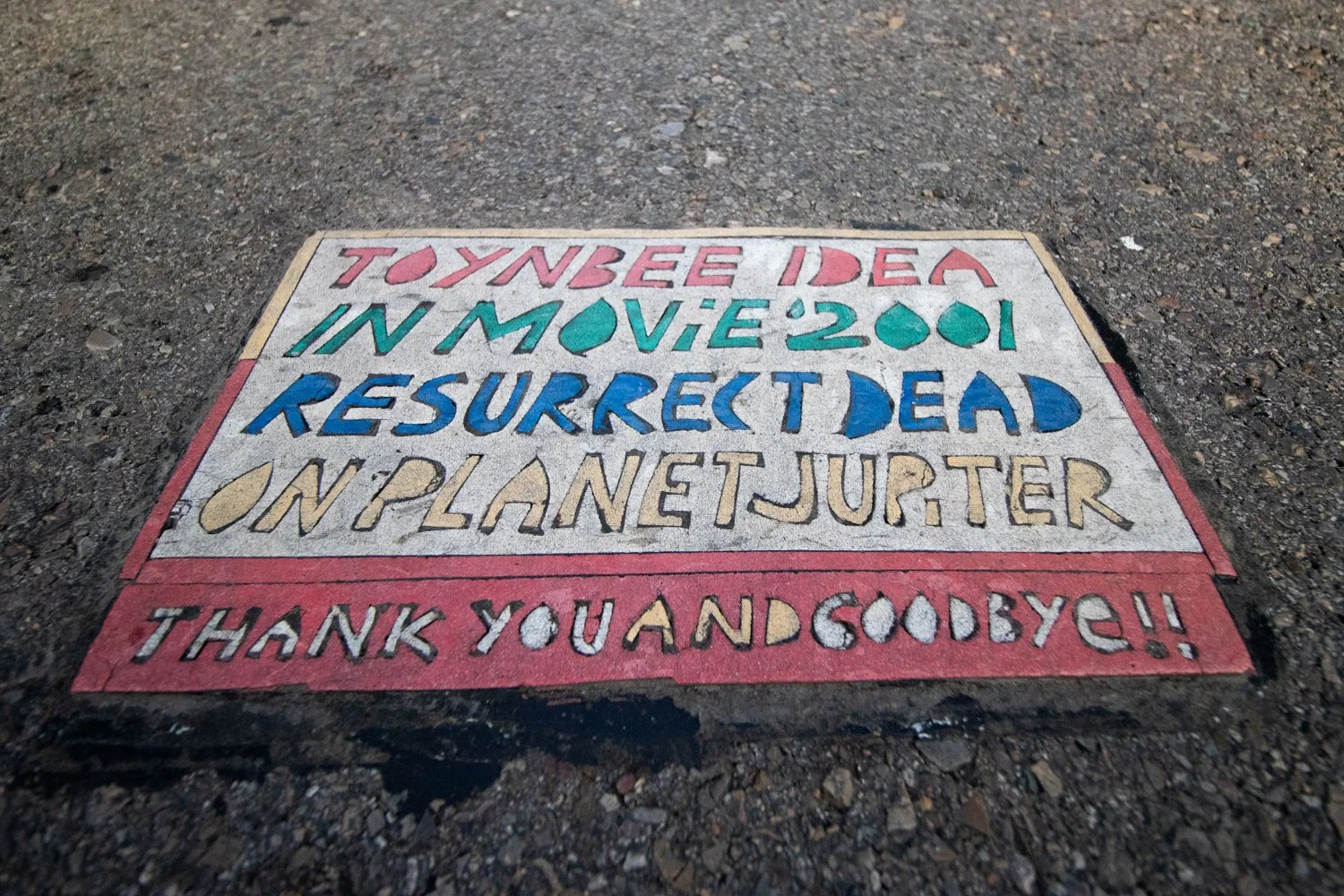
This cryptic phrase was found on the original Toynbee tiles and I’d never actually seen one of those in person. However, it’s believed that the initial tiler has long-since retired and it’s also established that although House of Hades uses a similar medium, they are a different artist. Given how fresh the Dayton tile appeared when I photographed it in March 2024, I think it’s safe to assume that this example is a tribute from House of Hades to the original tiler. Most likely one that popped up in the 2023 wave.
Although it’s a bit smaller than its predecessors, this particular example features an incredible attention to detail with regard to mimicking the Toynbee style. Linoleum isn’t particularly easy to cut (5chw4r7z and I once tried to make our own tiles) and yet, the letters and style look fairly spot-on. This also wouldn’t be the first time that HOH had paid homage to, or referenced, their predecessor.
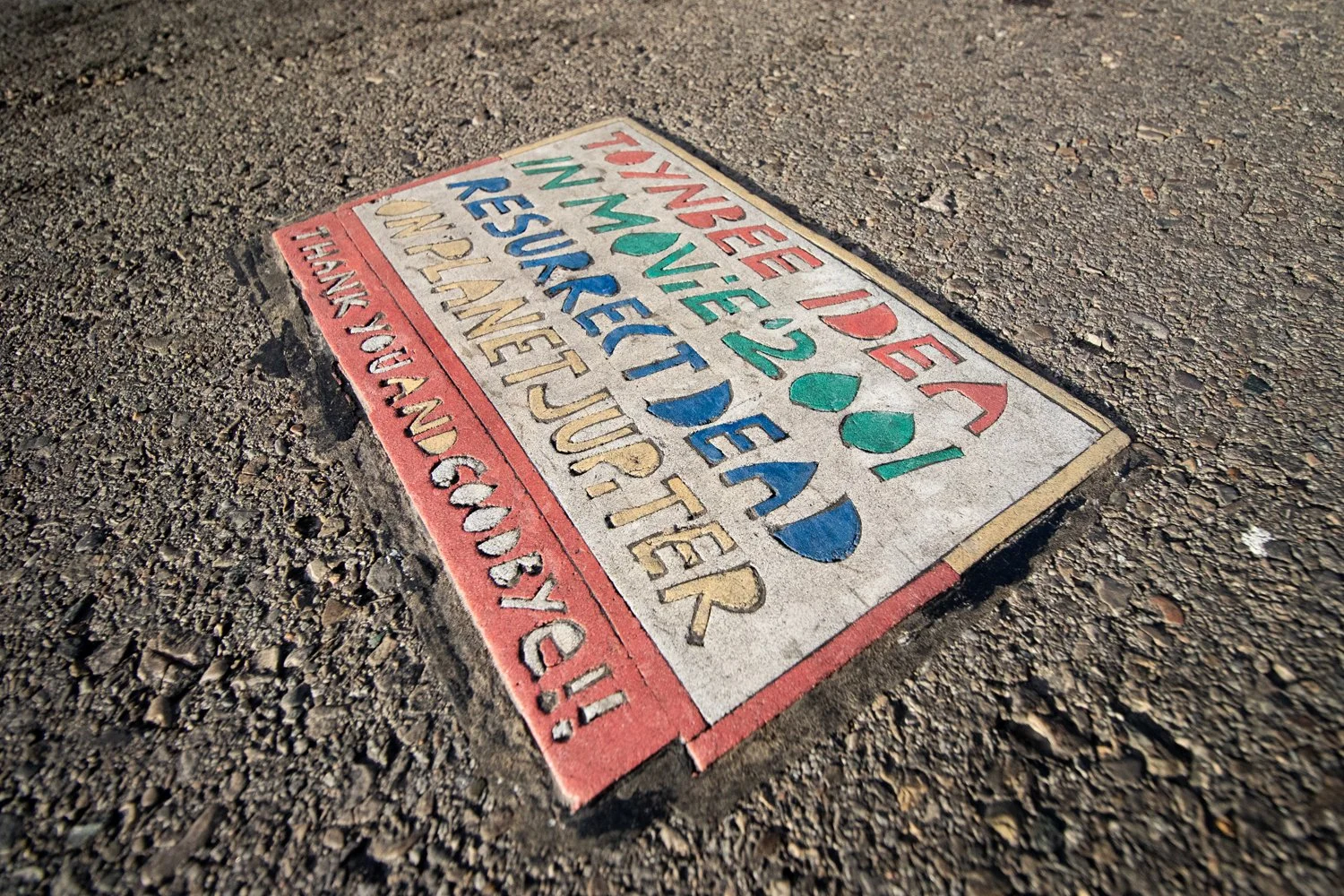
The bottom message reads: “THANK YOU AND GOODBYE,” with “and” emphasized in a contrasting color. Is HOH saying goodbye to the original tiler, to us*, or expressing something else entirely?
*New tiles marked “HOH 25” have begun appearing in other cities since the Dayton tile appeared.
• • •
The CAC Tile
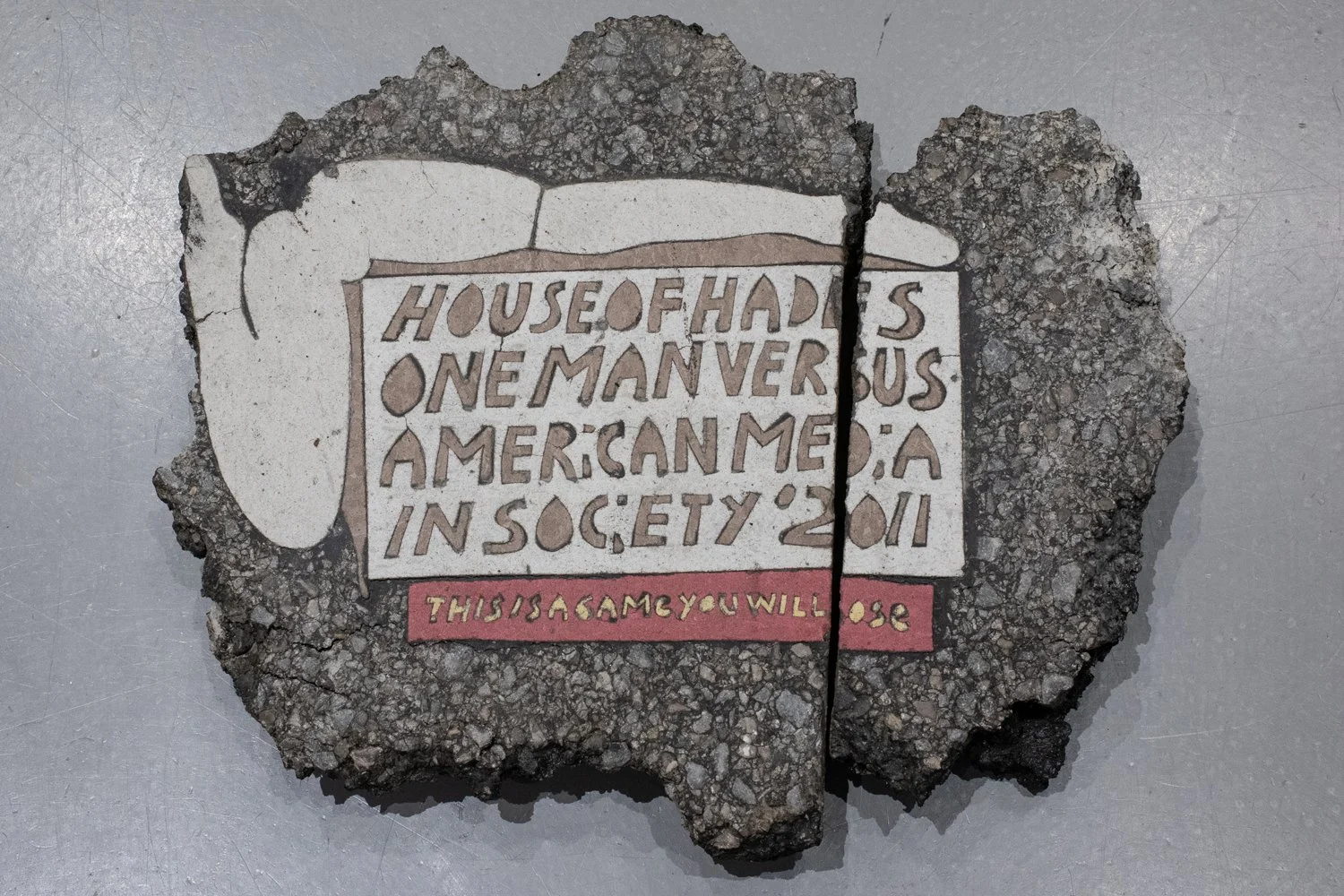
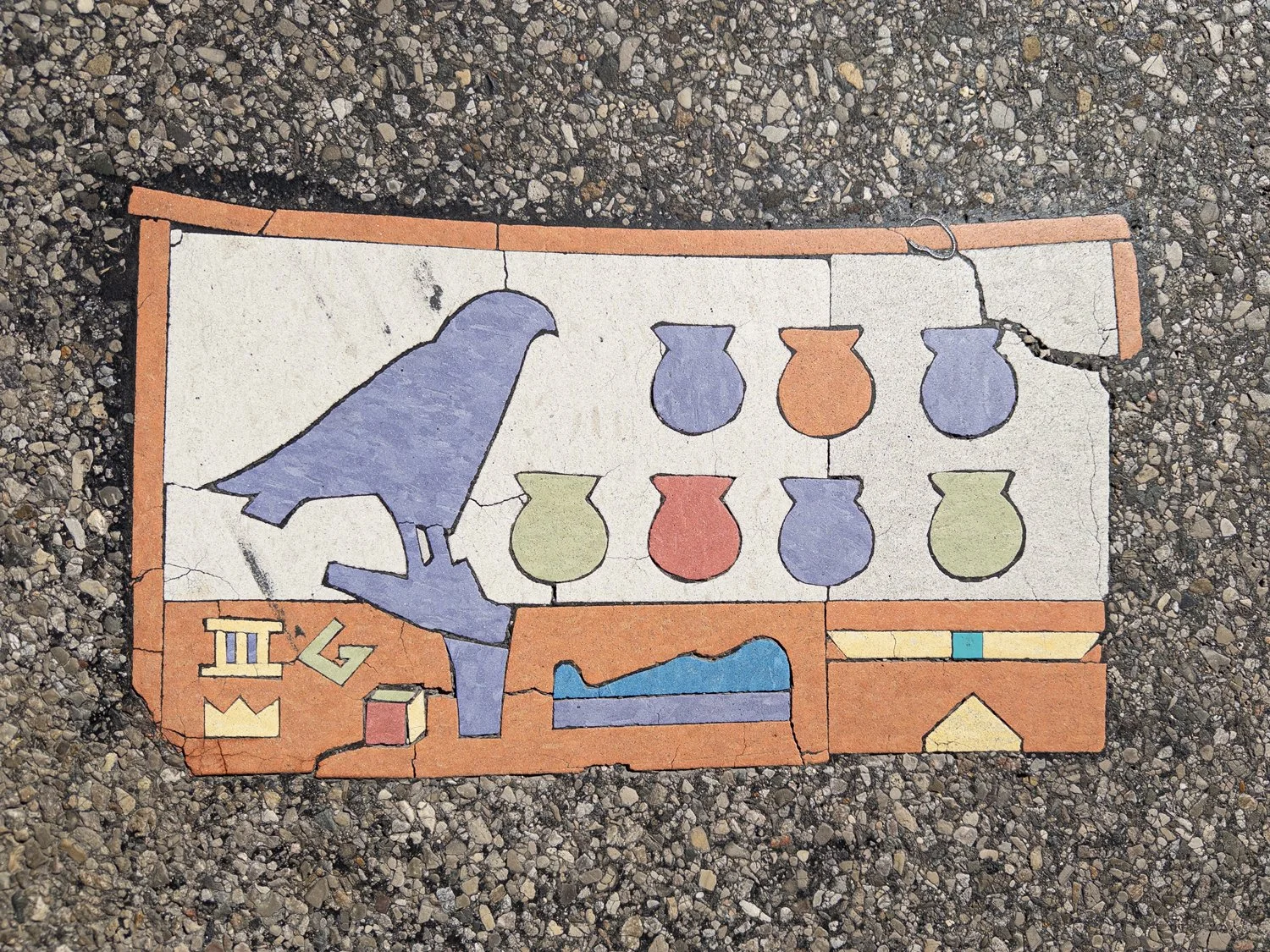
2017 was when I first learned of the street tile phenomenon and subsequently authored my first story. By that point, all of Cincinnati’s original Toynbee tiles were gone and although it had boasted at least five House of Hades examples, only three remained. Two were lost to roadwork with 5chw4r7z having visually documented one before its demise and the Contemporary Arts Center managing to rescue the other.
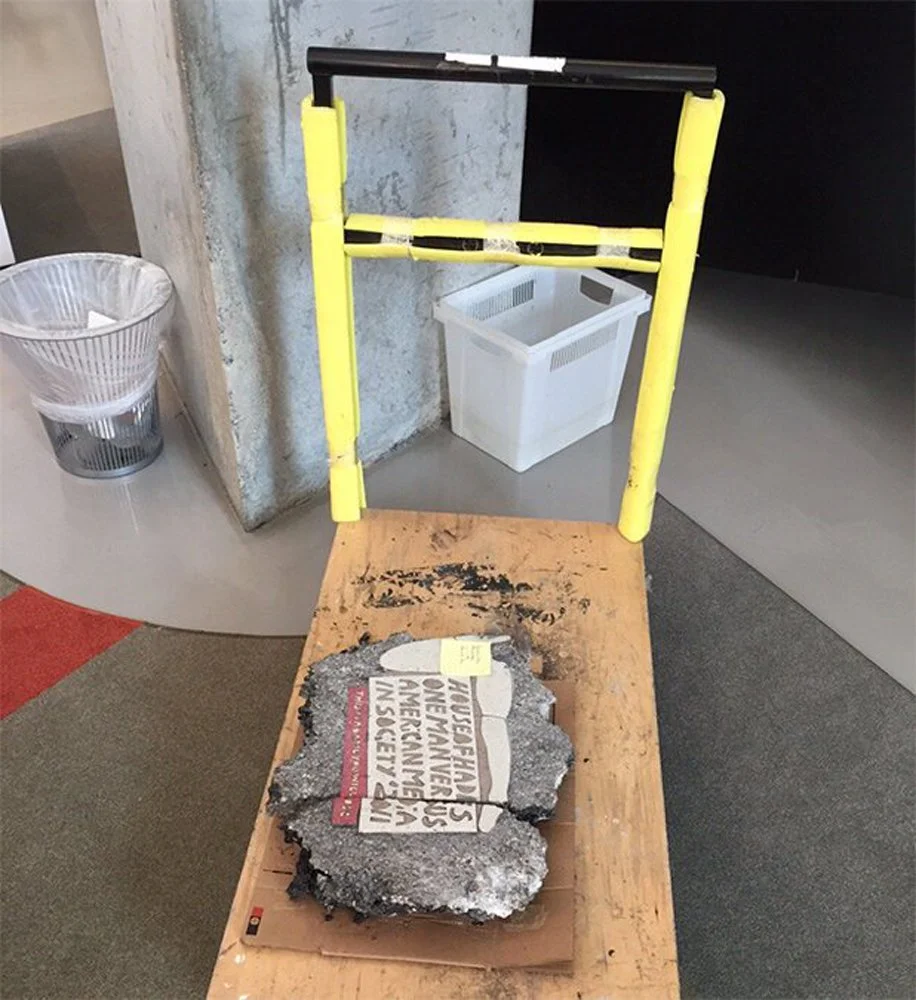
A 2015 photograph posted to Twitter by The Contemporary Arts Center of the tile they saved from the road near their entrance.
After I reached out in August of 2024, Carolyn Hefner and Rebecca Roman of the Contemporary Arts Center were kind enough to have the tile brought out of storage so that I could photograph it.
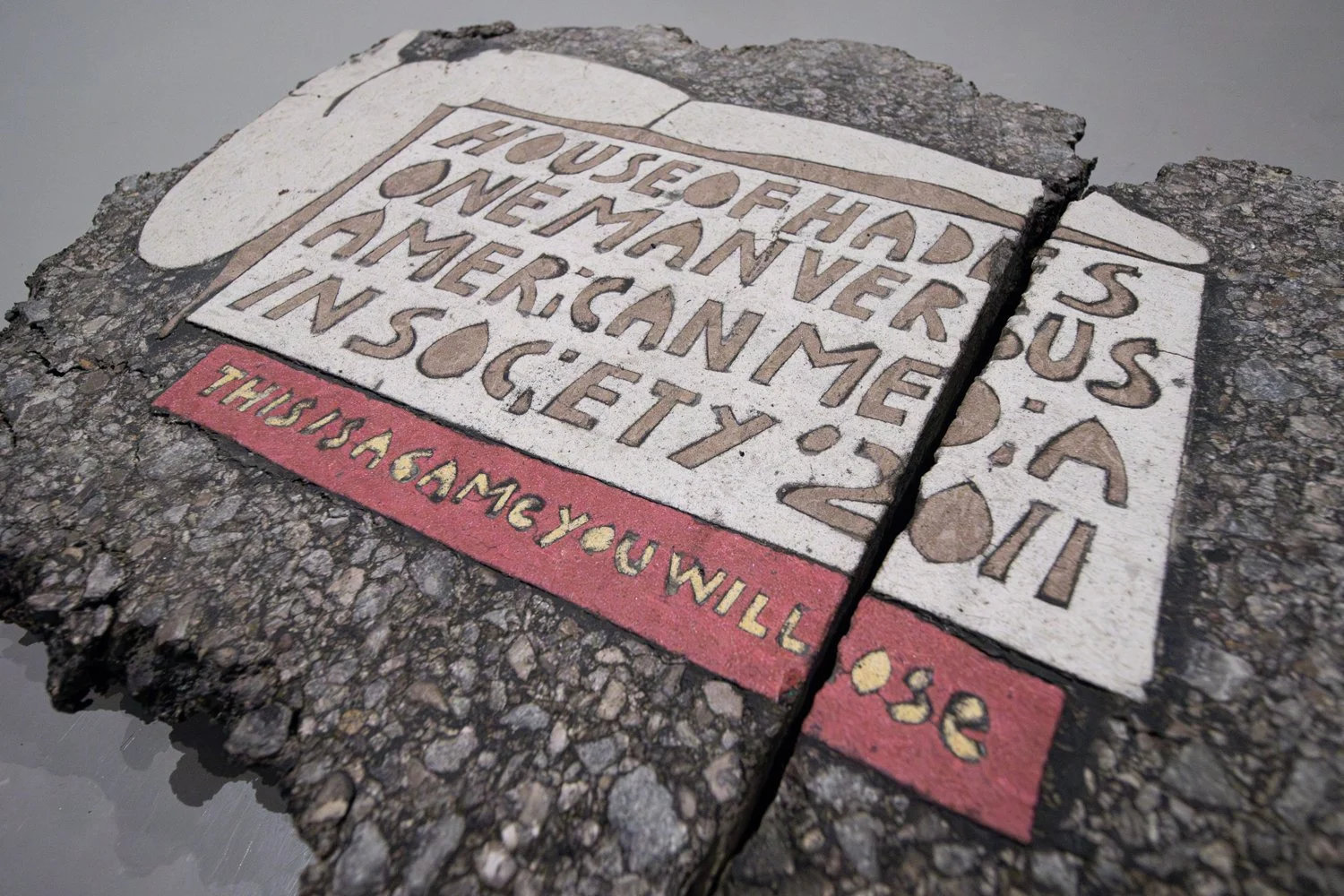
A sincere thanks to Carolyn, Rebecca, and the CAC for their time and assistance.
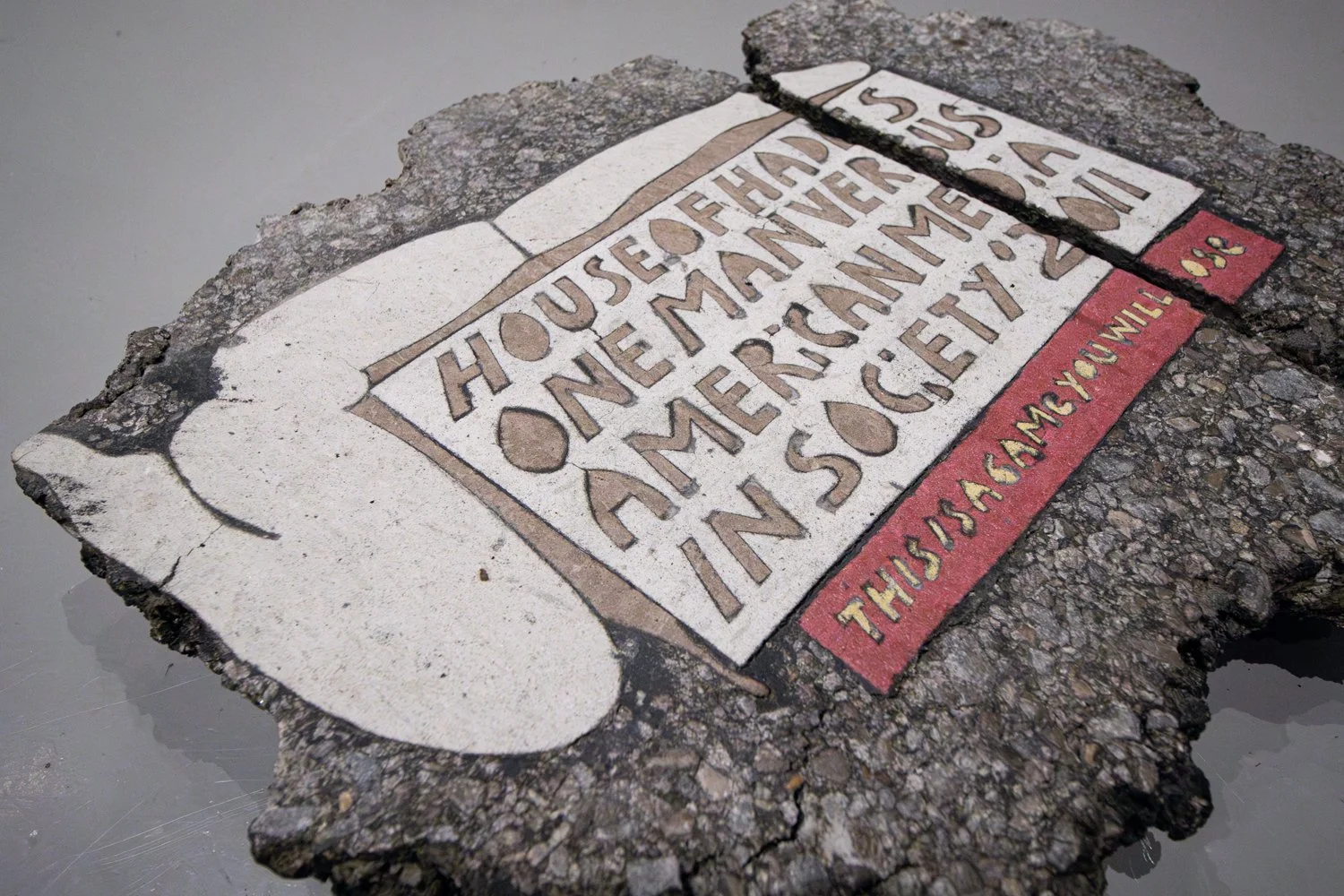
This particular HOH example currently remains in the CAC’s archives.
• • •
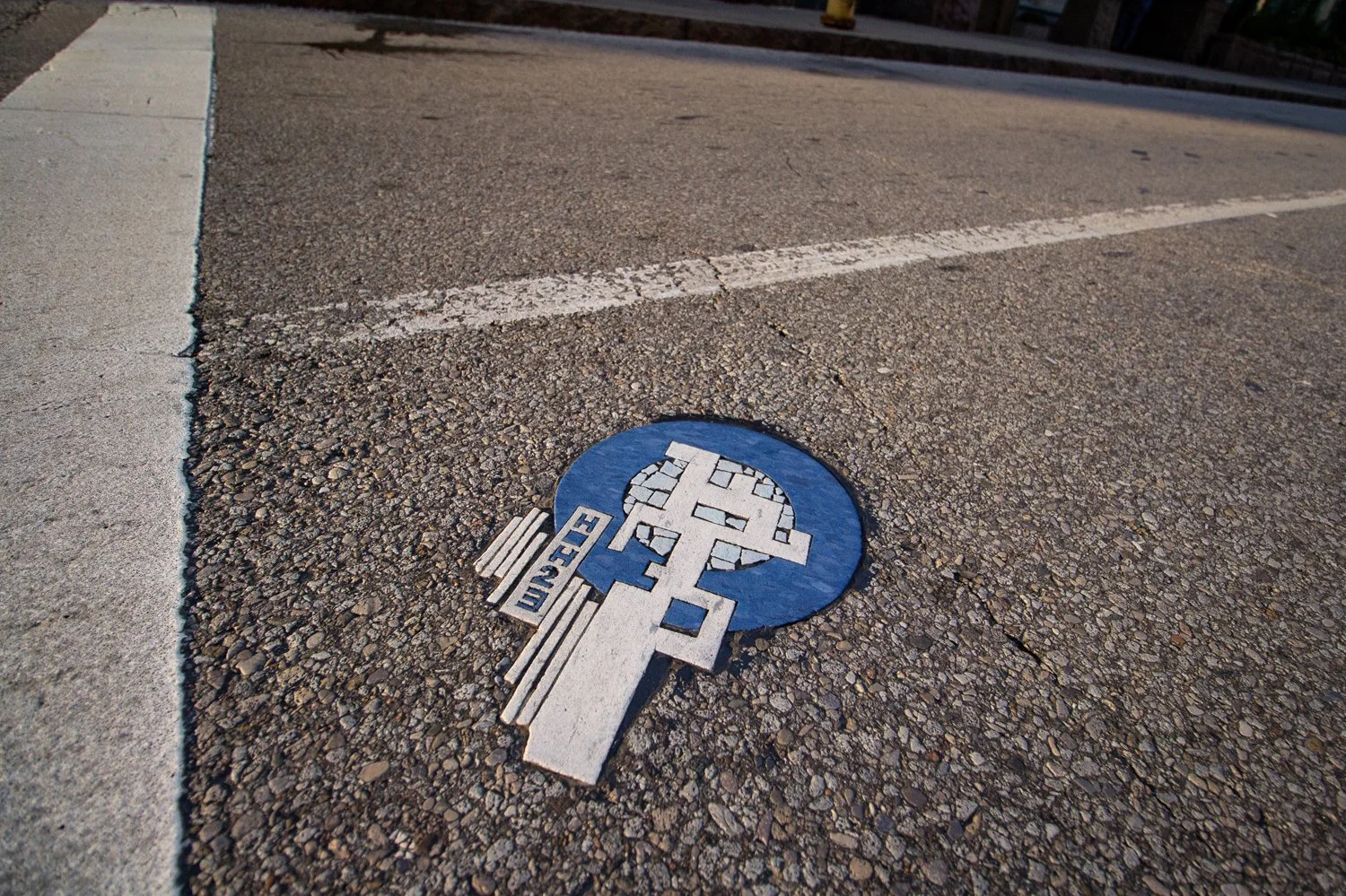
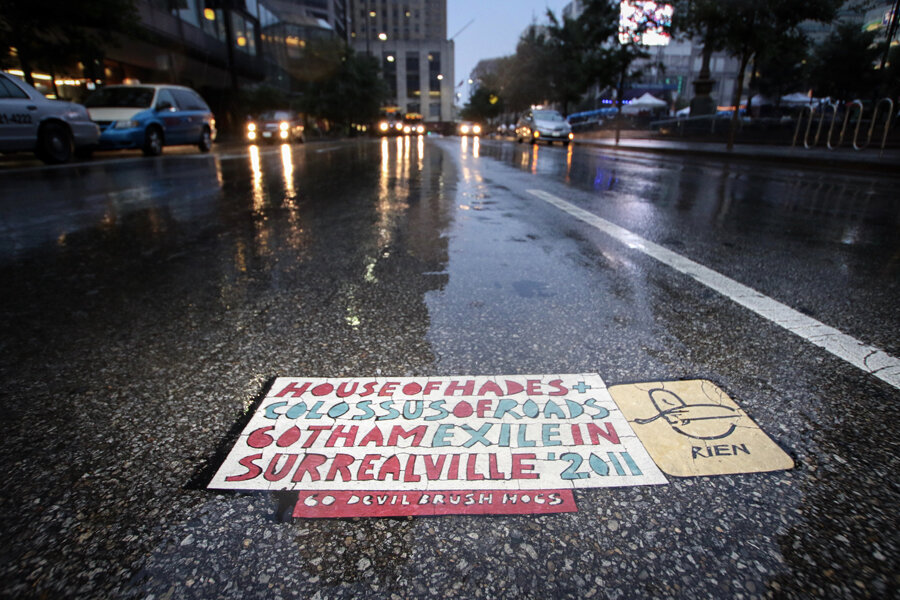
The Tenth Hades Tile of 2023:
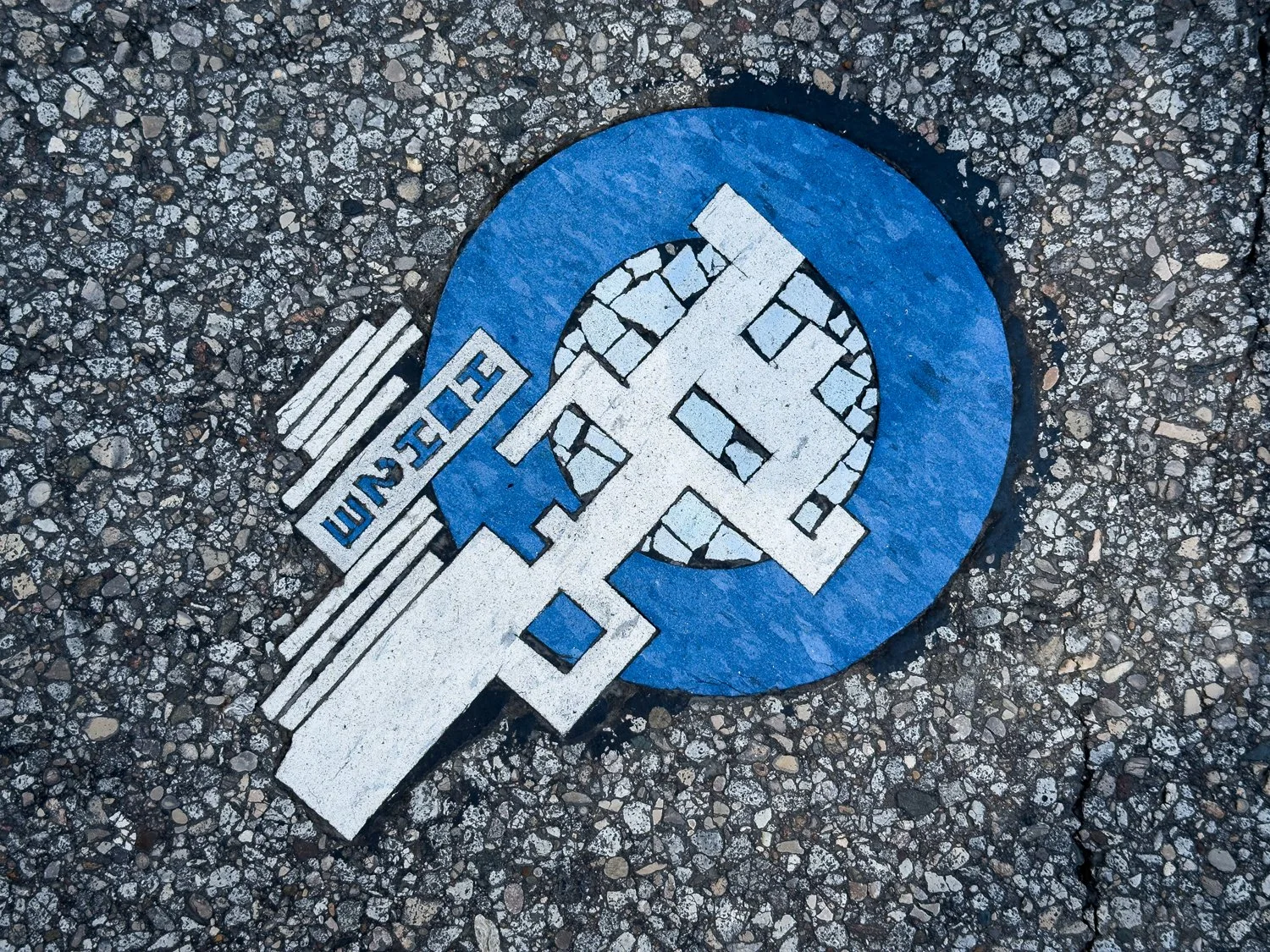
No. 23-10.
Near the end of 2023, I felt pretty confident that 5chw4r7z and I had documented every new tile that’d emerged in that year’s wave. All in all, we’d found nine, but then one evening: I missed my bus stop.
No. 23-10.
Had I gotten off a few blocks before, I would’ve been home faster and avoided the shenanigans of Government Square, but then I wouldn’t have regretfully looked out the window to spy number ten. Not sure how we’d missed this one given how often each of us passes this area in our daily lives, but I did finally get around to documenting it.
• • •
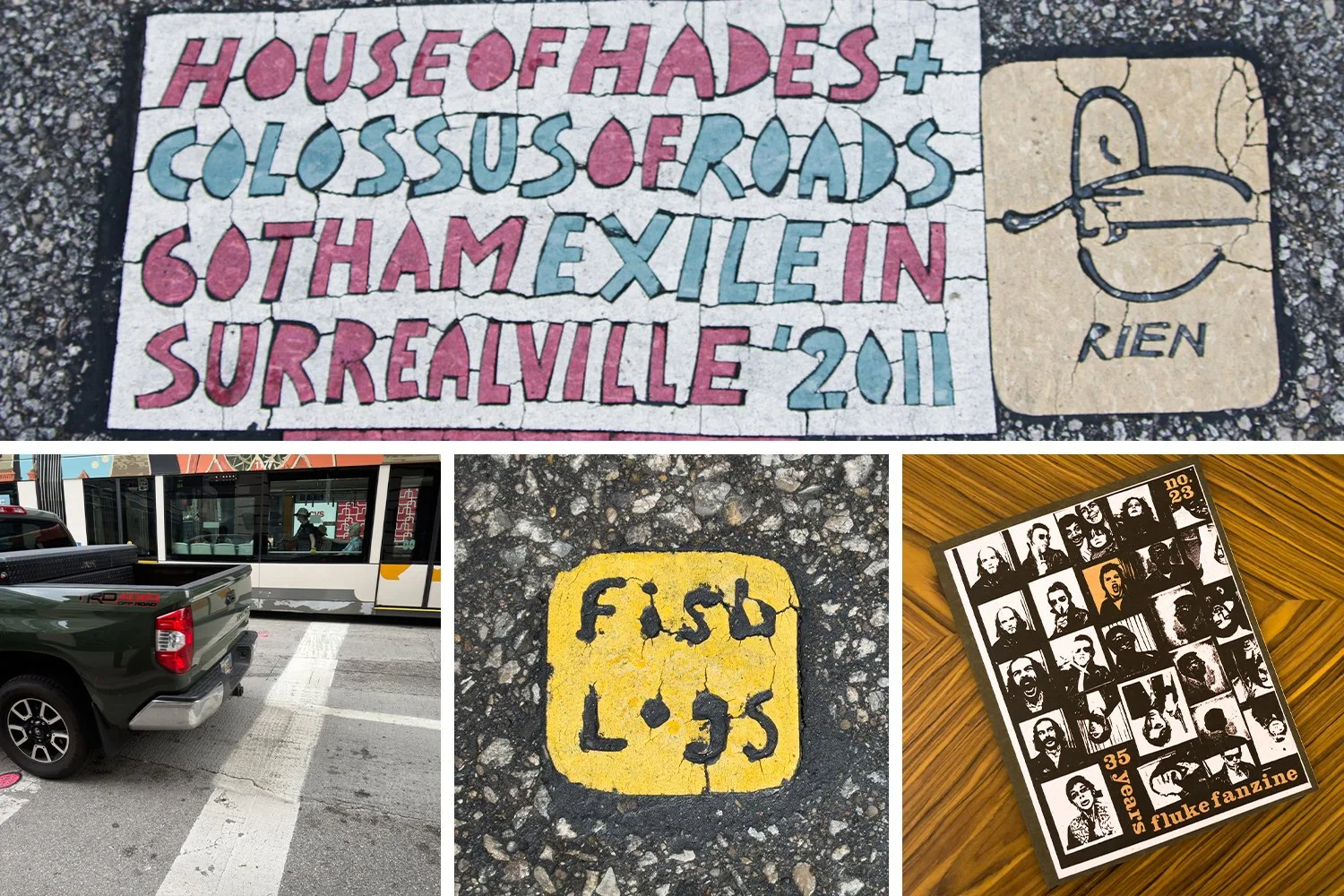
FISH LOGS Number Four
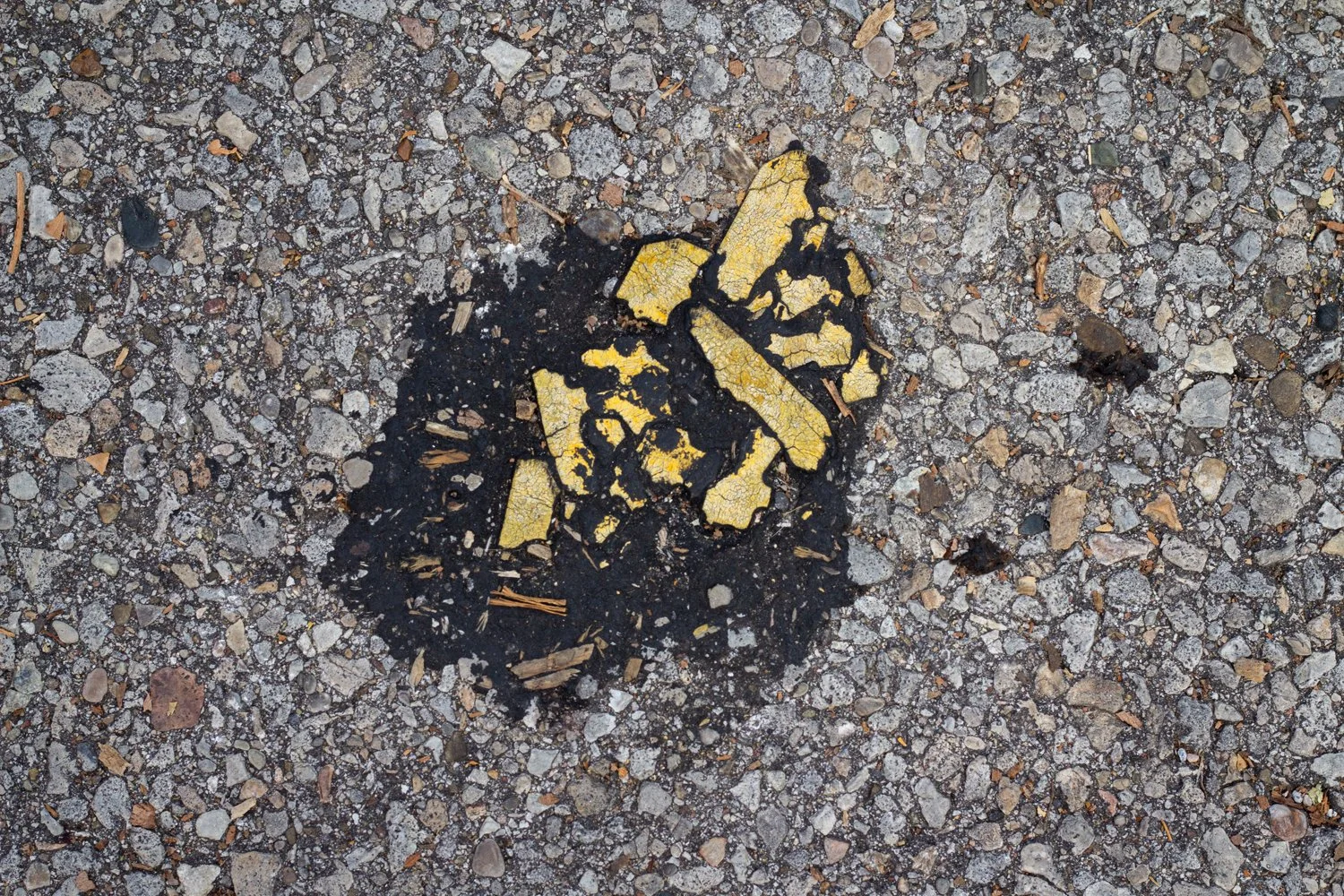
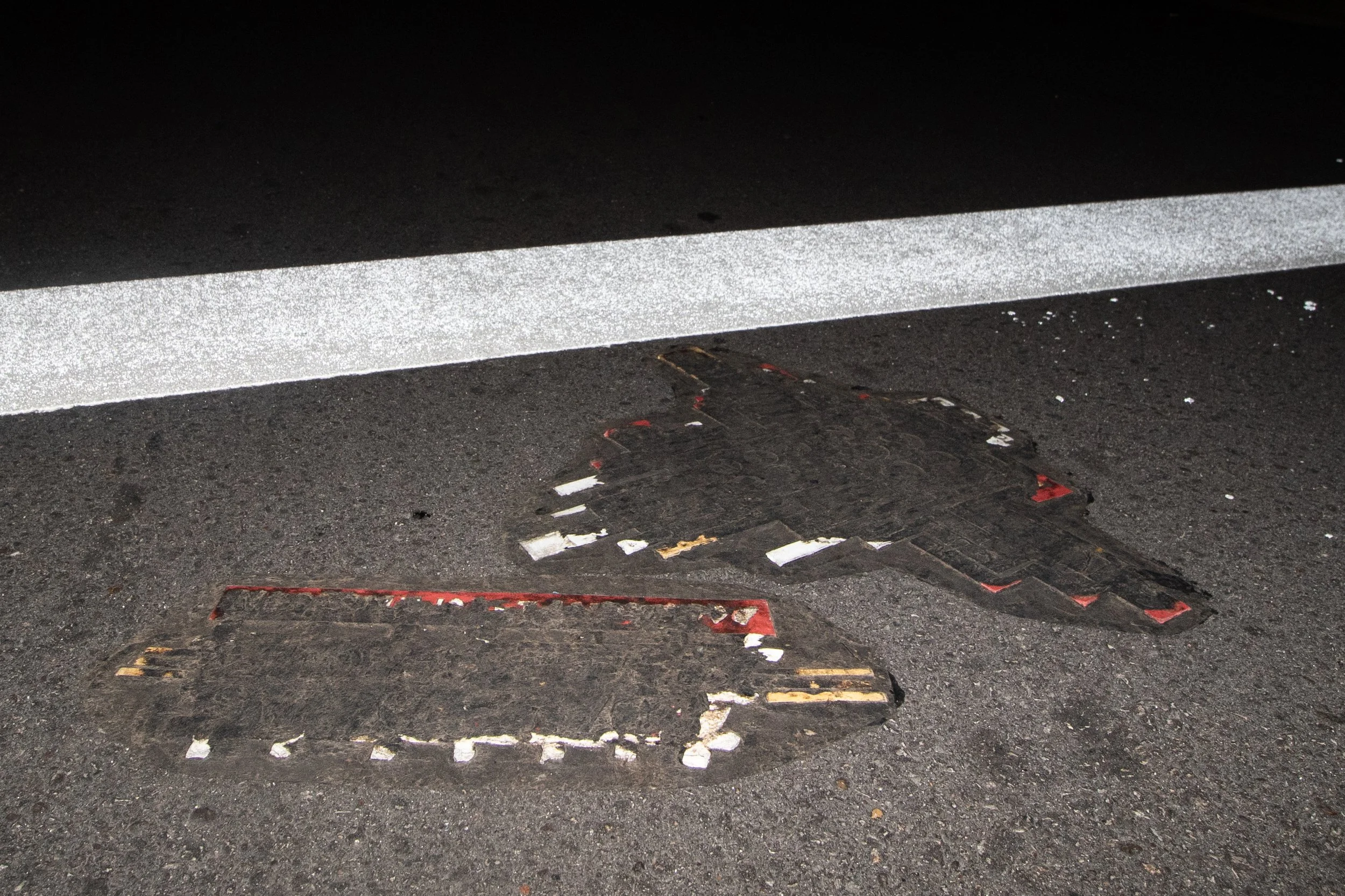
While checking on the status of the three known “FISH LOGS” tiles, I stumbled across what appears to have been a fourth. I don’t think I ever saw this one before it cured, and it seems that once it did—it didn’t last long.
• • •
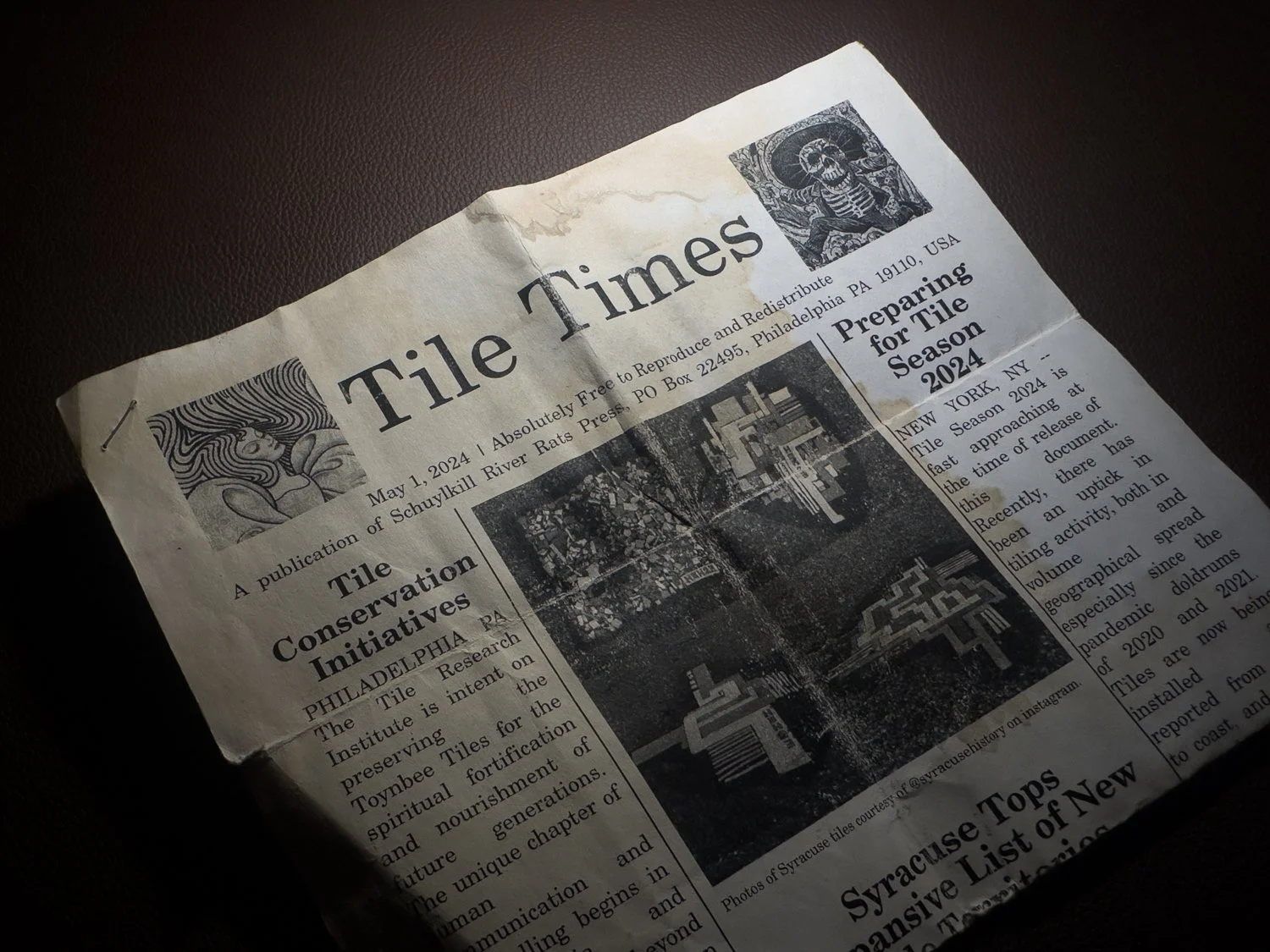
The Tile Times
I’m not the first, or only individual, to have covered the subject of street tiles (nor have I ever claimed to be). In addition to various publications and journalists over the years, the 2011 “Resurrect Dead” documentary did a wonderful job of examining the phenomena. If I had to bet, though—I’d wager that most people’s introduction to this subject still comes from an internet search. One performed after muttering “the fuck is that?” upon encountering a tile in the wild. This was especially evident in 2023 as social media began lighting up with new sightings, rumors, connections, questions, and storytellers in the wake of House of Hades’ apparent return.
After connecting with the Tile Research Institute via Instagram, I received one of the their physical newsletters in the mail. Given the amount of coffee I’ve spilt on it and how long it’s been folded up in my notebook—my copy of the May 1, 2024 edition of the Tile Times appears more like a weathered treasure map at this point than a zine. Still, it’s a valued memento (and not just because one of my photographs is published within).
To quote the late buZ blurr pseudo-quoting House of Hades in my 2017 story: “the medium is the message.” I sincerely appreciated that the staff of the Schuylkill River Rats Press were also publishing content in an analog format. It felt appropriate not only for our digitally-inundated present, but in the spirit of the street tiles themselves.
In addition to cataloging a few contemporary sightings from around the country—the author(s) had covered history, styles, variants, and even conservation efforts. In the opening sentences of their first article, the mission was made clear:
“The Tile Research Institute is intent on preserving the Toynbee Tiles for the spiritual fortification and nourishment of future generations.”
I thought my plan was pretty clever. I’d go around the city, get my photos, conduct a phone interview with the Institute, and then I’d be set to quickly publish the next chapter.
It was August of 2024, though, and hotter than hell in the muggy, midwestern center of a rapidly declining nation. I’d been attempting to enjoy my day off by visiting the local pool and the local bar, but by the time I went out to shoot—the world had become like that Smashmouth song (might as well have been “walkin’ on the sun,” ya know?).
The goal was to photograph every one of Cincinnati’s extant tiles in a single session—capture them all on the same date, at a similar time. A concerted effort to document, and share, the most current information from the corner of the world where I happen to intersect with the larger subject. And while I did manage to see all of the local examples on that afternoon, I was barely hanging on as I chugged water and poured aloe in the minutes before my interview with Taylor.
Oddly enough, they’d first learned about this very visual subject in an auditory fashion. While listening to the story unfold via a rainy night’s podcast, Taylor realized that the city they’d just moved to was the center of the street tile mystery. And just two blocks away from their new Philadelphia address: they encountered their first one.
It was a blue, abstract House of Hades variant, but over the next few weeks they’d stumble upon some of the original examples that the City of Brotherly Love is known for. The tiles led them to the internet, the internet led them to YouTube, and YouTube showed them the documentary—but they wanted to dive deeper.
“I was kind of focused on the hunt for the guy who originally made them, but I thought: you know, they spoke to me as more of an art form,” said Taylor over the phone. “I mean, we have the original tiler who didn’t think of them as art, we have House of Hades who clearly thinks of them as art, and there are a couple people in-between.”
Quickly captivated, Taylor founded the Institute because they felt there was “a gap in the discussion.” Specifically, they “wanted to discuss these things as art.”
Taylor’s background wasn’t specifically in fine arts, but they dabbled in the Classics and were particularly fond of Roman and Greek artifacts. Not the statuary or pottery, but rather, the graffiti found preserved in the ruins of Pompeii and the excavations of Herculaneum. The Toynbee tiles were a natural fit for their fascination and what struck them most wasn’t necessarily the message, but the medium.
“Everyone uses the street, and we have so much space in the streets. There’s all this pavement, but there’s also isolation. [The original tiler], they figured out a way to communicate with people, and I think that’s something everyone needs, you know: a way to communicate.”
Although the identity and true motivations of the original tiler can only be speculated upon, this line of thinking seems to be common among the folks who follow such things—myself included. In the closing moments of the 2011 documentary, one of the narrators speaks of a similar sentiment after he happens upon who he thinks is the original tiler and decides to not say anything. Sometimes, it’s better to just let the mystery be.
The Tile Research Institute and Schuylkill River Rats Press receive inquires at:
P.O. Box 42
Beacon, NY, 12508
As Taylor and I said our goodbyes, there were a few details that we swapped, but agreed to not make public. While their work at the Institute has allowed them to create a log of documented tiles, they keep the exact locations a secret—believing it’s best if others come upon the tiles naturally or take the time to go for a walk in their city. I’ve since adopted a similar position (but there are some intentional bread crumbs left throughout this coverage for the curious).
What folks like Taylor, myself, and many others around the world seek to do is simply document a unique phenomenon when it manages to still occur (tiles have staying power, but a canvas such as the street exists at the whims of traffic, weather, and civic politics, after all). The various messages and examples may or may not be interconnected in some grand scheme and we may never know the true intentions or origins behind such creations—but they are a form of both communication and art. One that requires determination to create, patience to see, and exists at our feet. Literal street art.
It was this conversation with Taylor that got me inspired to compile all of the relevant information and photographs I’d accumulated over the years so that much like them and their “rogue band of outlaw academics and independent art critics,” I too can contribute to the “spiritual fortification and nourishment of future generations.”
All that information can now be found in…
A Field Guide to Street Tiles and Other Literal Street Art of the Queen City
〰️
A Field Guide to Street Tiles and Other Literal Street Art of the Queen City 〰️
…or you can continue on the narrative journey with:
Next Chapter:
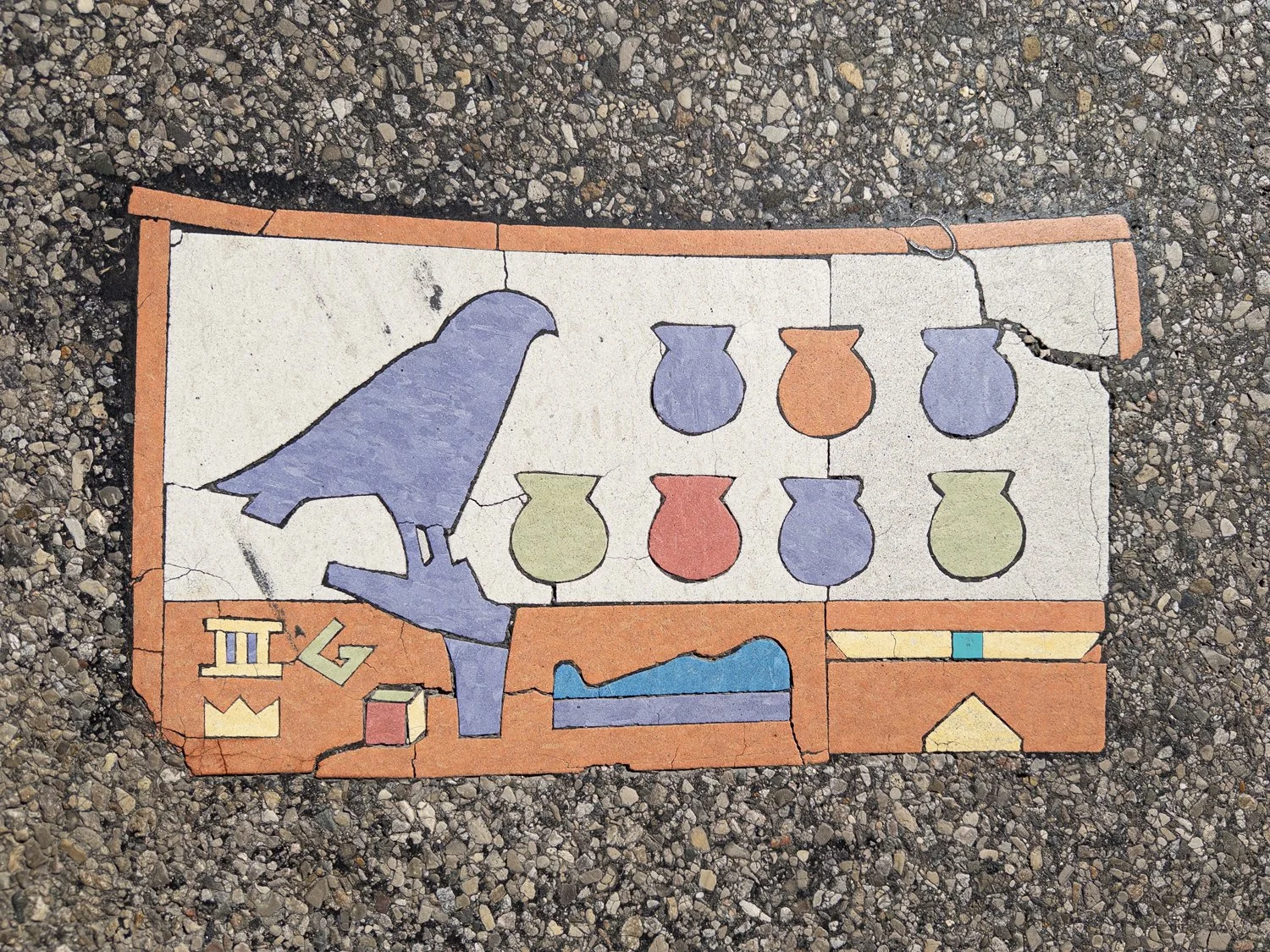
A new street tile (and type of street tile) appears in Cincinnati.
All “Street Tile” Posts:


Since 2007, the content of this website (and its former life as Queen City Discovery) has been a huge labor of love.
If you’ve enjoyed stories like The Ghost Ship, abandoned amusement parks, the Cincinnati Subway, Fading Ads, or others over the years—might you consider showing some support for future projects?
Tiles are talking and Fish Logs are multiplying.