Downtown Cincinnati’s “Dead Mall-Esque Backstreets”
Downtown isn’t Manhattan, but it’s certainly not a ghost town either. Still, even on the most eventful and event-filled weekends, there are several quiet corners to be found within the heart of the Queen City. That’s not a particularly shocking observation for any of this nation’s middling, major metros; American cities often switch identities after their nine-to-five, Monday-through-Friday workforces head home. Cincinnati, however, has something a bit more curious than the standard lineup of quiet office towers and lunch-only diners. Right at its core sits what most would consider to be nothing more than a mere alleyway—but someone, at some point, proclaimed this place to be: the Backstage District.
This subject had been on my to-do list for well over a decade, a fact I was reminded of every time the dog and I stumbled through it while on a quest for late-night sustenance. It always seemed like it’d make for a somewhat interesting story, but wasn’t the kind of thing that I’d ever made a priority. And then one night, I happened to look at the ground.
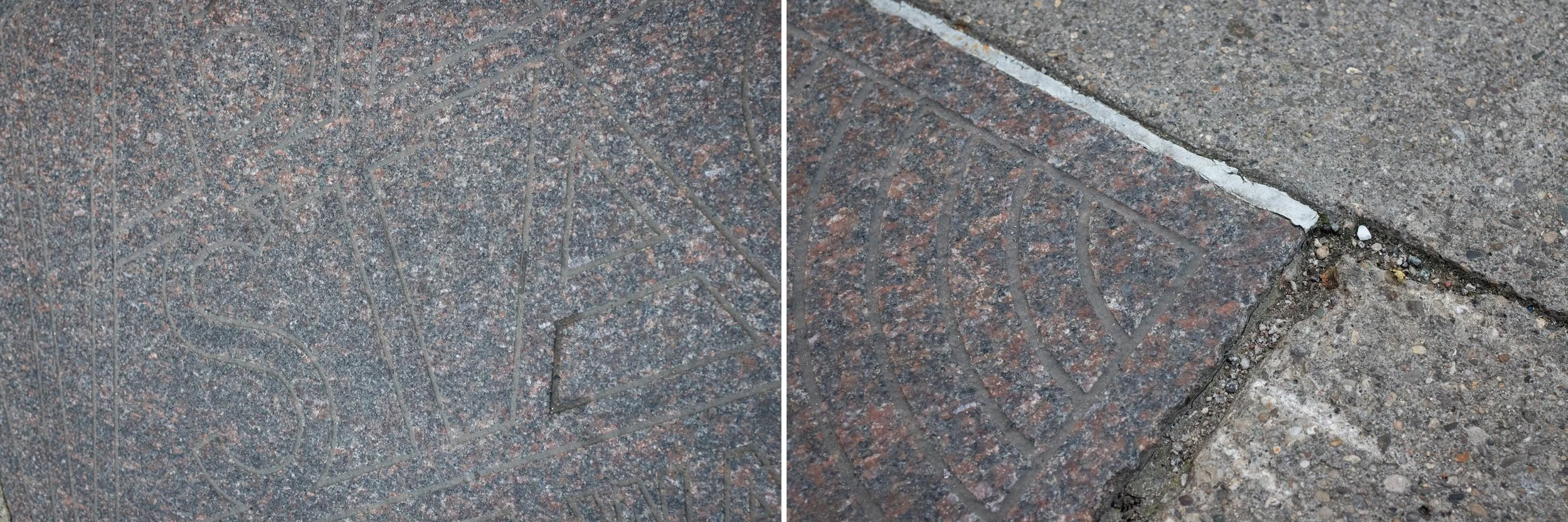
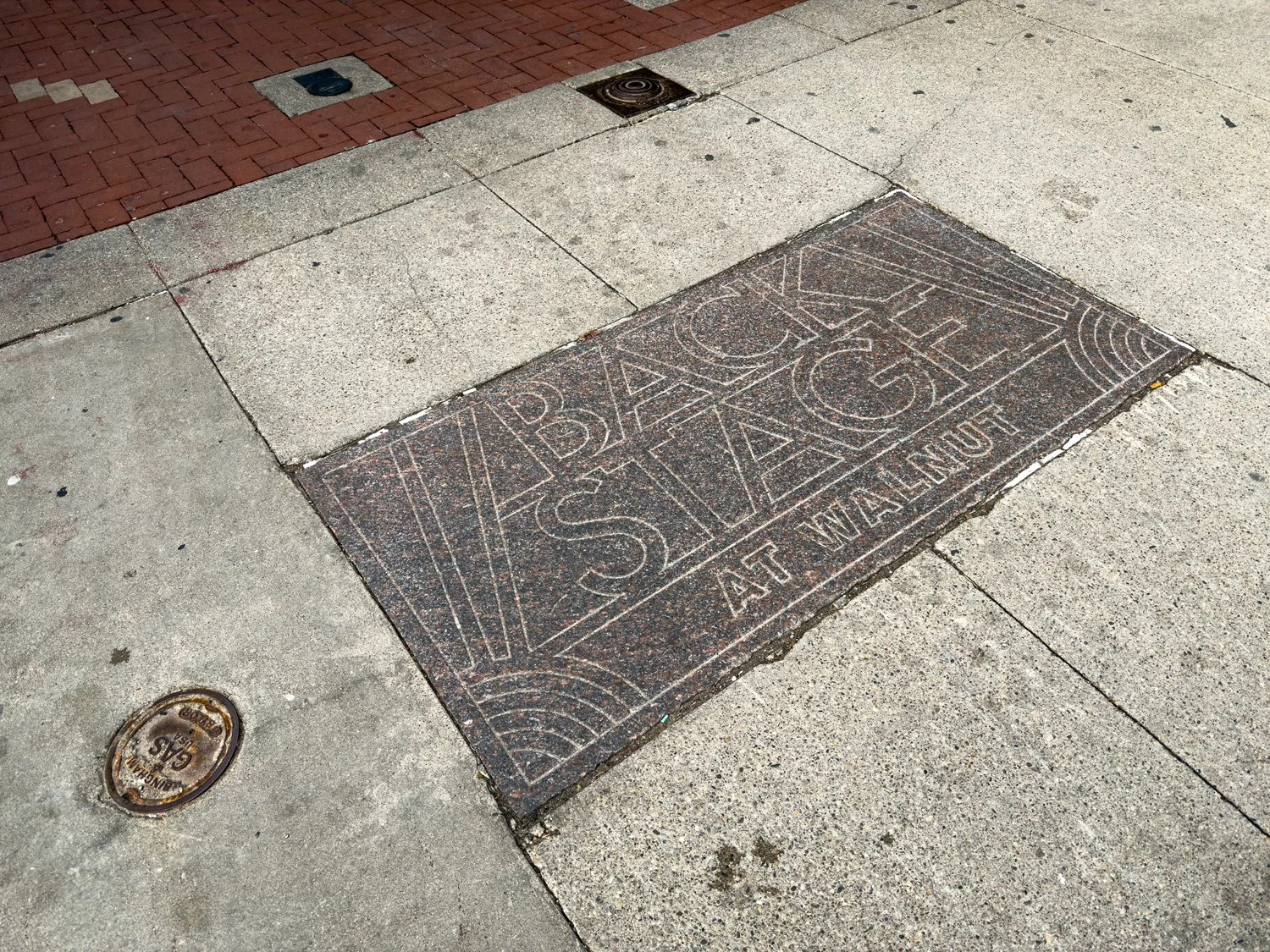
The slab of rock in the sidewalk wasn’t itself unusual—such an ornamental feature was befitting of the area’s theme—but at the right angle, I could make out several words. Almost like it was a fading advertisement or “ghost sign,” except instead of having been painted—these urban hieroglyphics were sculpted, stamped, or pressed in. And now, they were so worn down that they were only visible if you happened to look closely. I’d walked this area so many times over so many years, but had never noticed “BACKSTAGE ” etched into the eroded stone:

The stone slab as it appeared on May 17, 2025.

The slab with emphasis added (by Phil Armstrong). Even five years ago, this decor was still legible (as seen in another contribution by Phil).
It struck me as odd that such a Disney-style detail had been included within a destination that, as far as I knew, wasn’t one—if it ever had been in the first place.
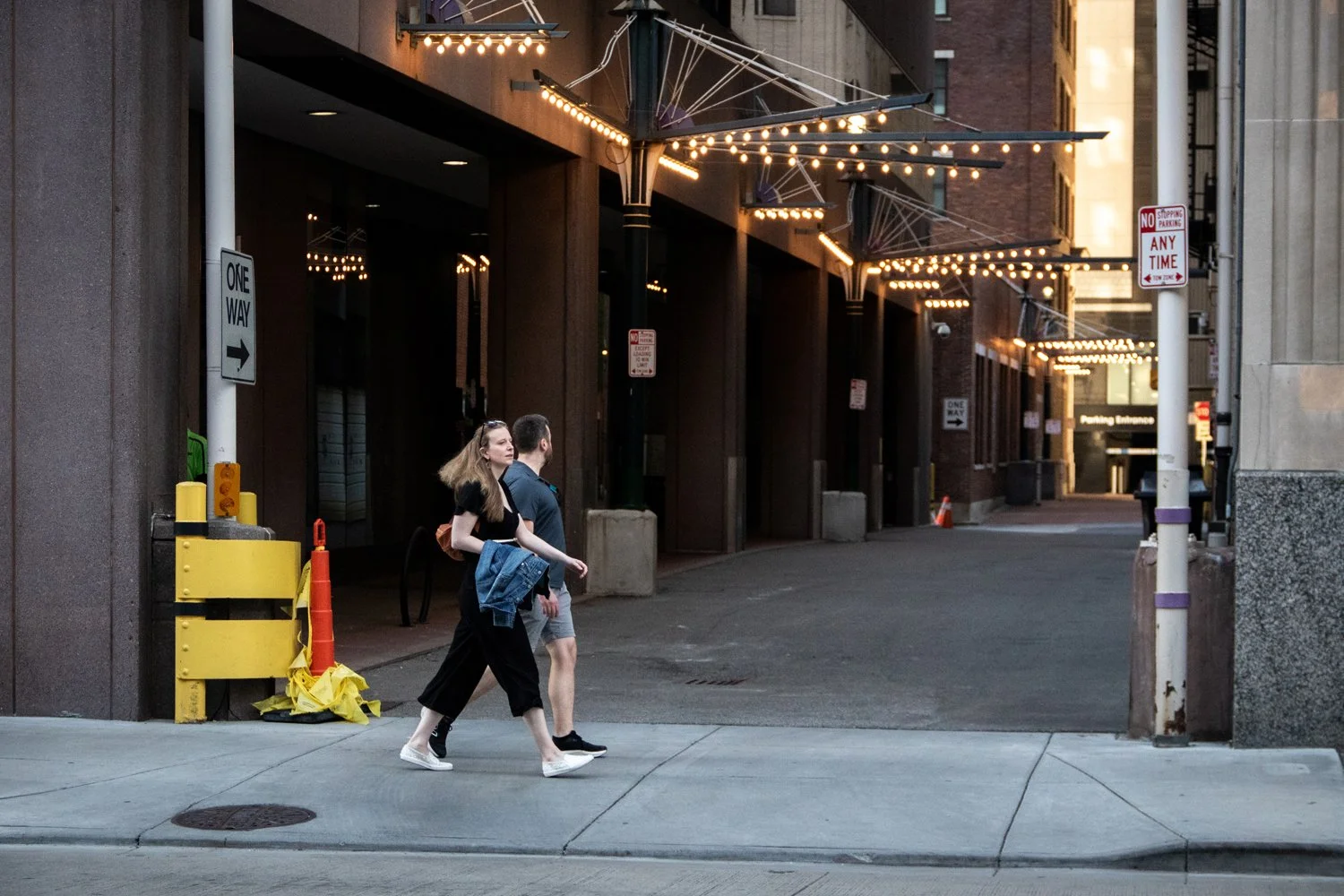
The Backstage District’s 6th St. entrance on the evening of May 17, 2025.
The district quadrisects one downtown Cincinnati block with 7th, 6th, Walnut, and Vine streets bordering it to the north, south, east, and west respectively:
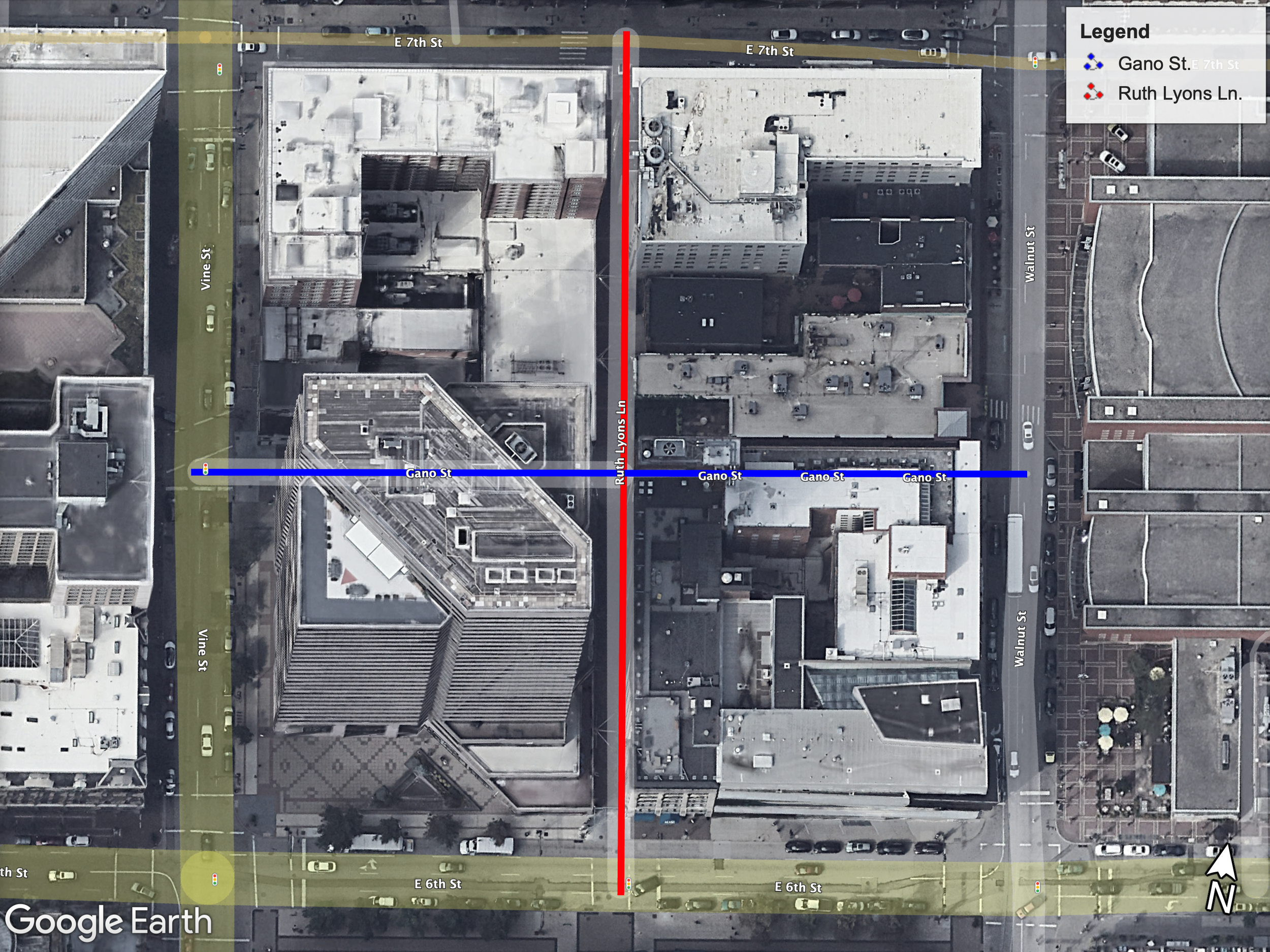
The Backstage District’s thoroughfares of Ruth Lyons Ln. (red) and Gano St. (blue).
The area serves as a connection between popular downtown waypoints and is surrounded by numerous residential, office, retail, entertainment, and tourism destinations.
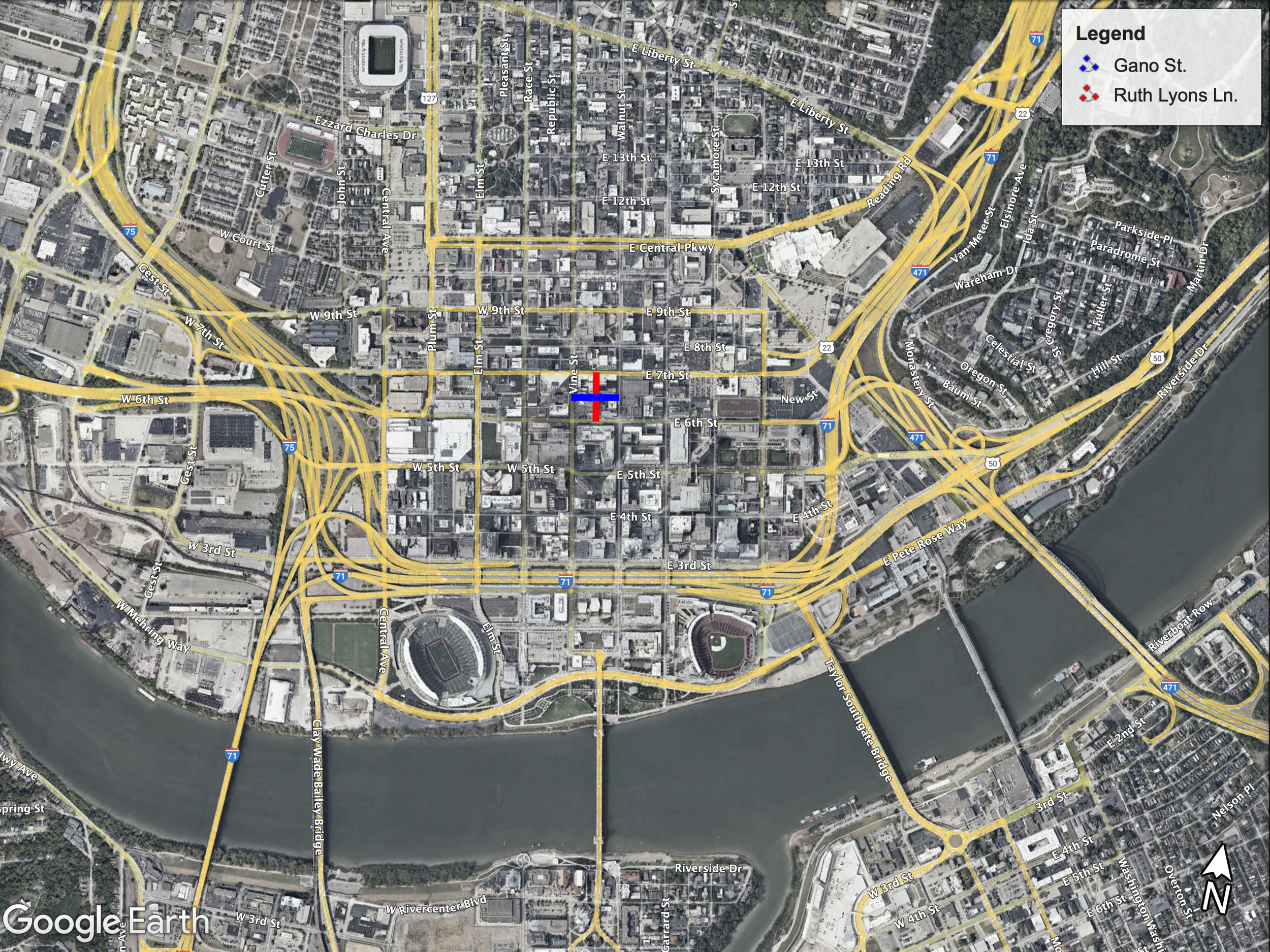
The Backstage District within the geographical context of Cincinnati’s urban core.
The north-south running Ruth Lyons Ln. was named in honor of a beloved, local media personality and philanthropist in 1983. It connects 7th St. with 6th St. and directly aligns with a pedestrian tunnel to the civic plaza of Fountain Square.
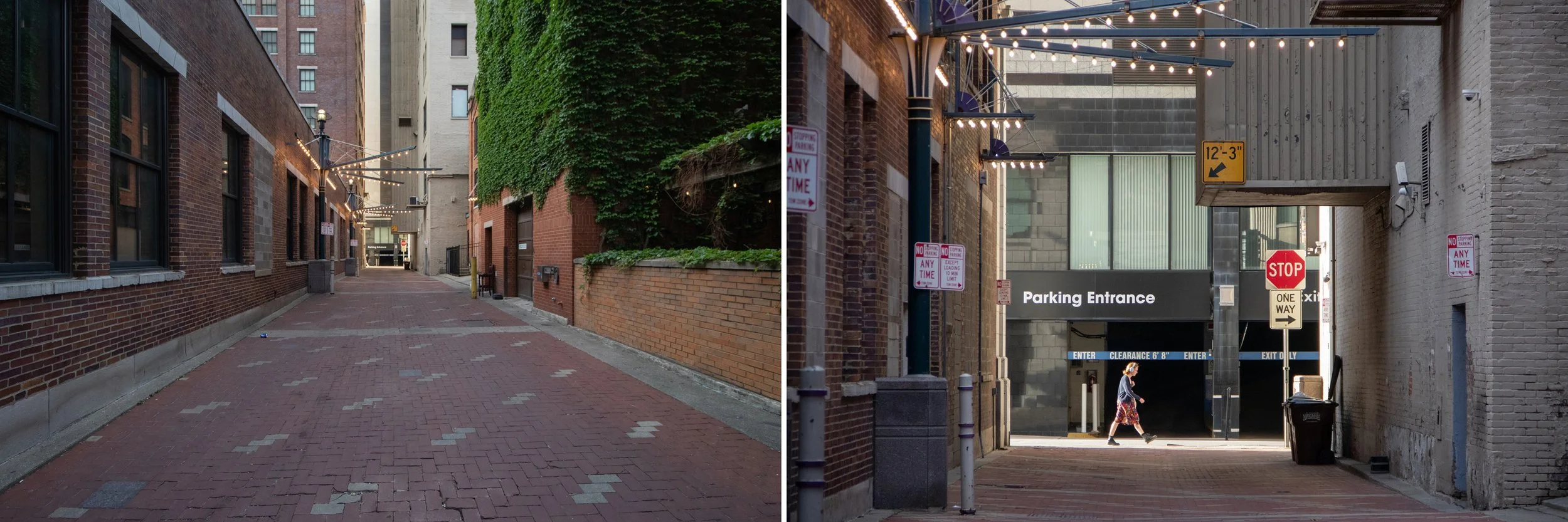
Looking north on Ruth Lyons Ln. towards 7th St.
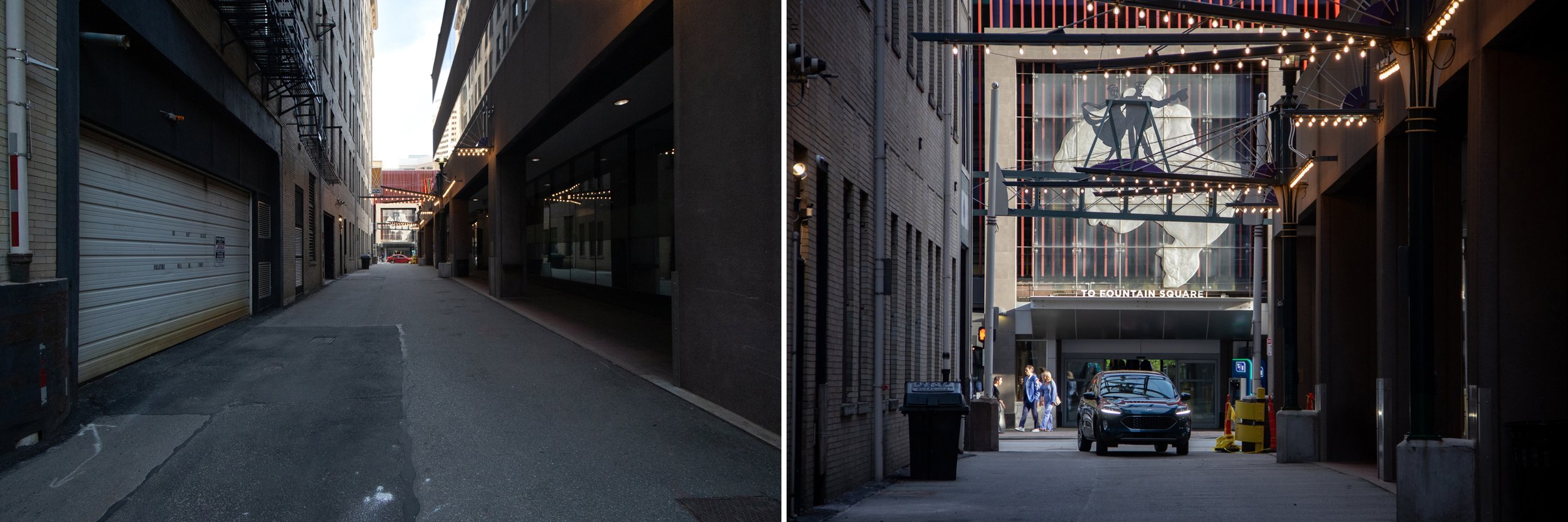
Looking south on Ruth Lyons Ln. towards 6th St. and the Fountain Square pedestrian tunnel.
Meanwhile, the east-west running Gano St. connects Walnut St. with Vine St. Although it now only exists within this block, Gano was historically known for its collection of popular restaurants, clubs, and bars.
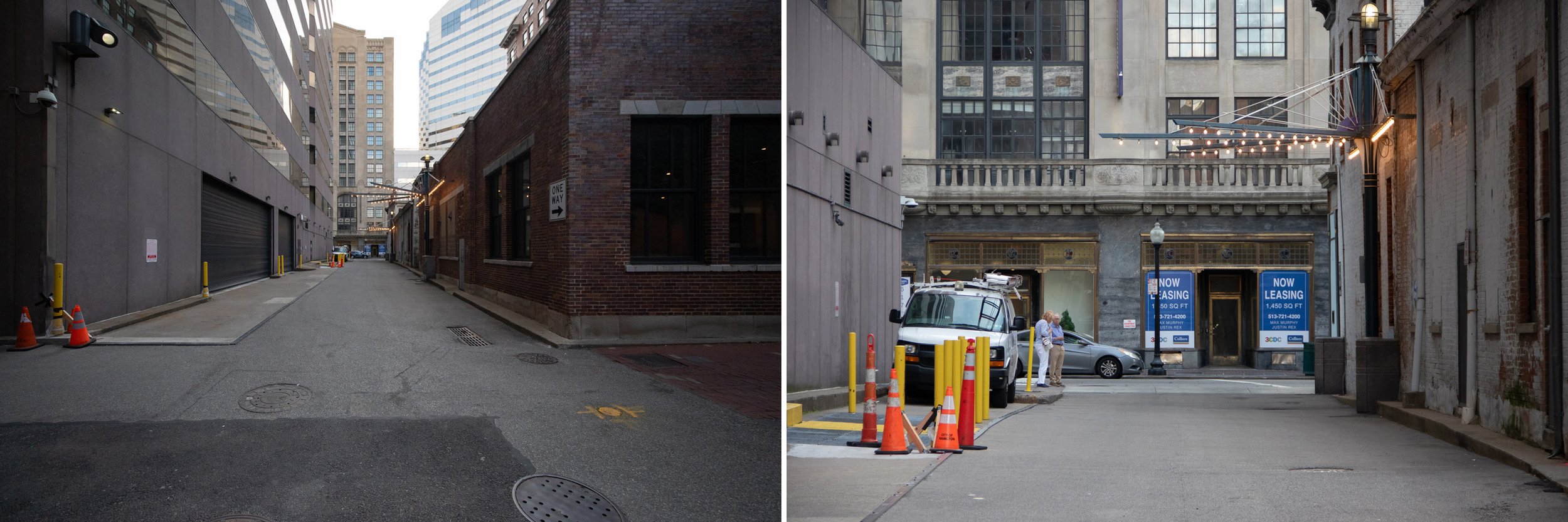
Looking west on Gano St. towards Vine St.

Looking East on Gano St. towards Walnut St.
The district’s eastern entrance along Walnut St. is the only segment currently integrated with local attractions. Nicholson’s is a longstanding and reliable local eatery, while the 21c Museum Hotel boasts both an upscale restaurant and rooftop bar.

Looking towards the Aronoff Center for the Arts with Nicholson’s on the left and the 21c Museum Hotel on the right.
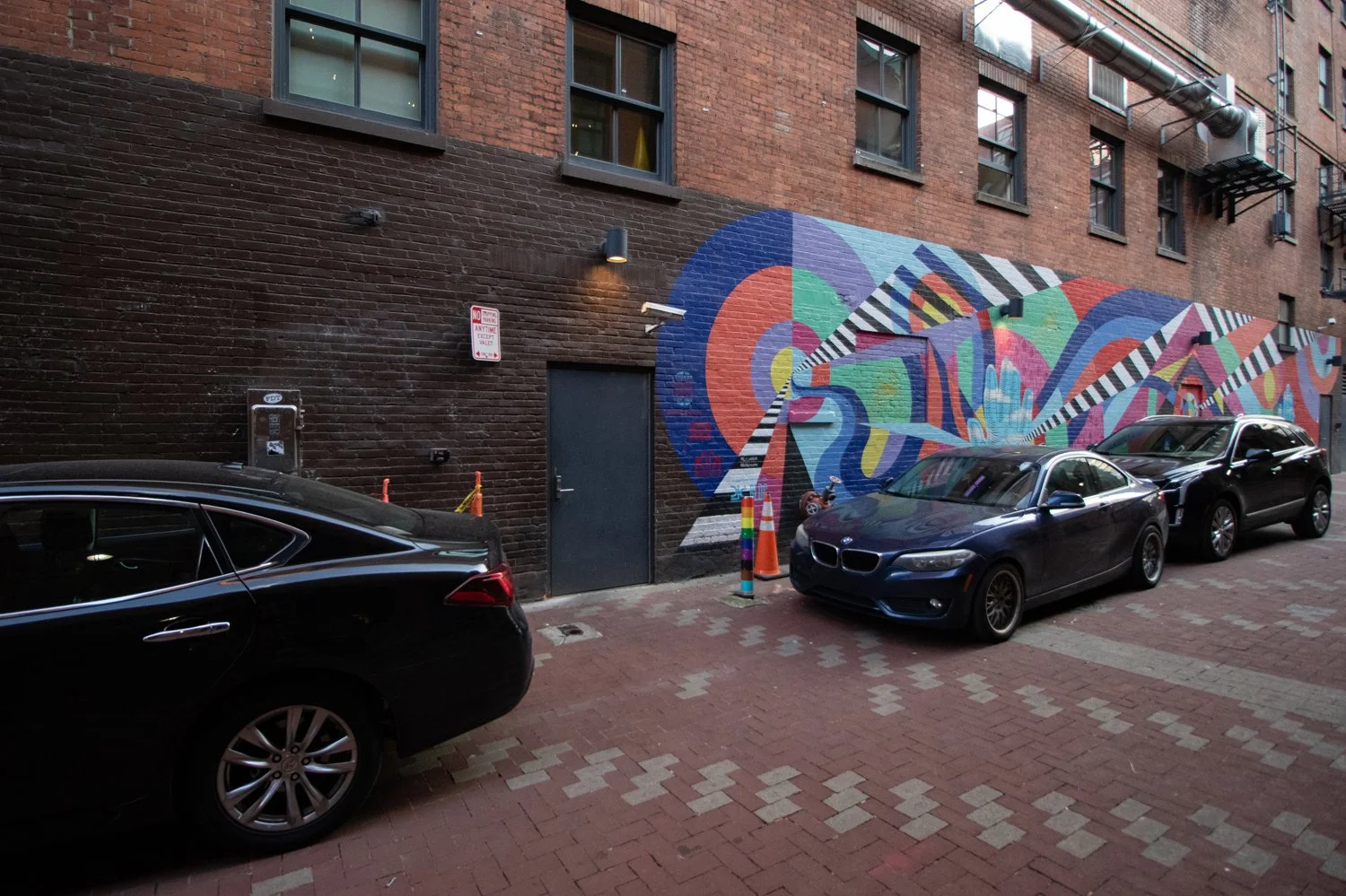
The entrance to the 21c’s rooftop bar is located within the Backstage District in an area also used for valet parking.
Along with the appropriately named Backstage Event Center, these businesses stand directly across from the César Pelli-designed Aronoff Center for the Arts. This is also where the previously mentioned “hieroglyphic” sits.
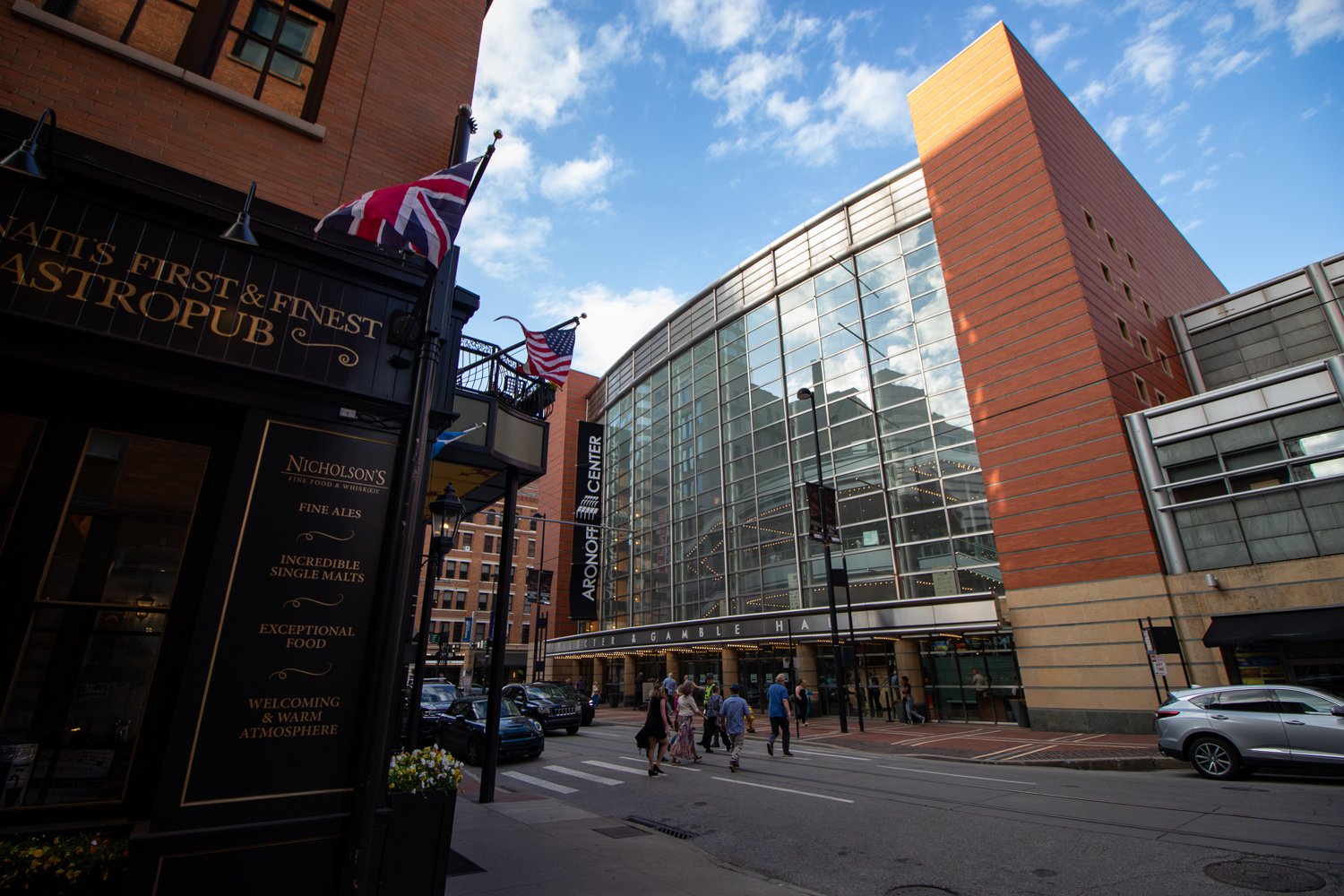
Looking northeast on Walnut St. towards the Aronoff Center and Nicholson’s.
Meanwhile, the other three entrances vary in appearance. The Vine St. side is so innocuous that I didn’t even bother to photograph it, whereas the 7th St. side is regularly caked with roadway grime and bordered by a perpetually empty bar space that’s featured a revolving door of failed concepts over the years.
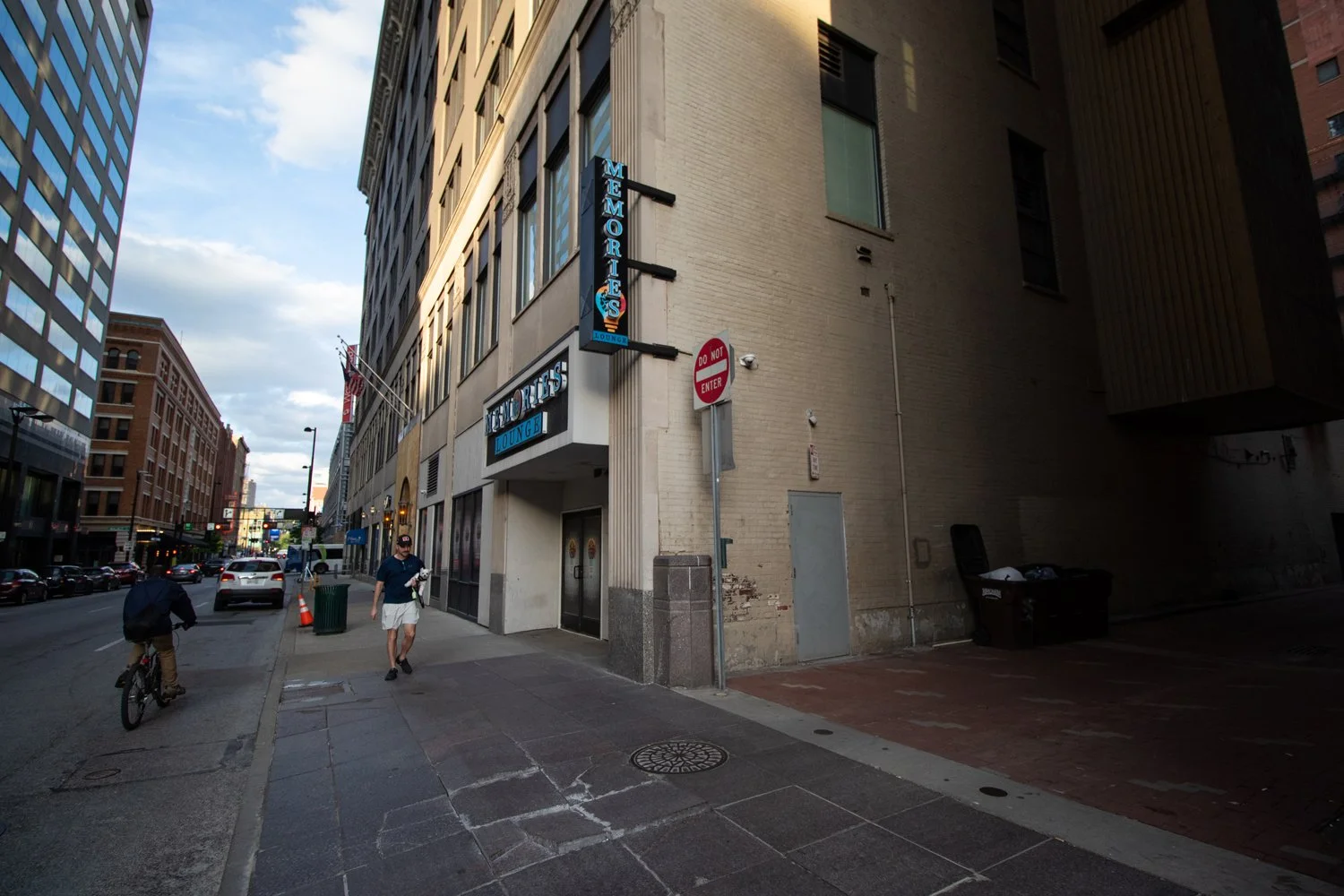
The 7th St. entrance to the Backstage District.
The 6th St. entrance, aligned with access to Fountain Square, has the most elaborate ornamentation and some of the only remaining signage acknowledging the district’s quasi-official existence. Though this gateway also features a recently failed bar space, the address was previously home to a longstanding (and delicious) Indian restaurant.
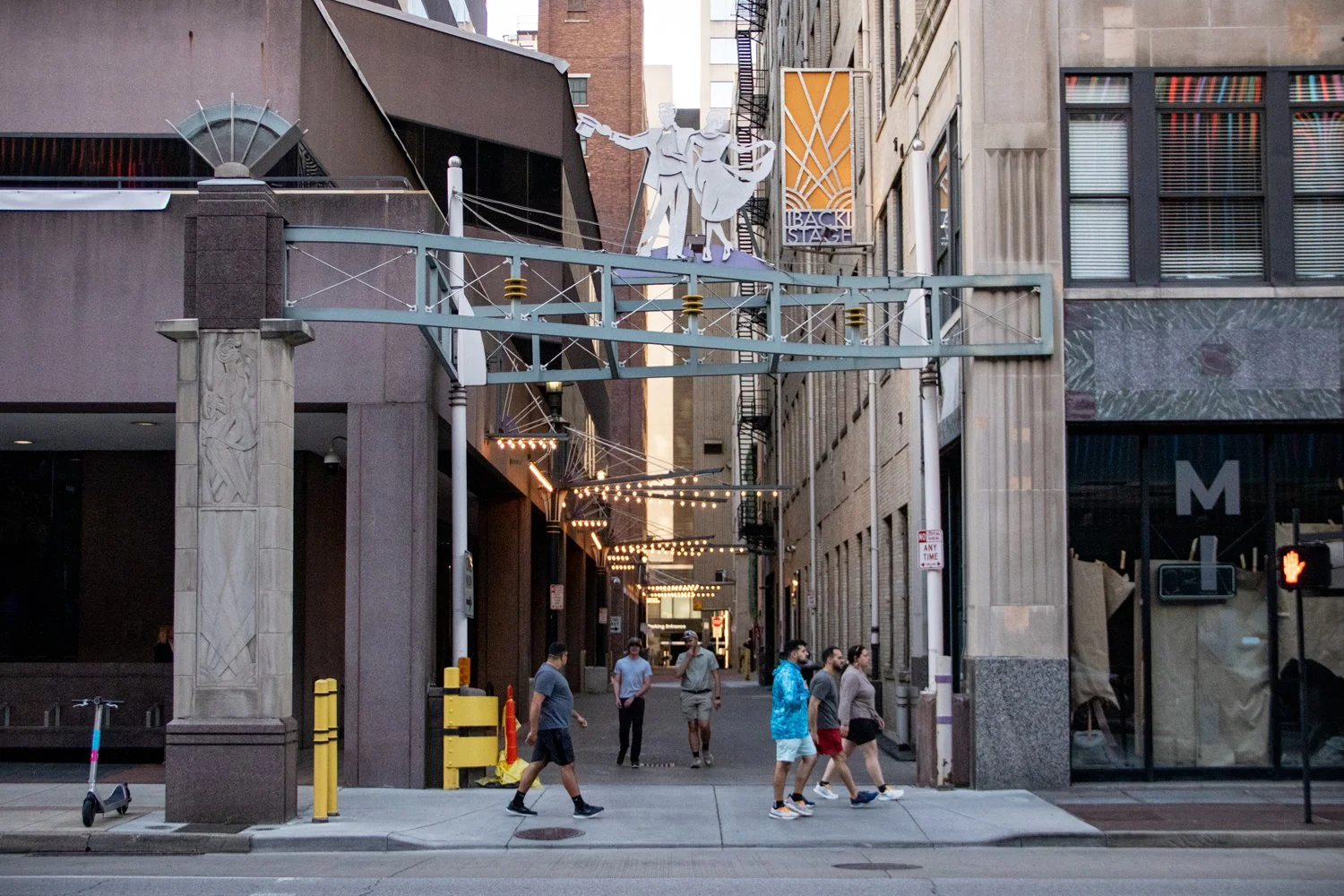
The Backstage District’s 6th St. entrance.

Backstage signage.
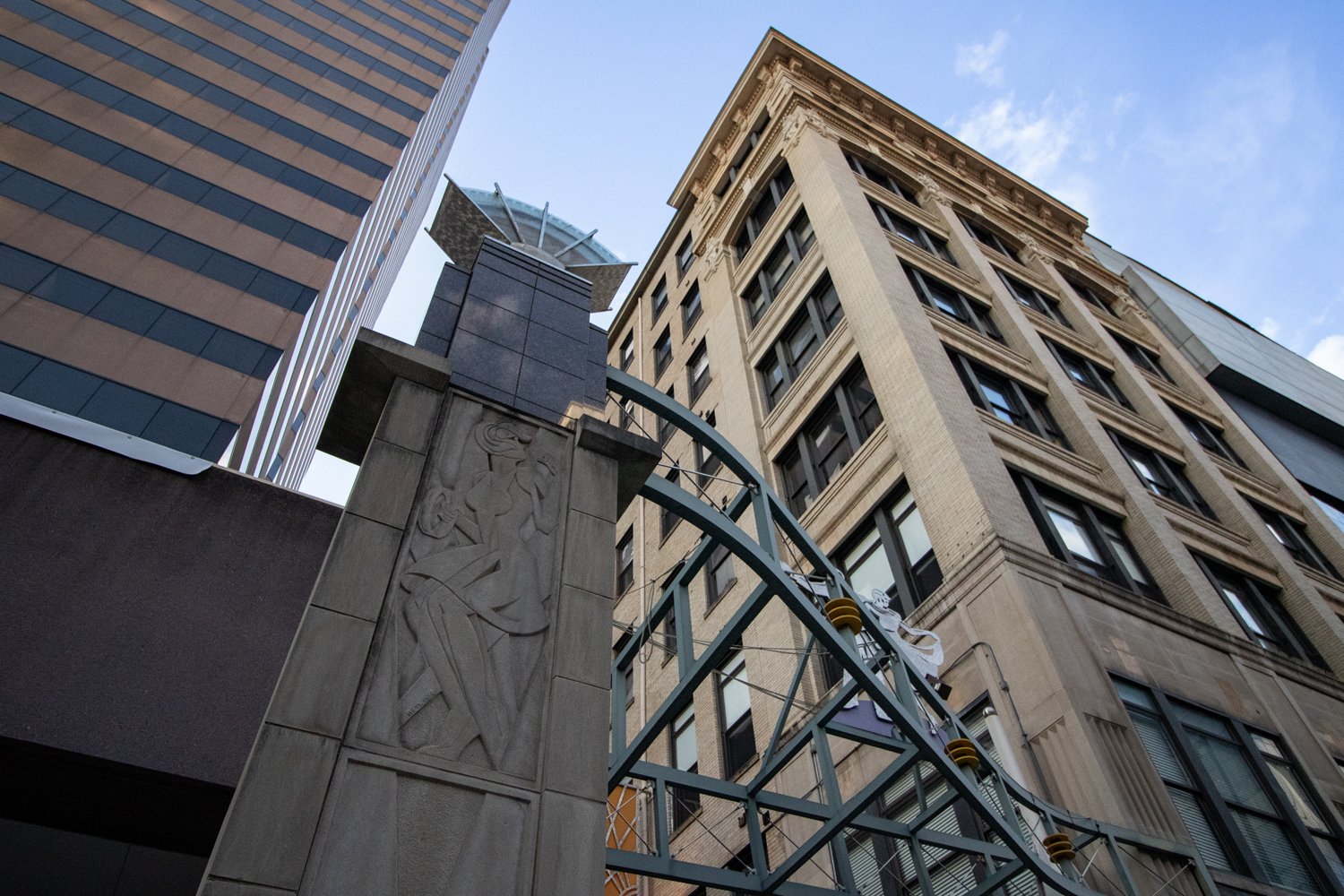
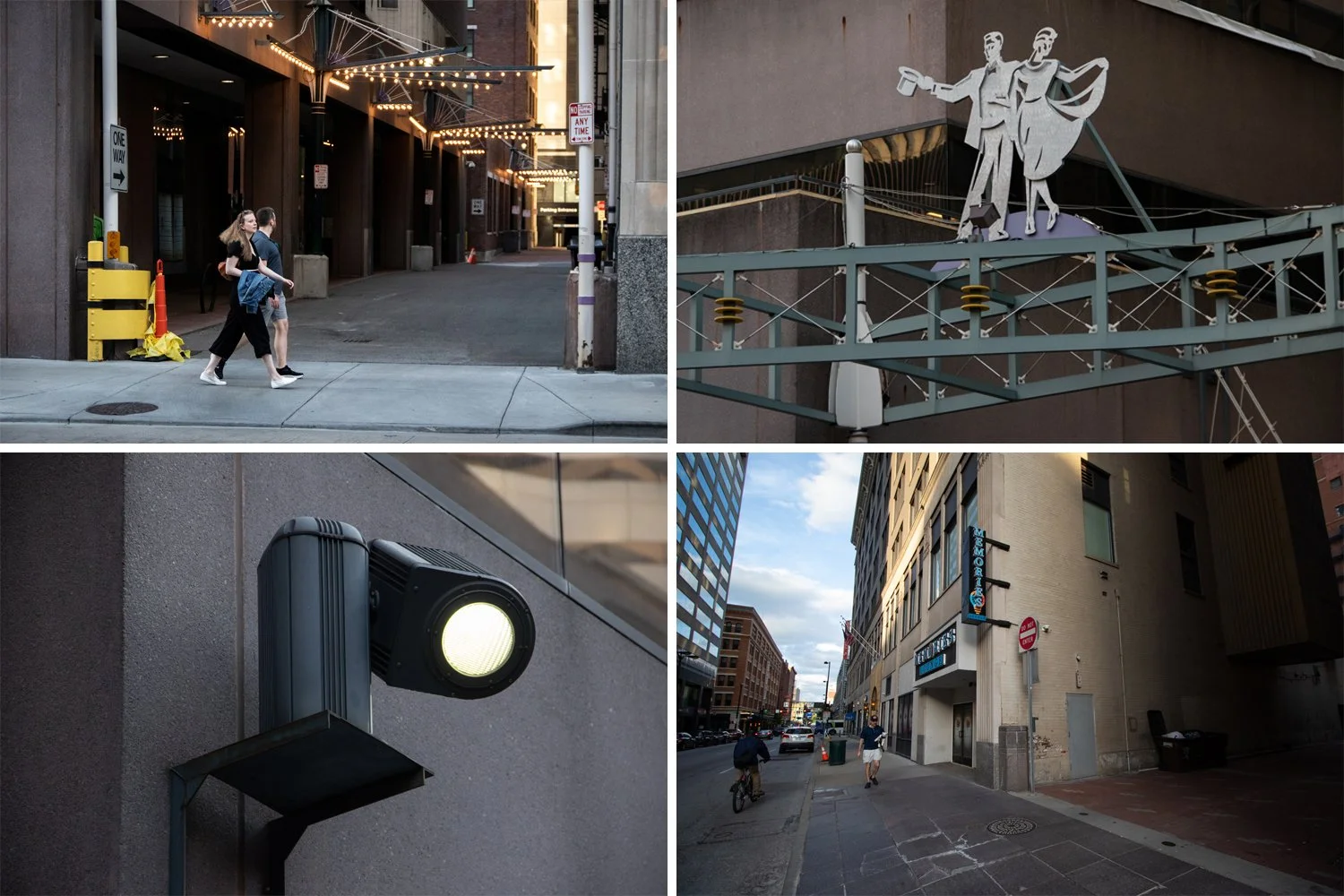
Relief sculptures in the 6th St. entrance showcase the amount of detail put into the district’s decor.
Though the district’s streets feature elements intended to encourage pedestrian traffic, they’re also fully accessible to motor vehicles. Atop the brickwork and below the elaborate lights, visitors will encounter dumpsters and grease traps while dodging cars of both the confused and valet variety.
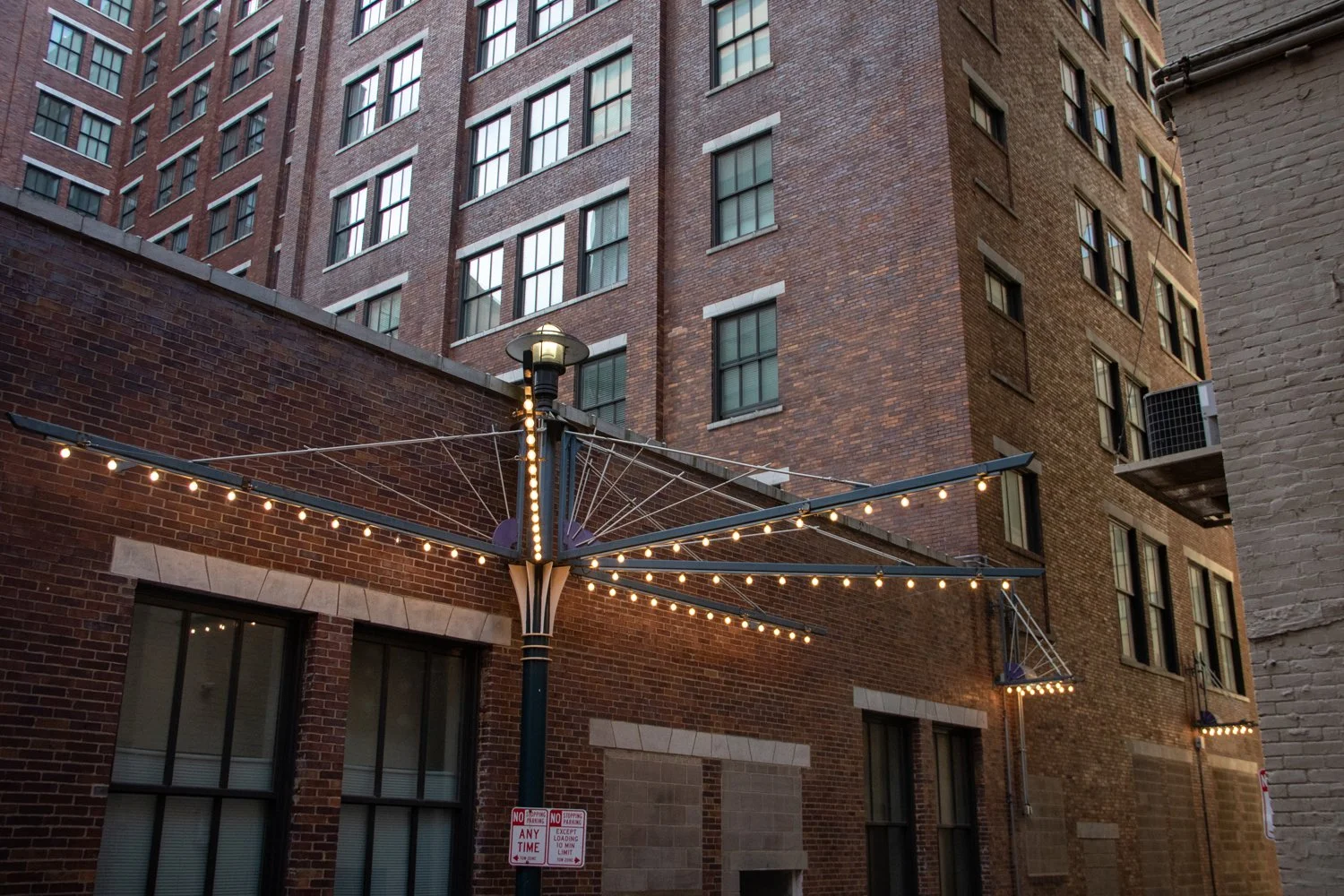
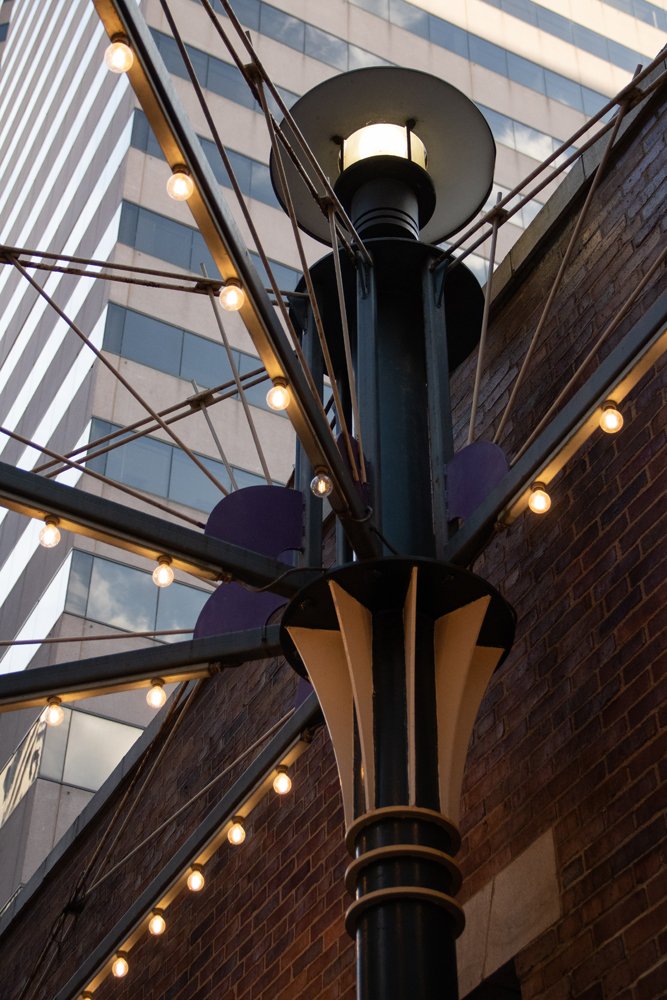
Decorative lighting along the north end of Ruth Lyons Ln.
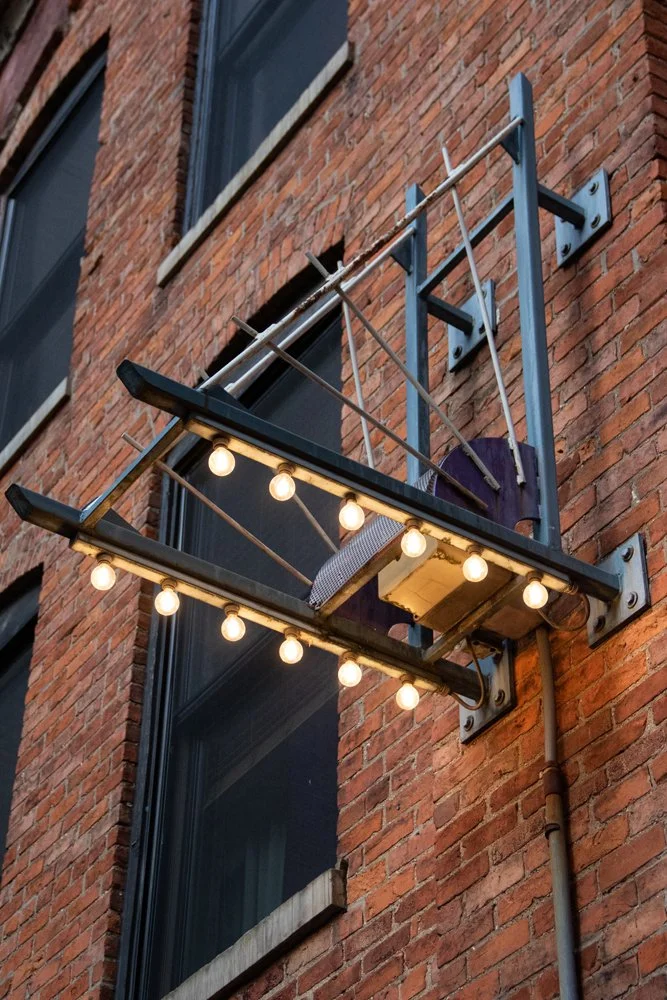
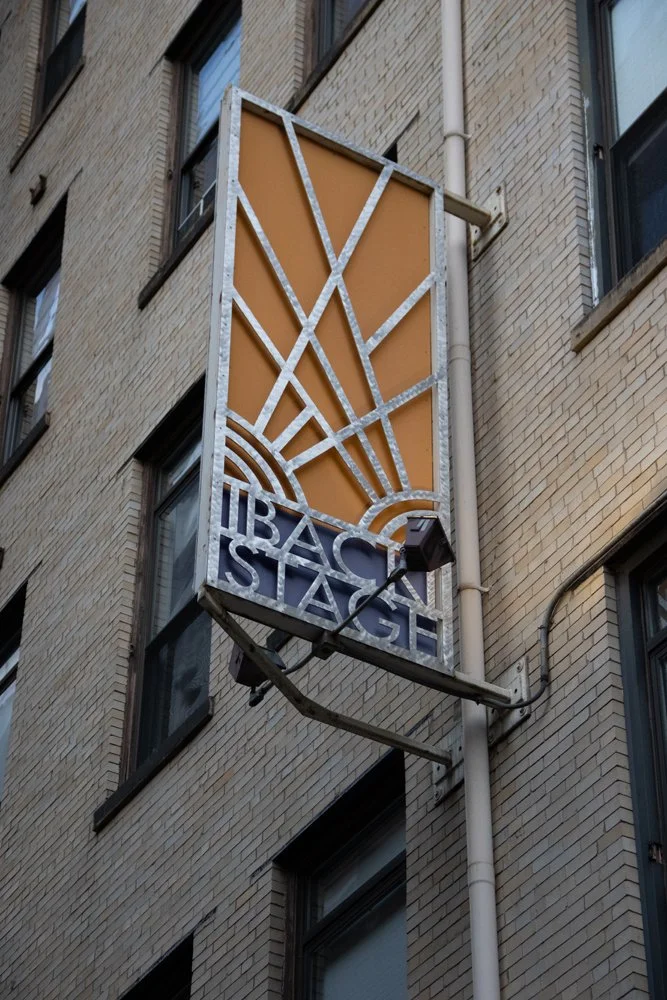
If you look closely at the previously mentioned “hieroglyphic,” you’ll notice that it shares several design similarities with this sole, remaining sign.
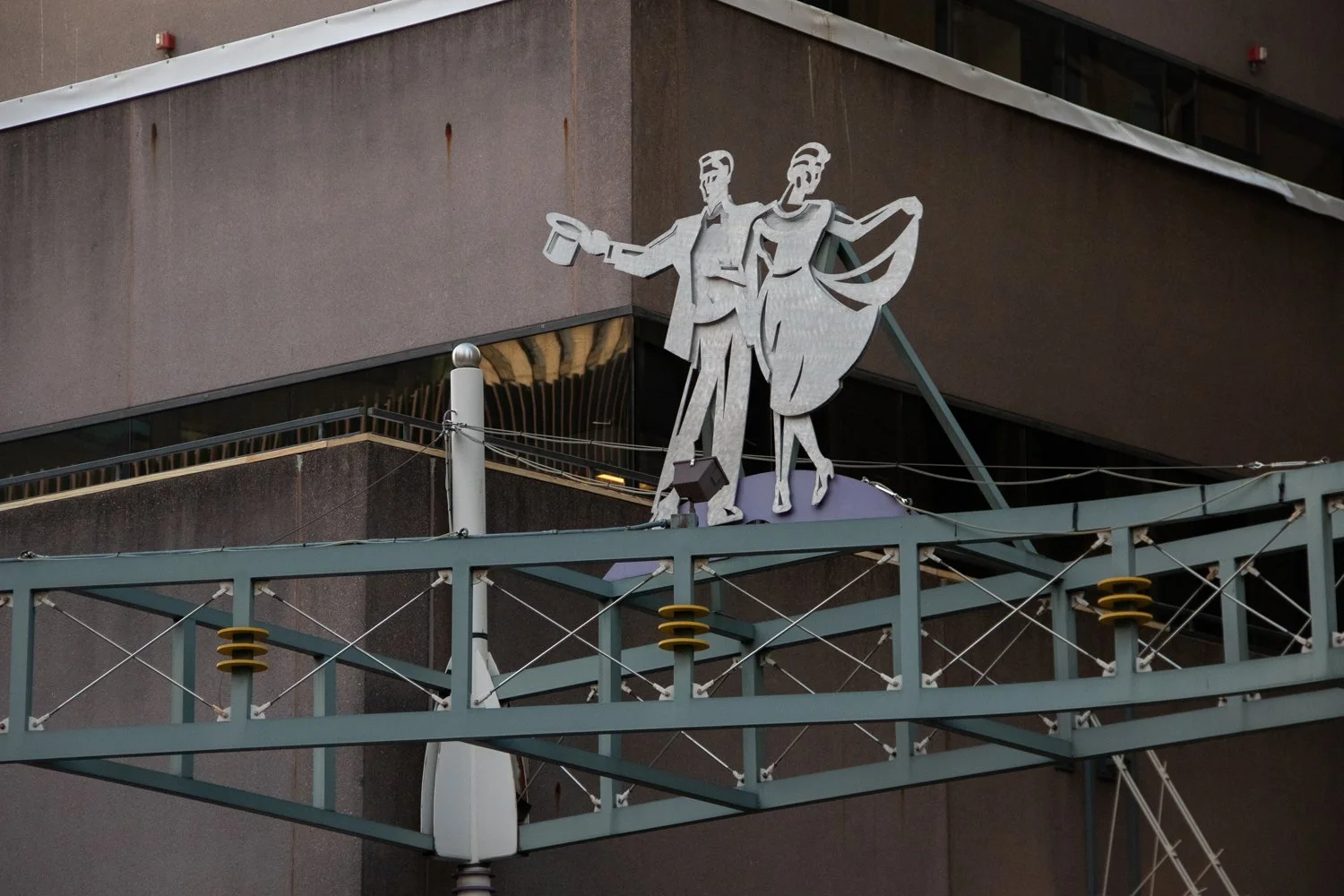
Decorations on 6th St.

Looking through the district’s 6th St. entrance down Ruth Lyons Ln.
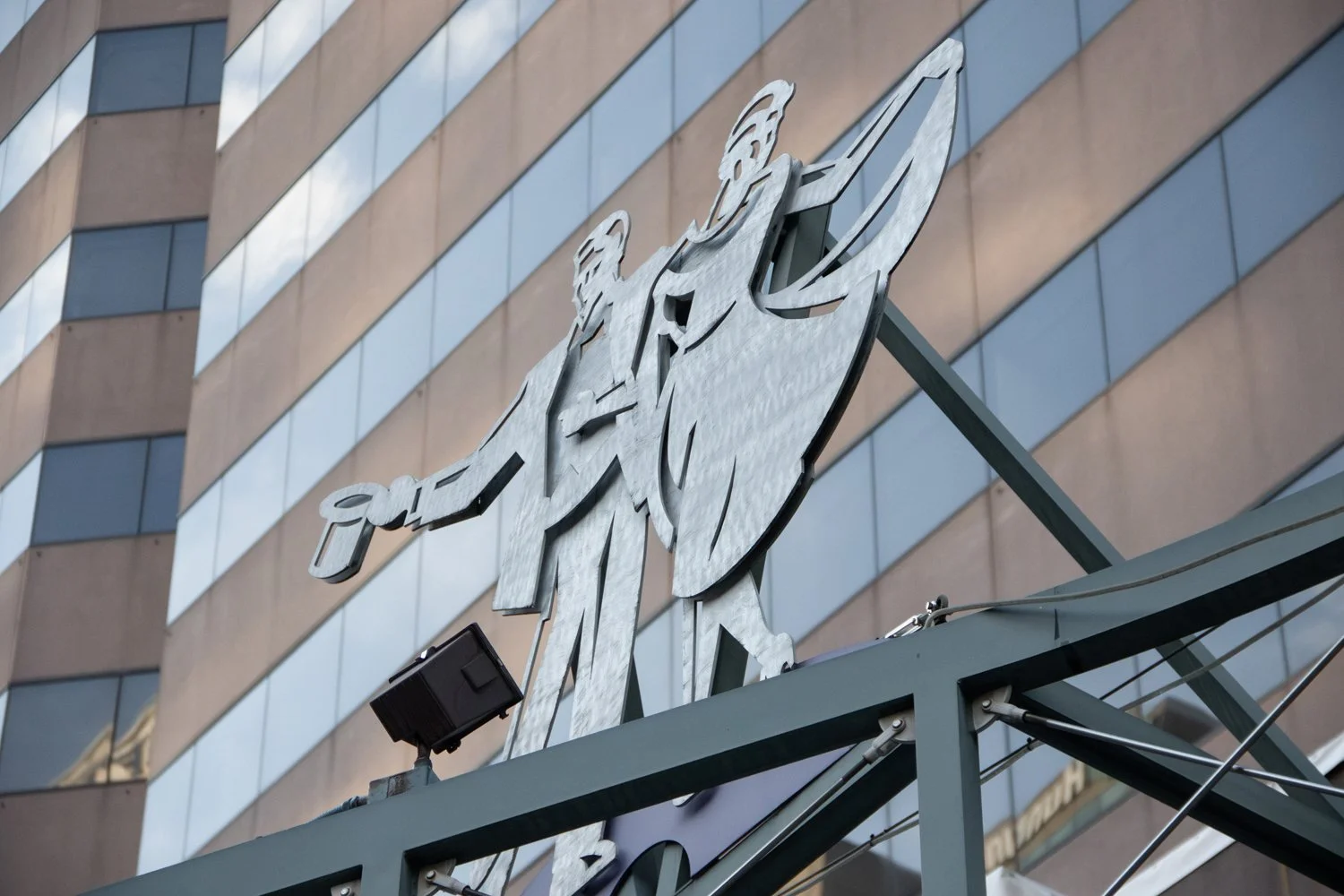
6th St. entrance details.
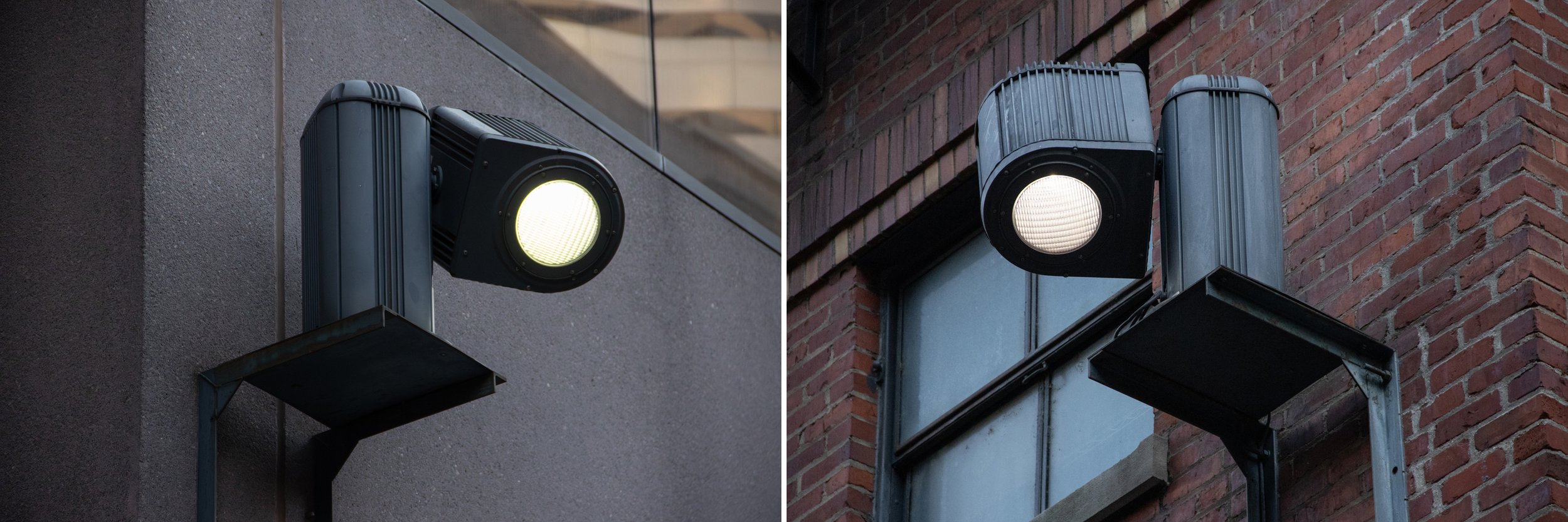
Lights that may or may not have been part of the original decorations. While they’re technically powered on, they don’t really provide any illumination.
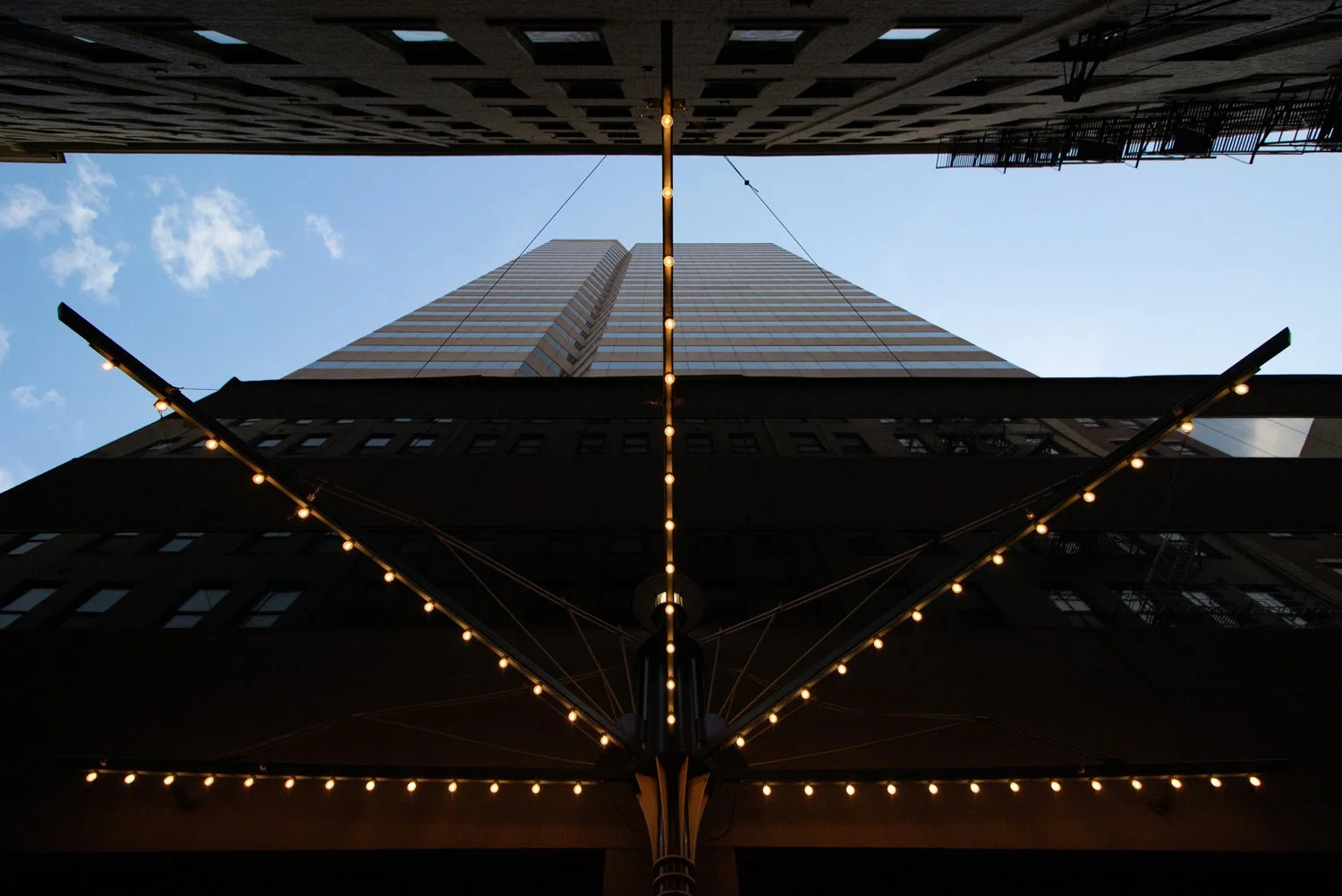
Ornamental lights as seen while looking up towards the Center at 600 Vine tower.
All of the streets are illuminated by thematic fixtures, but only half are still lined with decorative brick pavers—some of which recognize, and directionally align with, local points of interest.
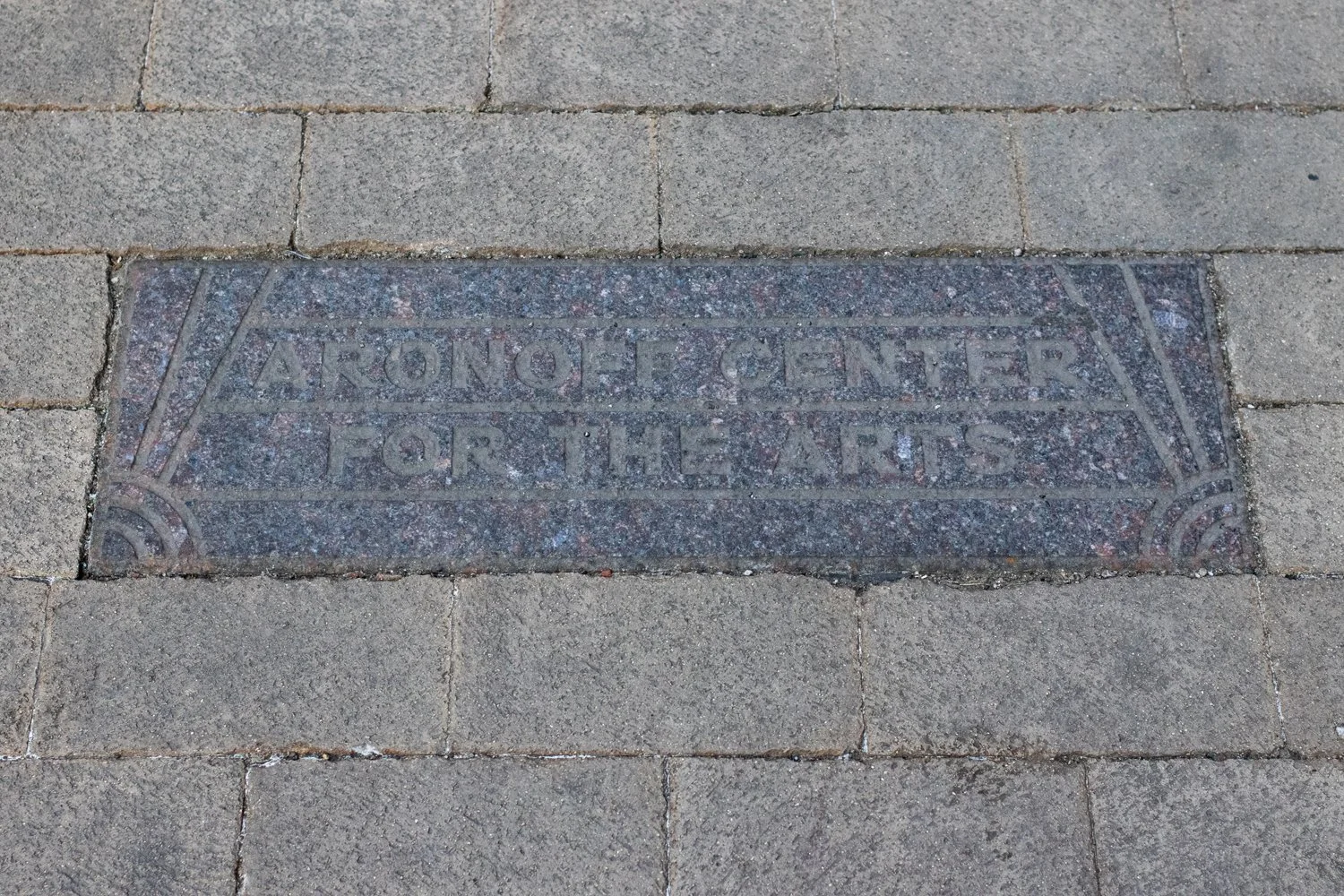
A decorative paver highlights the nearby Aronoff Center for the Arts..
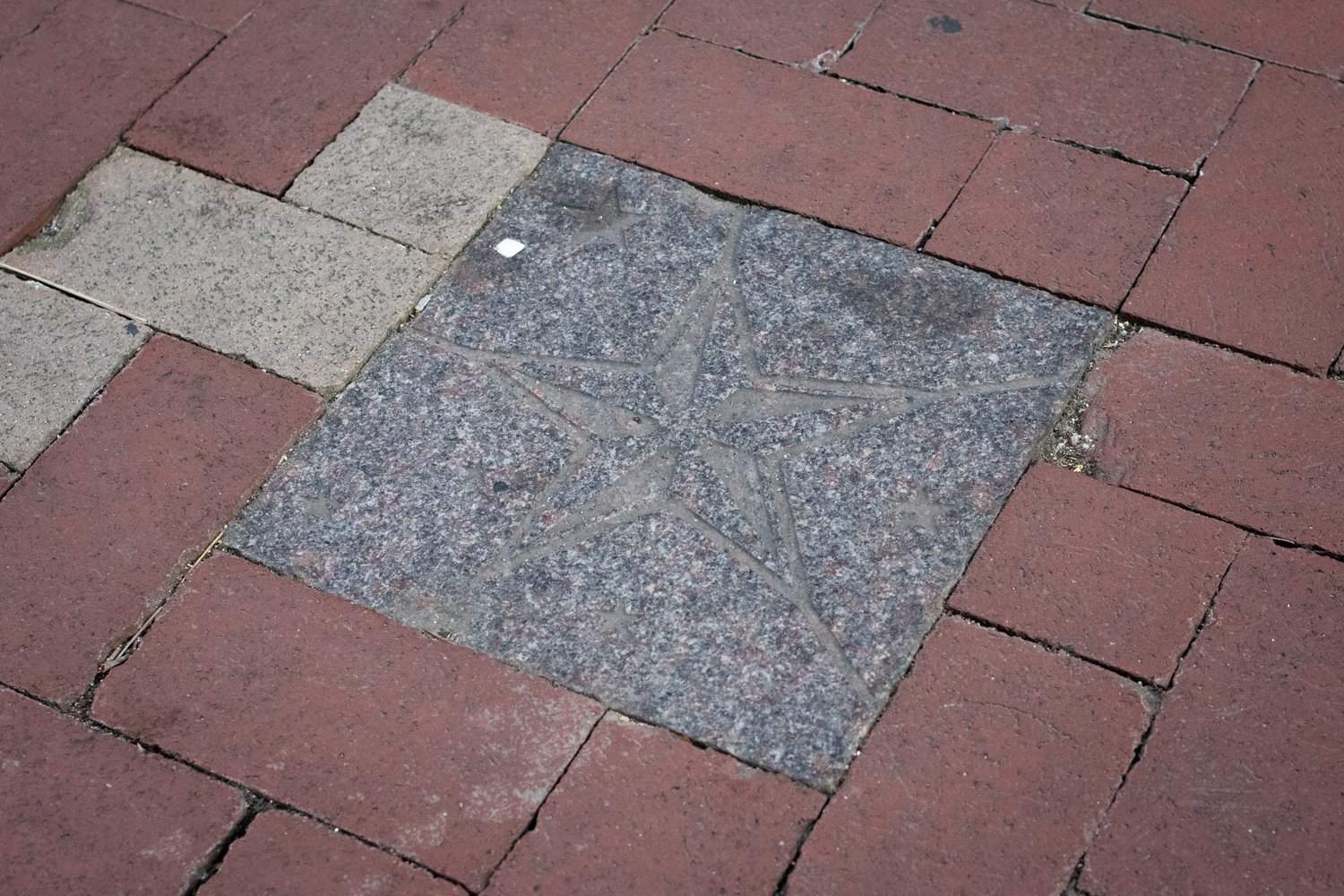
Decorative brick pavers within the district.
What I think makes these dead mall-esque backstreets so interesting is that despite having been gussied up at one point, they’re not heavily trafficked. In fact, they’re pretty much ignored since there’s really no need traverse them. All points of interest exist outside the glow of their decorative lamps and Cincinnati is—thankfully, not currently—the kind of city that needs to totally rely on theme park-style shortcuts to guide visitors.
At the same time, however, I’d never been sure if that was even the original intention behind this spot. Despite being someone deeply familiar with local bullshit lore, I’d never known “Backstage” to have been something promoted as an attraction.
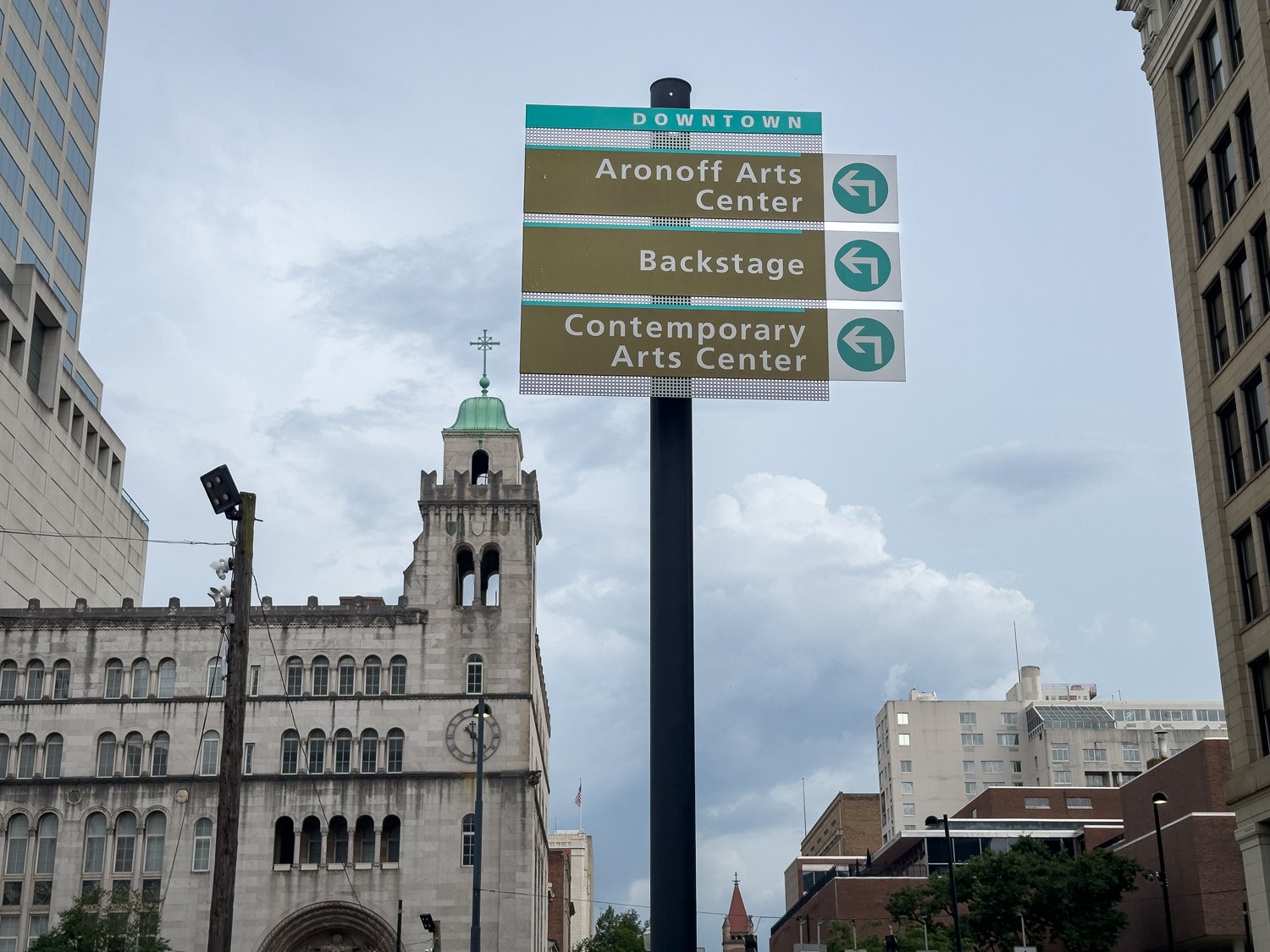
A directional sign along 7th St. still guides visitors towards “Backstage.”

Worn Backstage-style decoration within a Walnut St. sidewalk.
No matter how it was intended, what does exist at this moment is a spot for workers to grab a smoke break and argue loudly into the phone—a secluded place where tourists crash rented scooters and drunken sports fans improvise restrooms. A fitting locale for both senior portraits and stashing a construction dumpster.
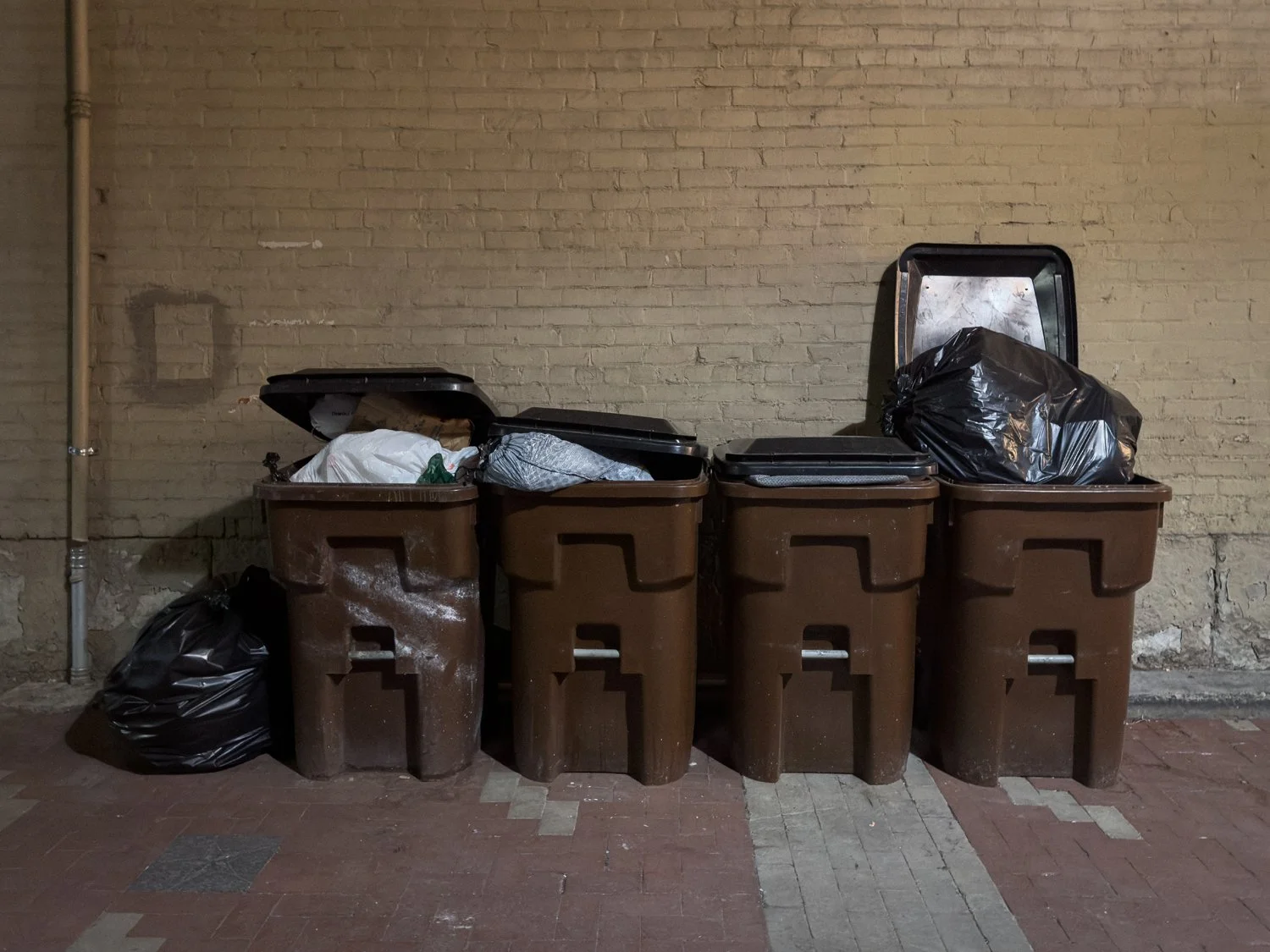

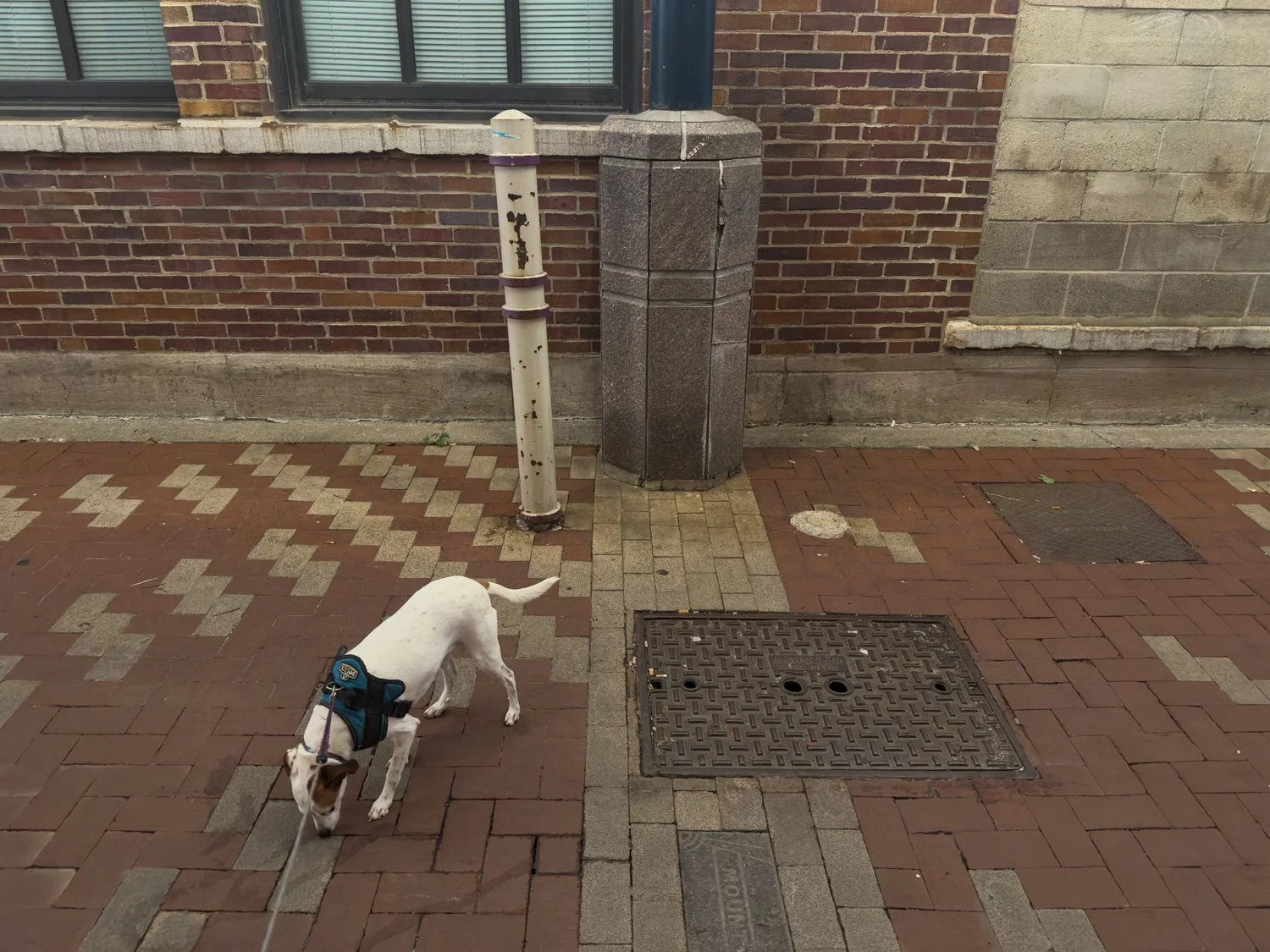
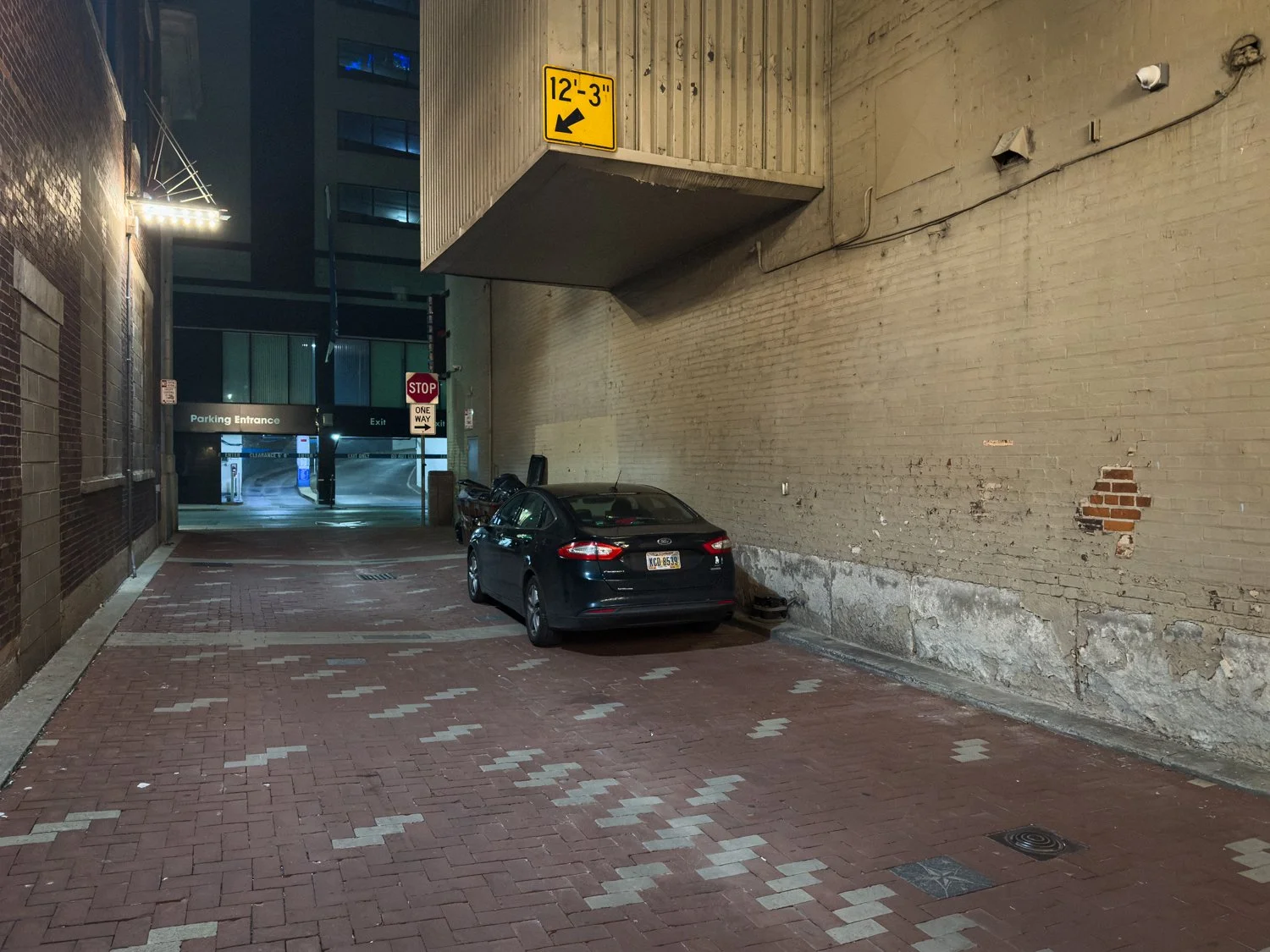
So, yeah… it’s an alleyway.
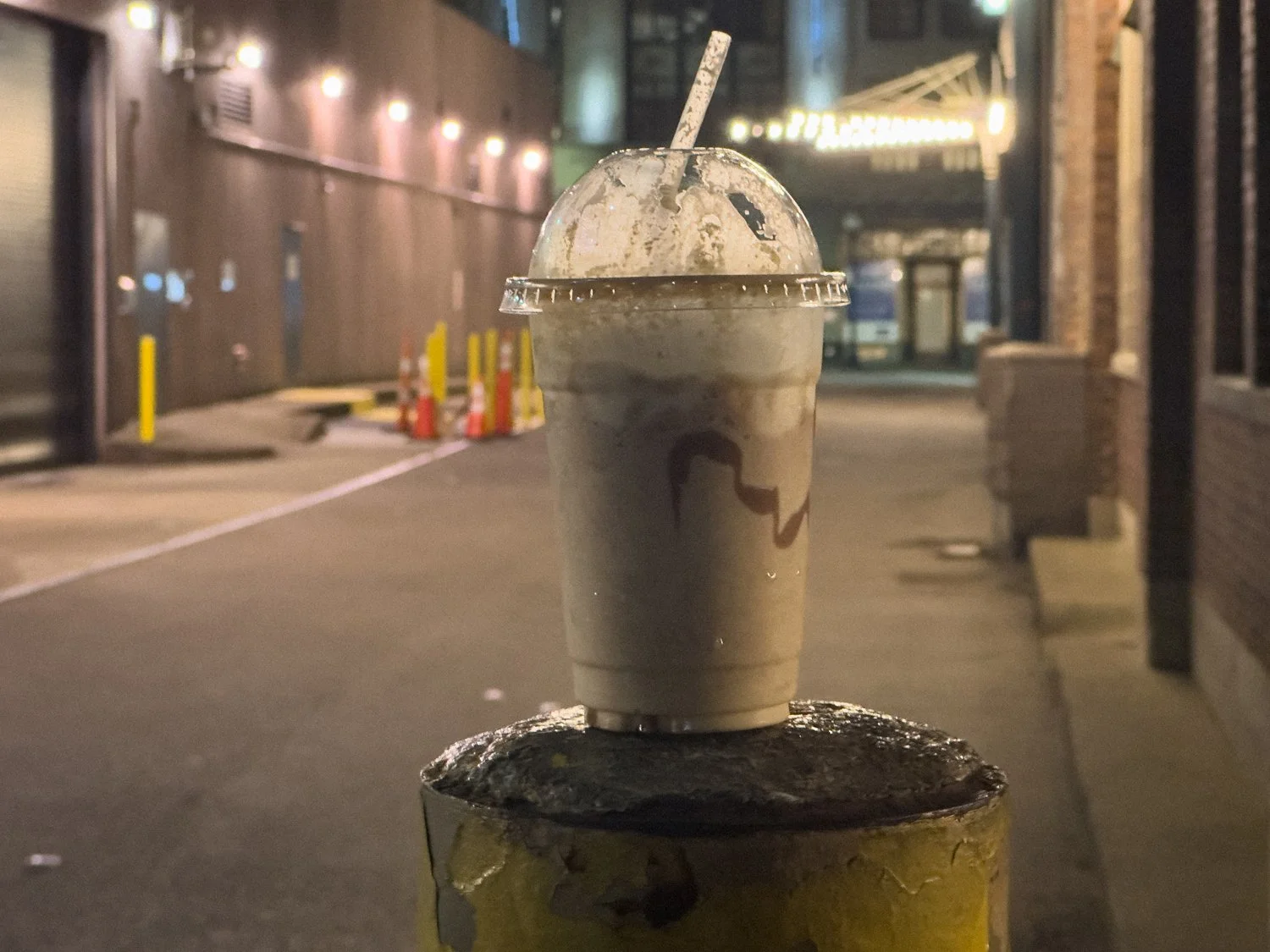
And a shortcut to one of the neighborhood’s few late-night eateries: the Chocolate Euphoria Crepe Cafe.
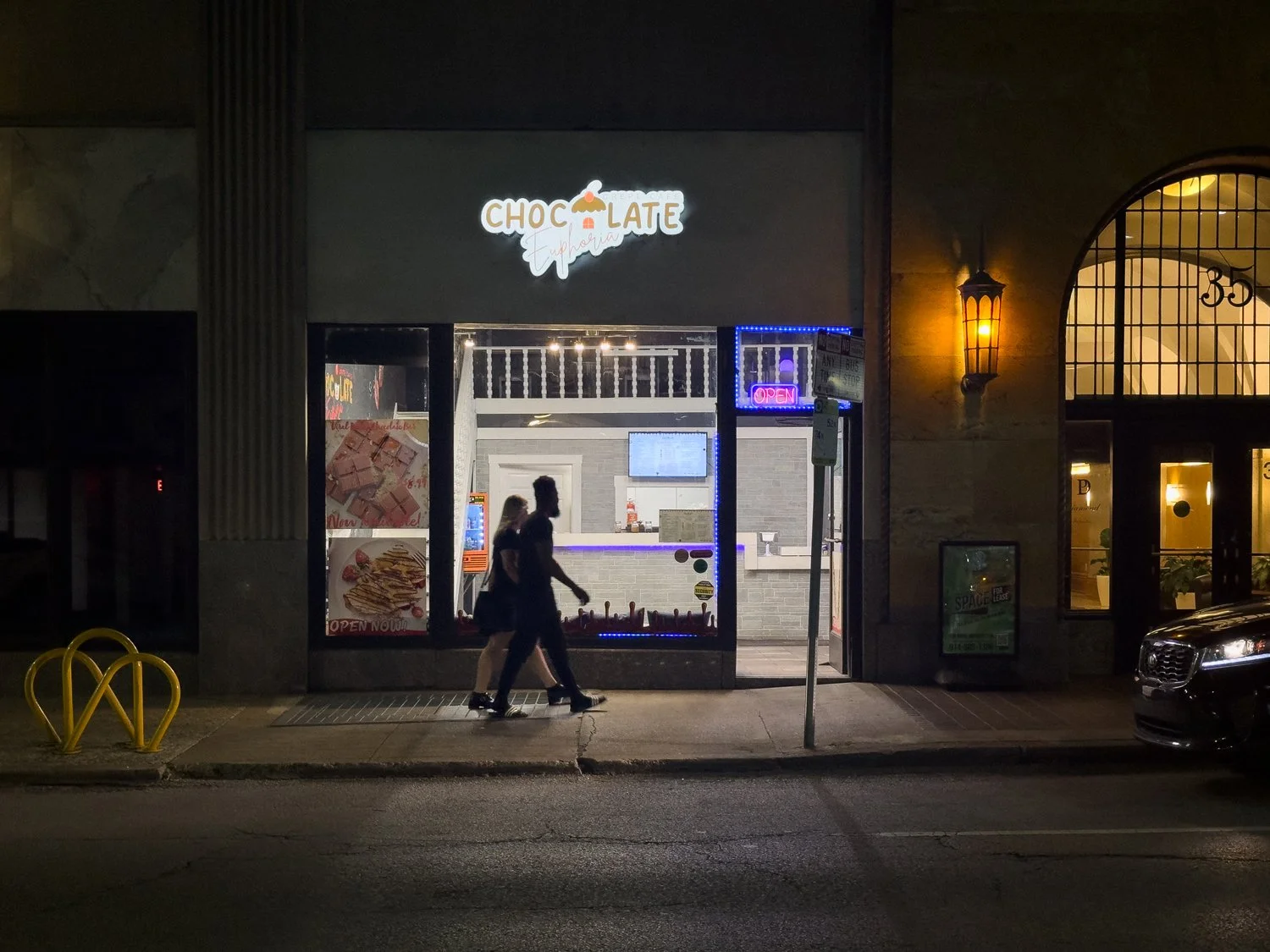
I highly recommend the Lotus Biscoff milkshake, but get it to go lest you want to find yourself drawn up to the cafe’s liminal loft with its weird vibes and ventilation that’s in no way suitable for maintaining the integrity of a frozen treat.
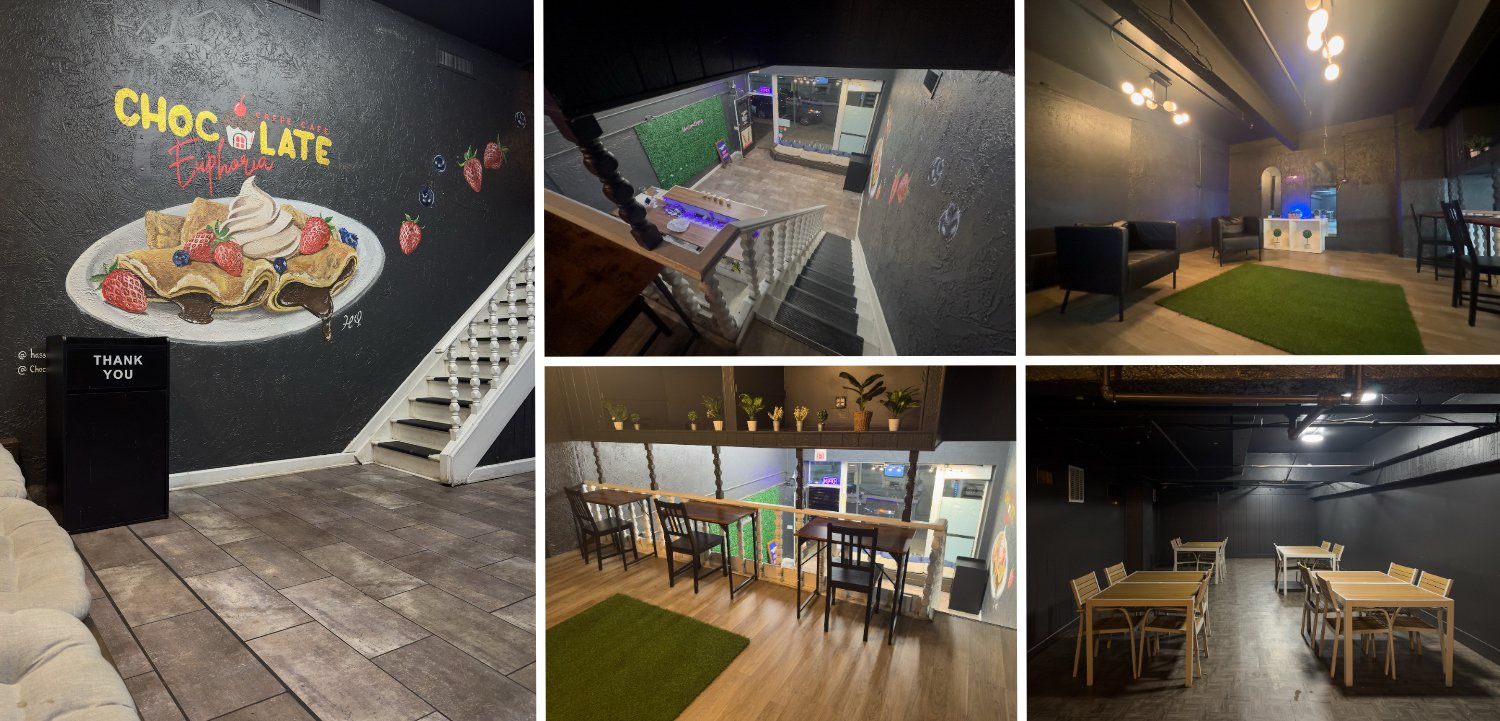
The Chocolate Euphoria Crepe Cafe.
The vast majority of these photographs were made on a pleasant, Spring evening in May 2025 as crowds descended upon downtown for Major League Baseball, Major League Soccer, a Broadway show at the Aronoff, and a concert at Fountain Square.
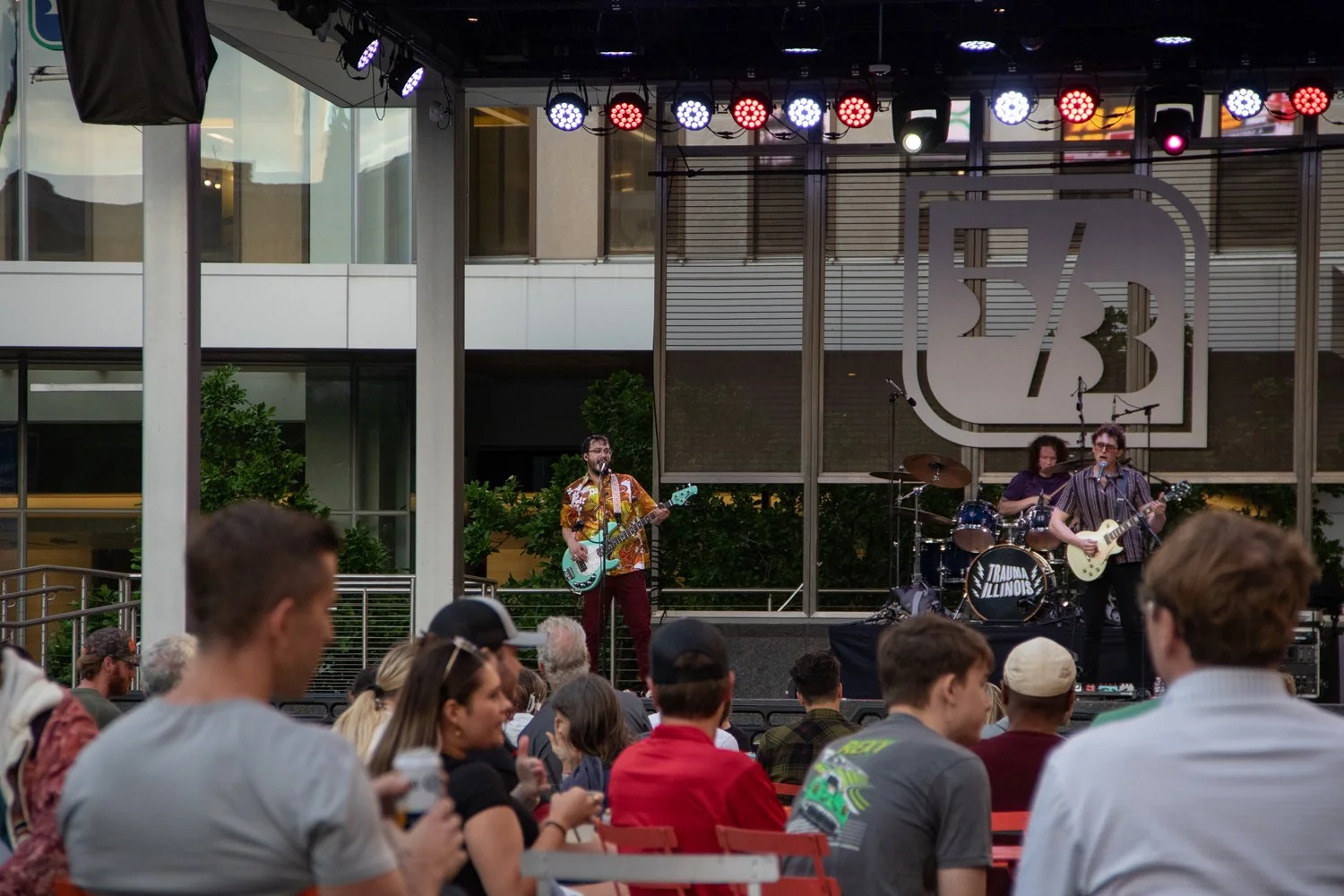
Fountain Square stage on May 17, 2025.
Few of those folks had any need to visit the Backstage District, however—especially after the sun went down. While I personally feel comfortable walking through the area as a 36-year-old male usually accompanied by a dog, there are the occasional evenings when I’ll opt for the scenic route. I don’t mean to imply that the area is nefarious or in any way particularly dangerous, but as I belabored earlier: it’s an alleyway within a major city.
And yet, I don’t wish to dismiss it as something so simple.
Because, when I do my find myself among the trapping of its 1990s stylings—I can sense that original vision and picture the throngs of suburban visitors “Goin’ Backstage!”* beneath carnival-style bulbs to dine, drink, and dance upon quaint streets akin to News York and Orleans.
*No idea if that was ever a tagline for this place, but wouldn't be surprised if someone once got paid a decent amount of money to try and make it one.
I get it.
And if you made it this far, you probably do too.
So, what’s the deal here?
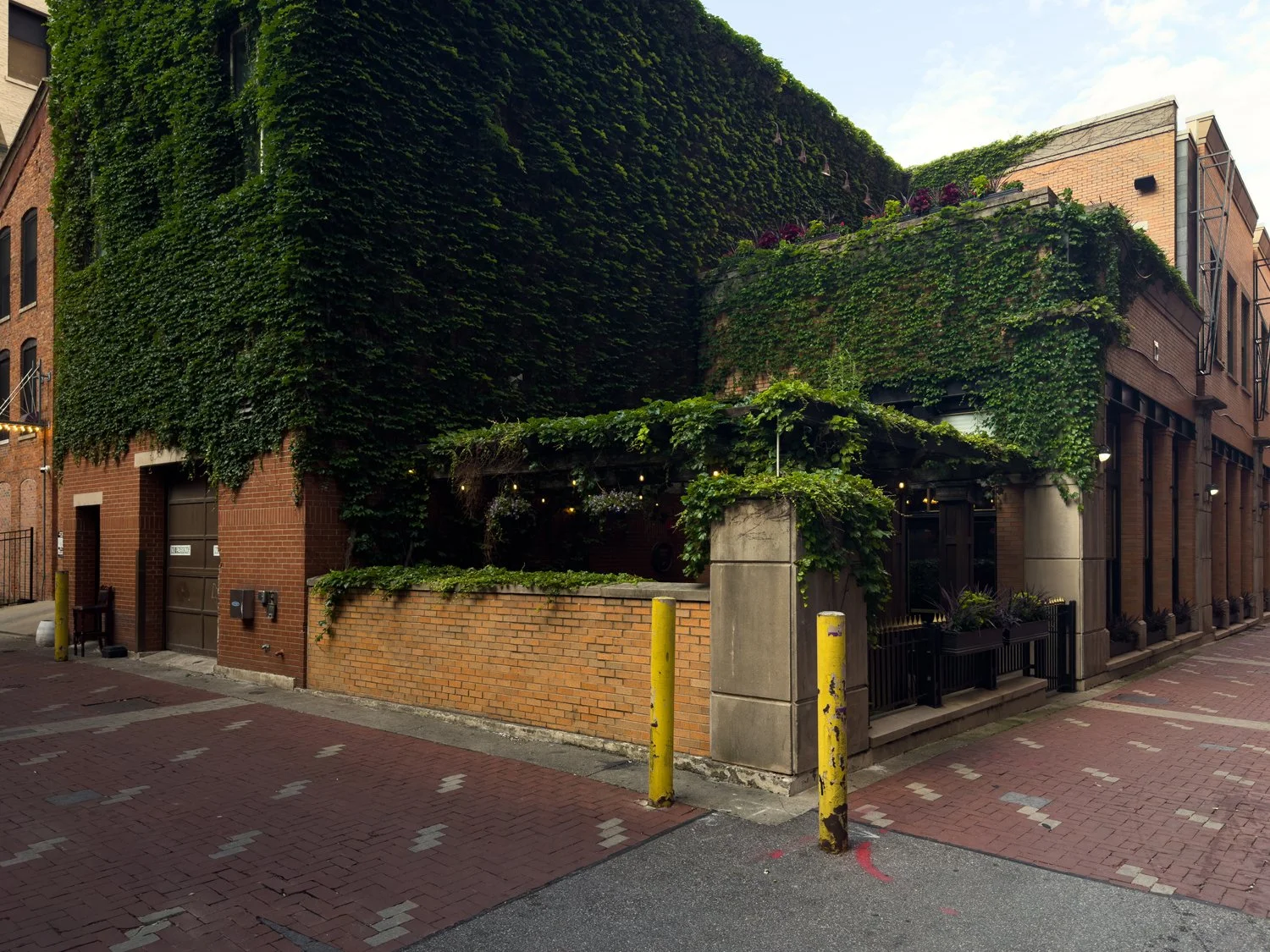
Ivy-wrapped, outdoor seating areas for both Nicholson’s and the Backstage Event Center within the district.
As far as I can tell: the notion of a “backstage” area first began cropping up in late 1994. Championed by Downtown Cincinnati Inc. (a group then “recently formed” to “manage downtown development”), the district was just one aspect of a larger vision to create what the Cincinnati Post’s Cliff Peale described as a “mall atmosphere” in downtown. While such an idea may sound odd in 2025 (a time when numerous malls aren’t just dead, but are actively being demolished), it made sense for the moment as the concept was still resonating with an economically participating public.
Backstage was intended to be one of multiple districts within a greater experience—an inner city center where each section would tout a specific focus such as retail, entertainment, or residential development. Within that same article, DCI’s Chief Operating Officer elaborated on the concept this way:
“The outcome is going to be much nicer than a mall, because it’s not something you can plop down on any suburban location in the world…but we are going to use some of the same principles that make shopping centers work.”
Ah! A tale as old as Trickle-down economics and Skywalks—those same old local names touting those same old suburban savior promises. Of course that was the plan. I’s always a goddamn mall. Numerous other existing urban concepts and a beltway full of half-full shopping centers be damned, this one was gonna be it!
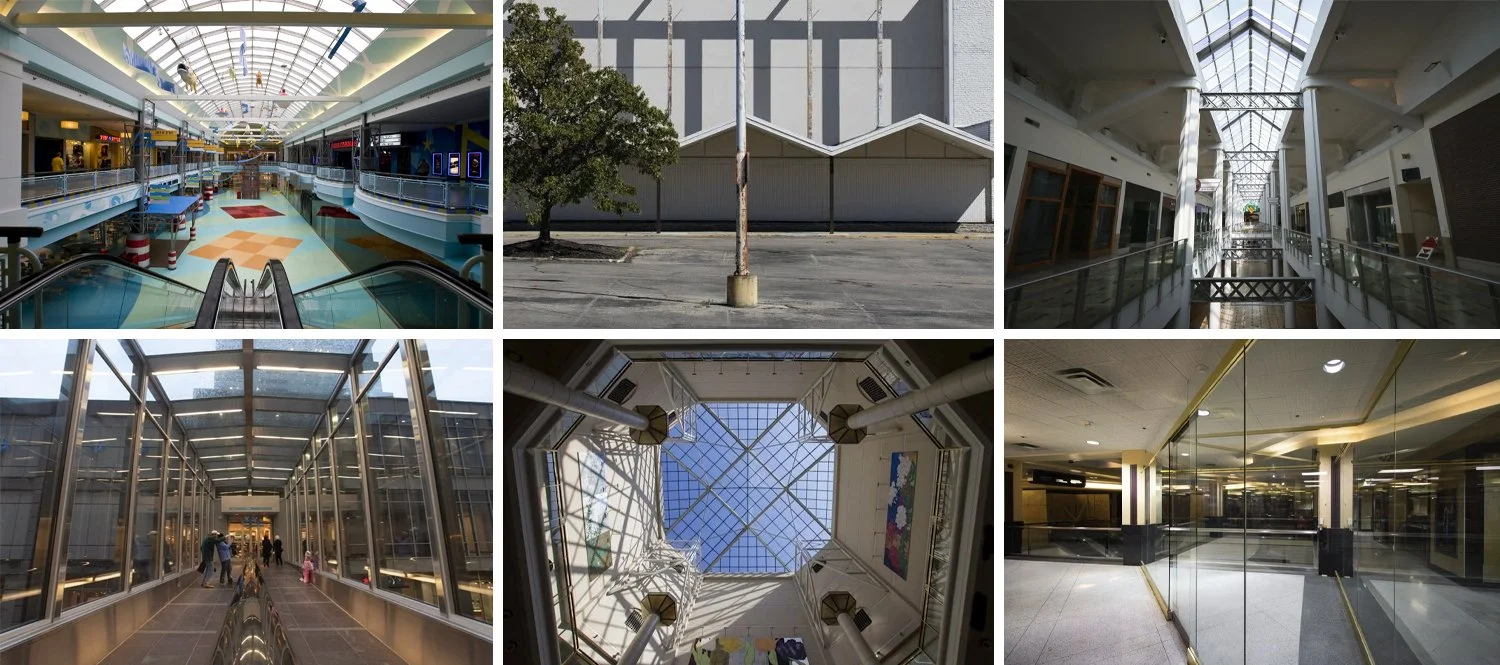
Compilation of various Cincinnati-area mall (and mall-adjacent) projects that met their demise over the years.
And look, it’s easy to laugh off such ideas in cynical hindsight. Especially when you hail from a mid-tier region of the country known for its half-baked projects, and you grew up working within the dying gasps of traditional retail all while repeatedly watching politicians of every level and stripe fall for the same schemes.
“Just who is under the mask of that struggling ‘lifestyle center, anyways?’”
“Zoinks!’ It’s the mall!”
However, I’ve come to find that the genesis of the Backstage District was (in my objectively unwarranted and pseudo-unqualified opinion): a measured and clever approach. Something that could stand on its own even if the larger vision of segmenting the neighborhood into something-that-would-normally-be-anchored-by-a-Sears didn’t come to be. Though the area presently exhibits a state of neglectful deterioration—I think that can interpreted not necessarily as a symbol of abandonment, but rather: success. Downtown Cincinnati’s rapid growth over the last three decades has led to so much existing outside of the district that there’s no need to market it as some sort of destination. A “good problem to have,” if you will.
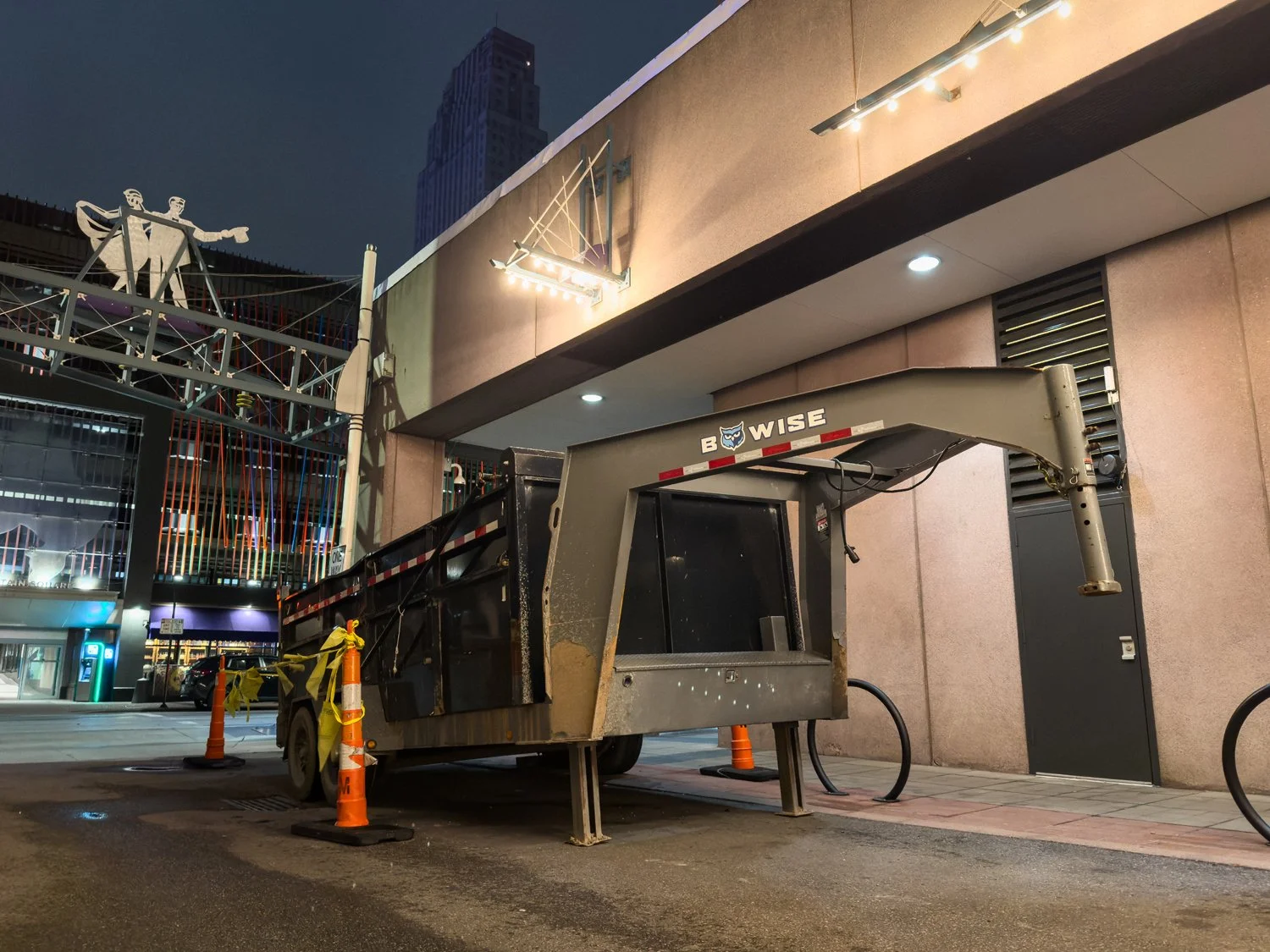
Construction equipment stored in the district.
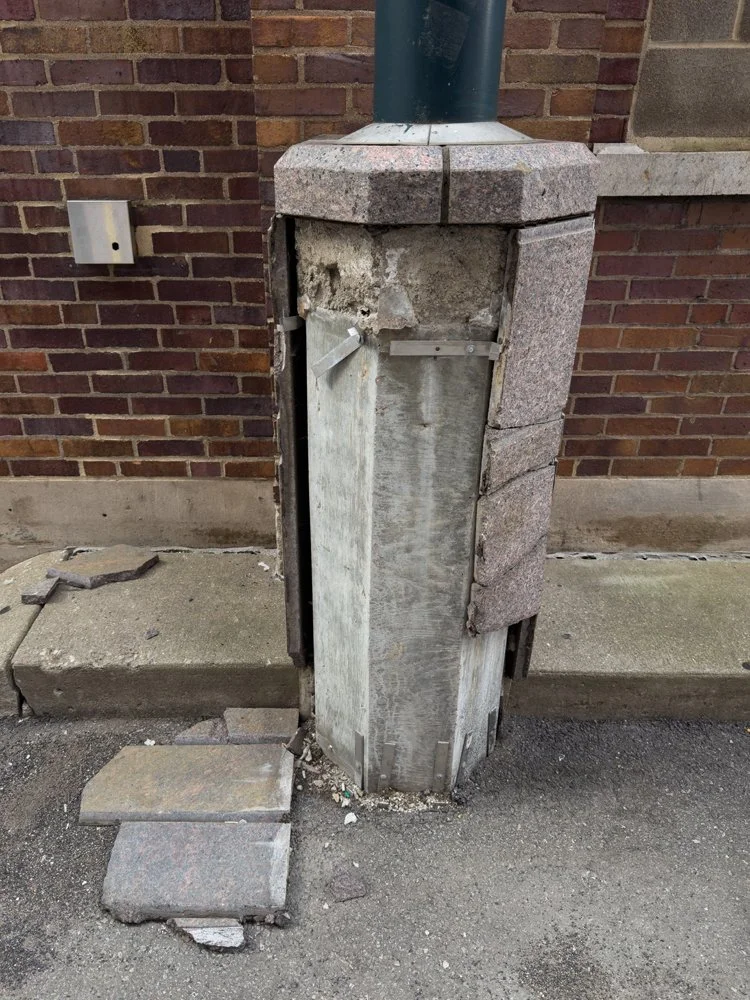
Crumbling lamppost along Gano St.
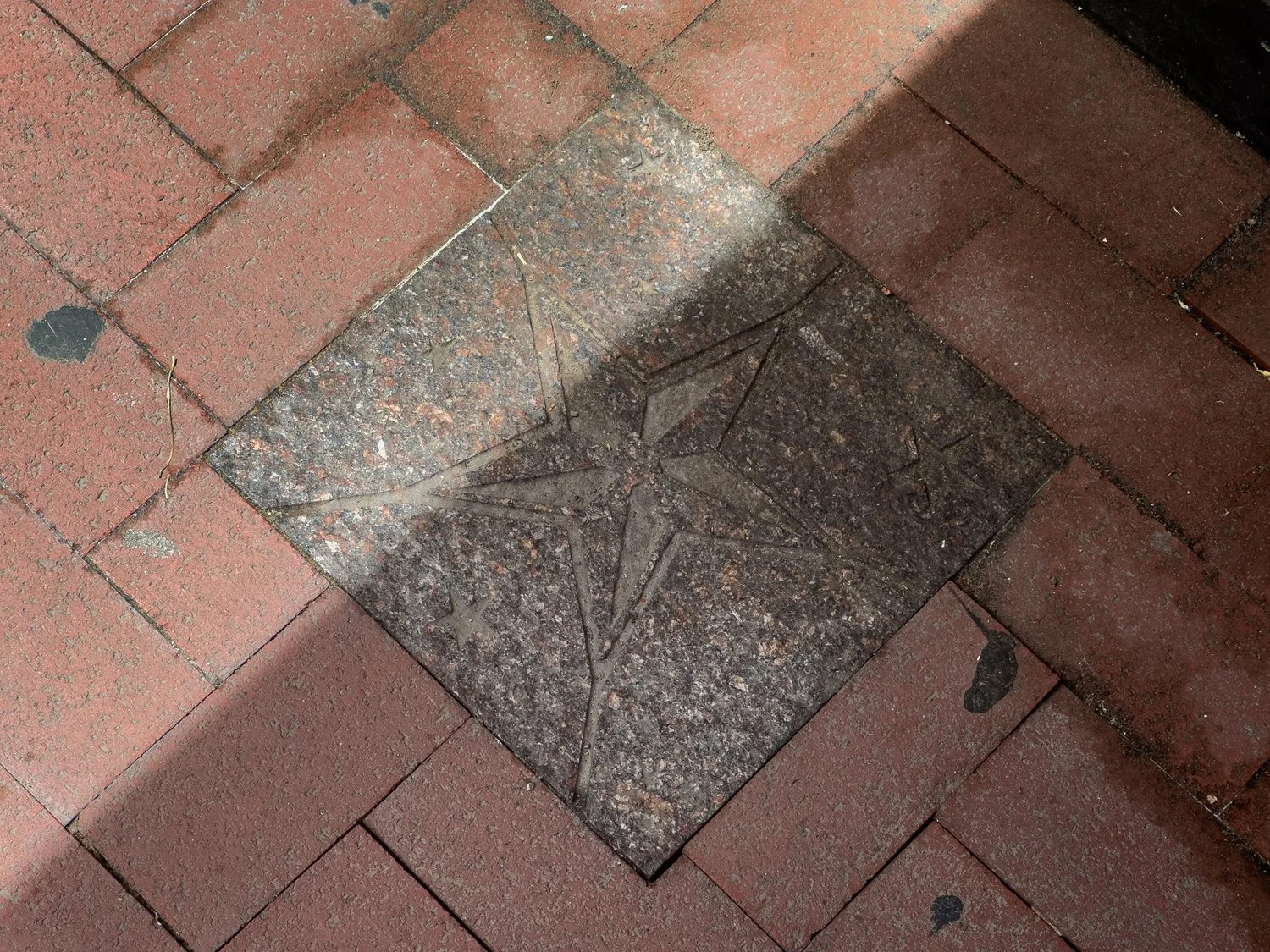
Decoration on nearby 7th St. intended to signify that passersby are close to the Backstage District.

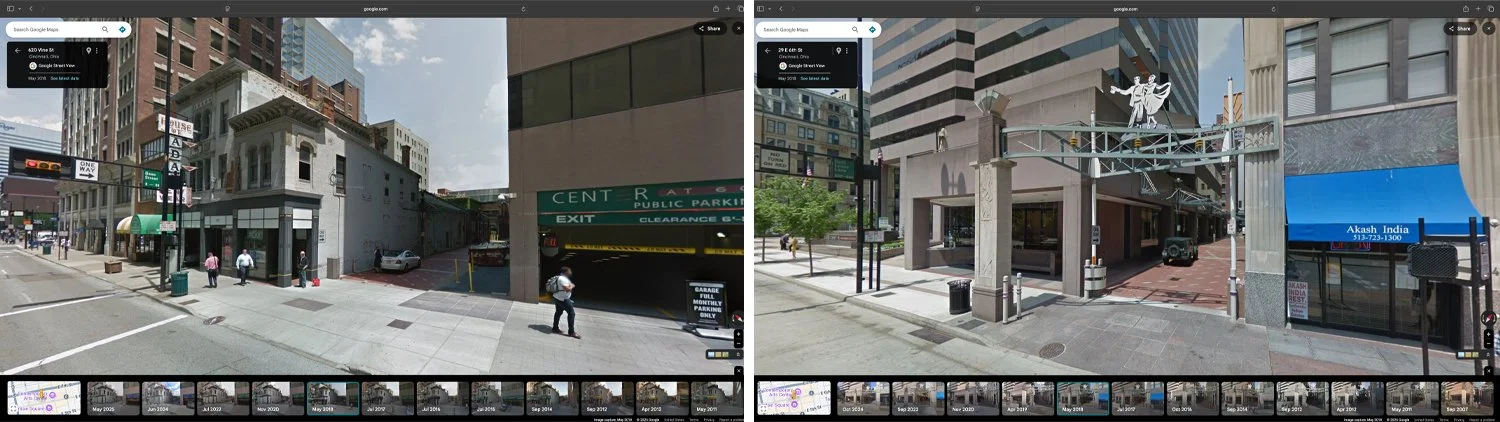
Google Street View of Gano St. in August 2015, showing both Nicholson’s and the 21C’s Metropole restaurant operating outdoor seating with bollards preventing vehicles from entering the area. As of 2025, this area is fully open to cars and primarily serves nearby valet stands. While Metropole no longer offers outdoor tables, Nicholson’s still does in two other seating areas.
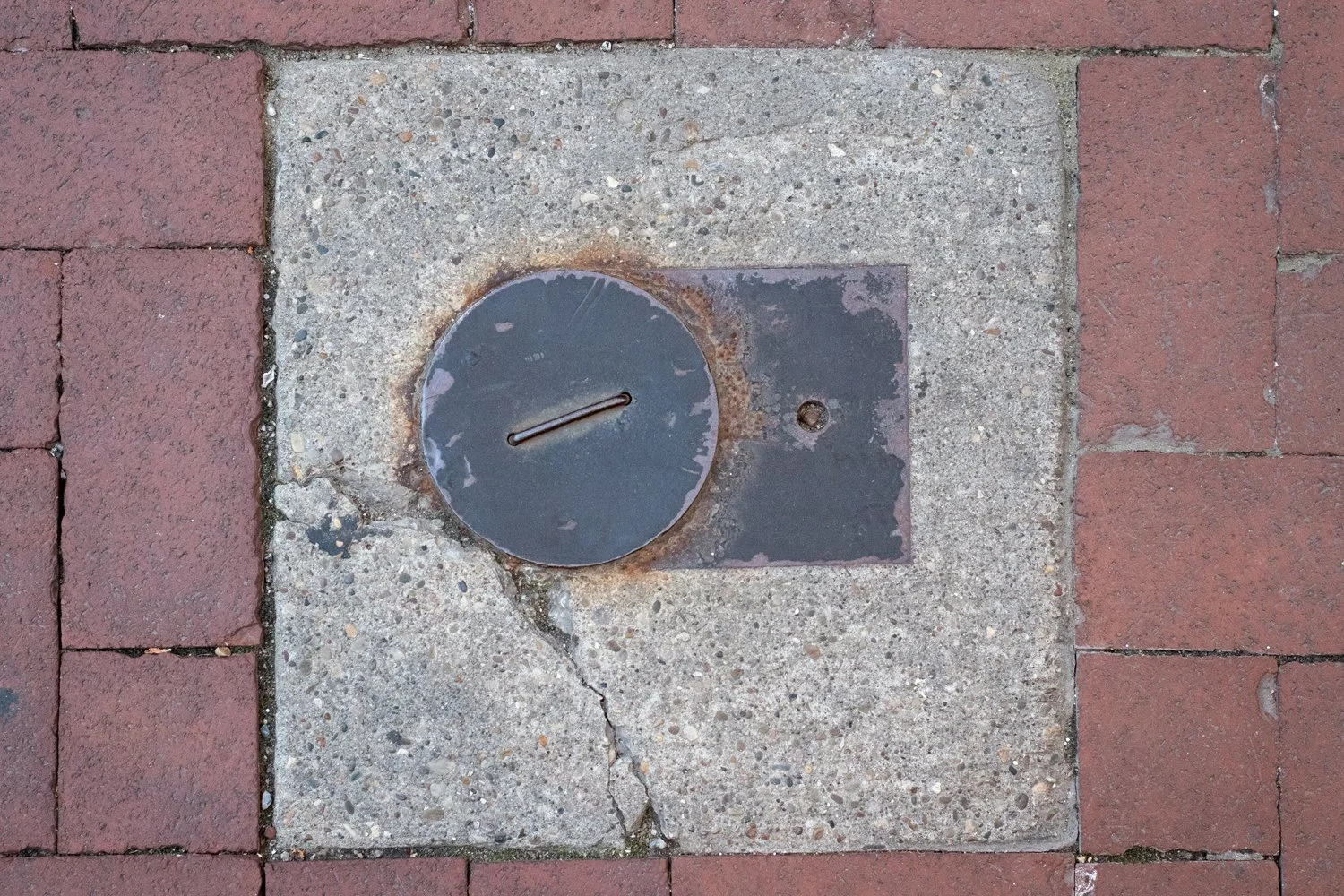
Cap for infrastructure that can be utilized for the installation of bollards.
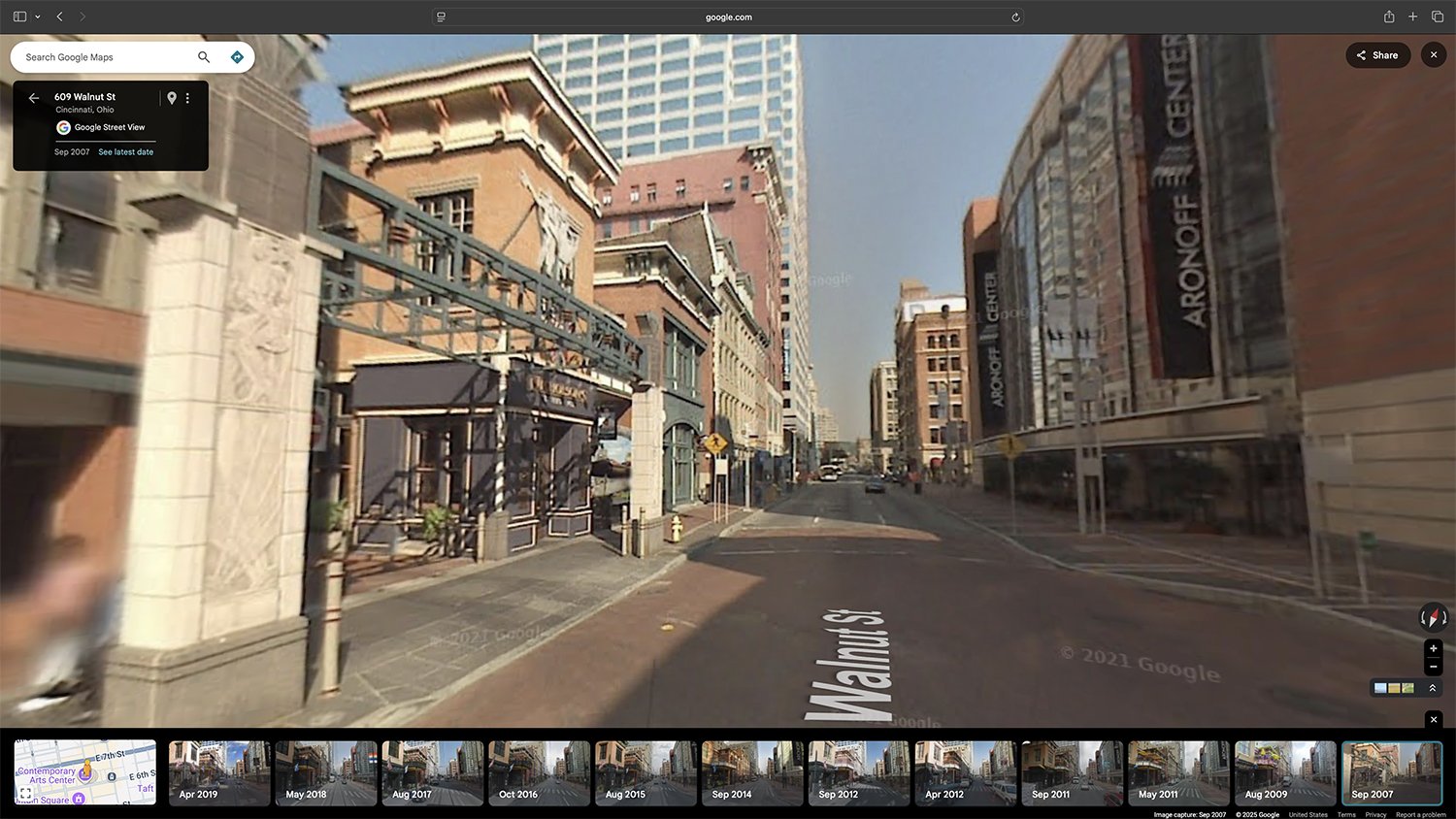
The district’s Walnut St. entrance as seen on Google Street View in September 2007. At this time, the area still featured a decorative archway similar to the one still found on Walnut St. Brick pavers also extended into the roadway. This area was heavily modified and rebuilt to accommodate the Cincinnati Streetcar.
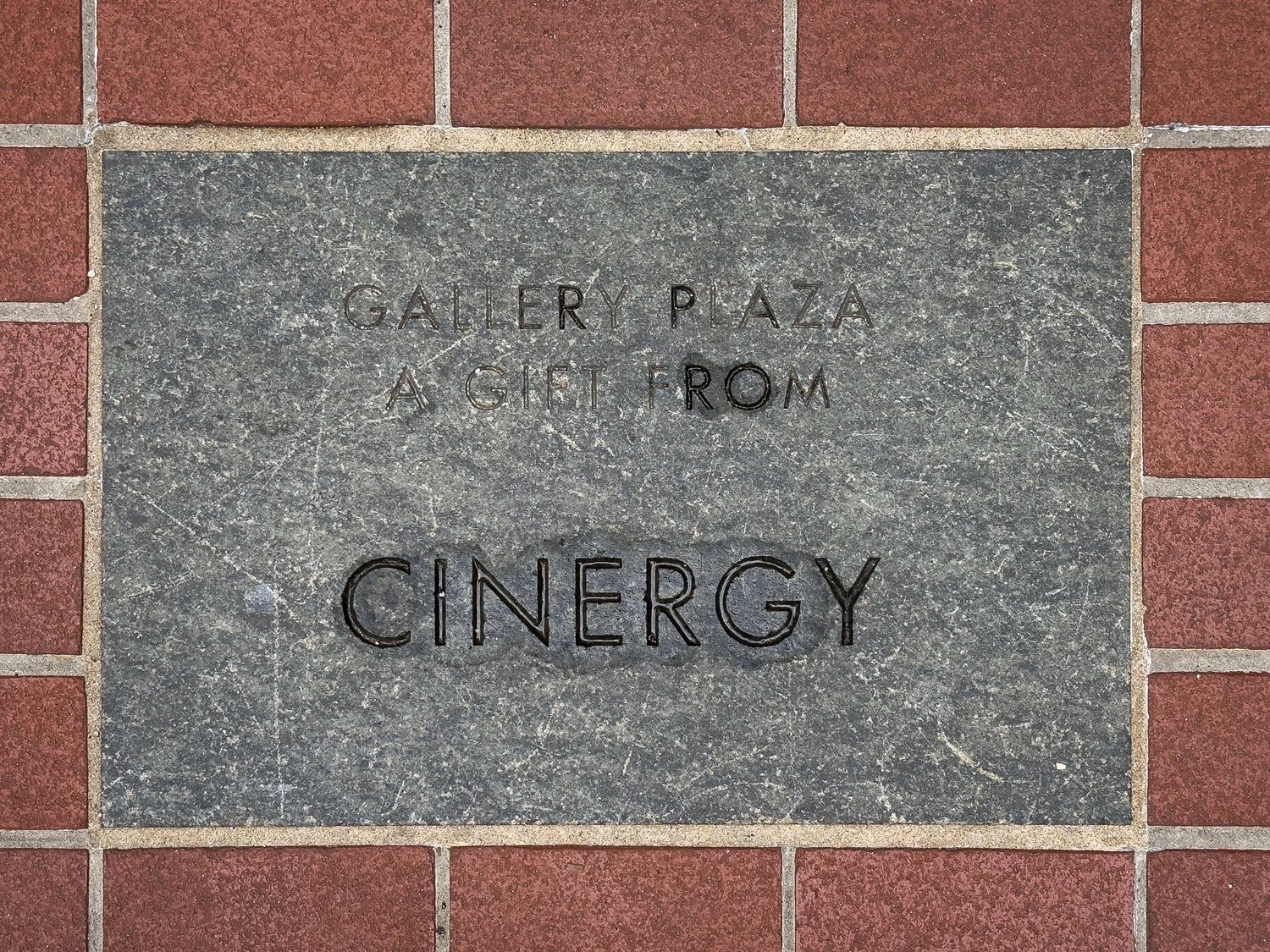
The Gallery Plaza at the Aronoff Center still bears the name of Cinergy, a local energy provider who eventually merged with and adopted the name of Duke Energy. Cinergy’s name was a clever play on words, but was also derided by locals when it became first local, modern example of selling a stadium’s naming rights. Cinergy Field would be imploded in 2002.
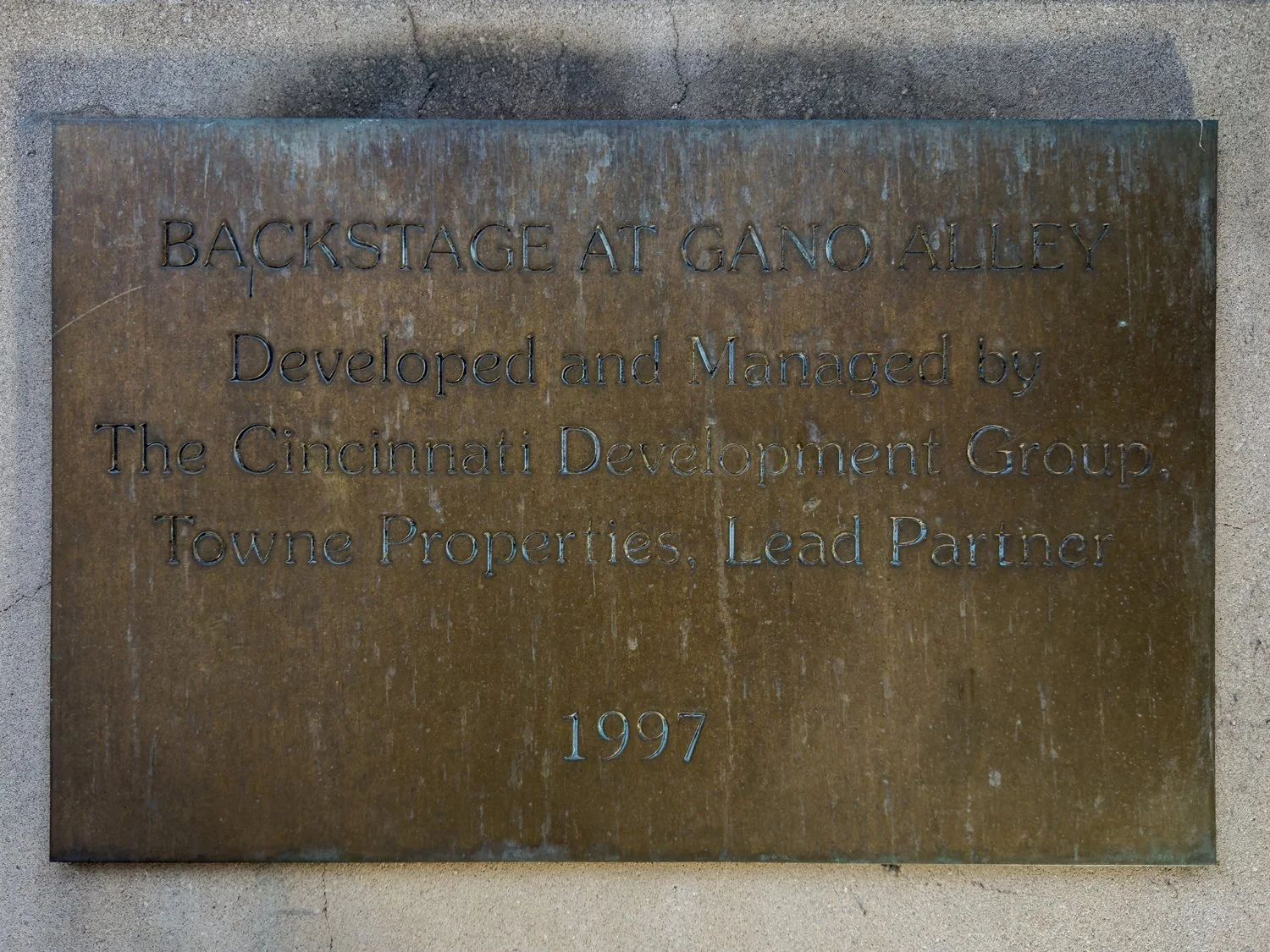
A plaque on the side of Nicholson’s commemorating the efforts of The Cincinnati Development Group and Towne Properties for their work on “Backstage at Gano Alley” in 1997.
I’m not personally familiar with what existed in the area before it officially became the “Backstage District,” but I’ve heard tales. Particularly about the legendary nightclubs that were said to have boasted multiple floors of live music within buildings that were barely meeting code.
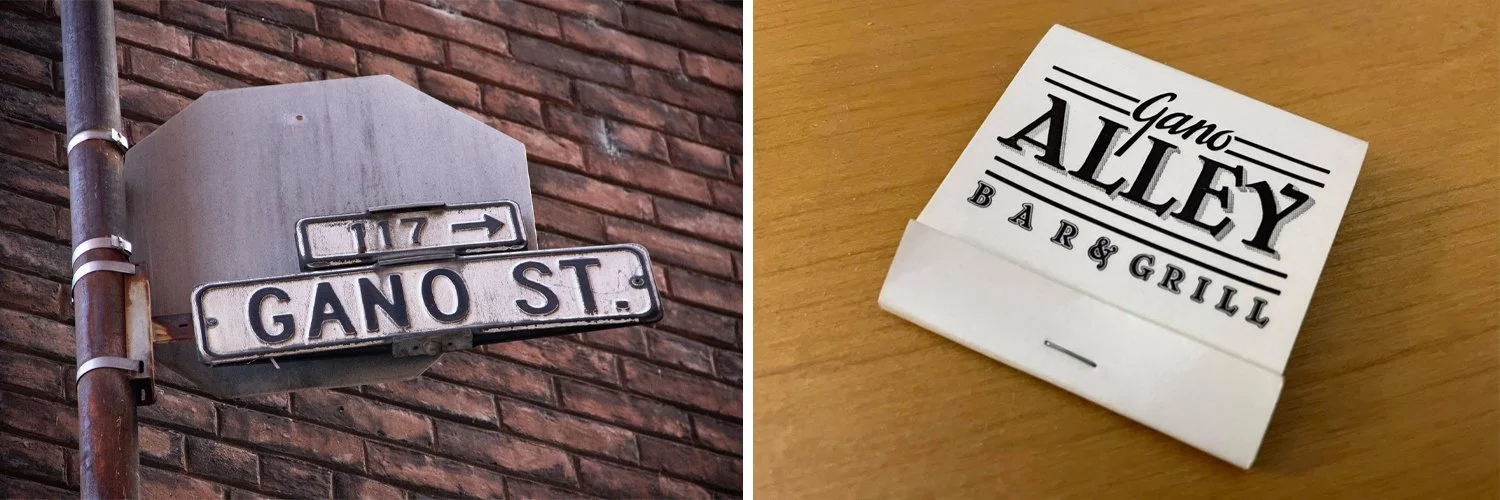
LEFT: An old sign for Gano St. still existing near the Aronoff Center’s loading dock.
RIGHT: A matchbook advertising the long-gone Gano Alley Bar & Grill.
Everyone, eventually, grieves for the nostalgic nights of their youth and the places within which they were spent, but while reading through all of those fond memories—I never got a sense of when things “ended.” That left me to wonder if classic holes in the wall had been forced out in the name of progress, or, if the area was just due for a shot in the arm. In the early 1990s, downtown Cincinnati was very much in a transitional phase—searching for a fresh identity and long-term, strategic focus. Several newspaper articles of the time hint at this, but a March 1996 opinion piece from the Cincinnati Enquirer’s Editorial Board specifically spoke to the goals of the backstage concept:
“Downtown is closer than it’s been in decades to having a nightlife. Backstage brick pavers are going down underfoot. Lattice-work lights are going up overhead. But for now, it’s still a dress rehearsal until new actors fill some holes in the scenery. The sooner the better.”
No matter what the state of the neighborhood’s nightlife was at the time, though, it was the Aronoff Center for the Arts that got developers and politicians specifically focused on this area.. The debut of a modern theater complex designed by a world renown architect was both a literal and figurative landmark moment for the city of Cincinnati. Partnering surrounding development with this new attraction not only made practical sense, but offered a chance to directly link it with the civic center of Fountain Square through what had historically been a popular entertainment area.
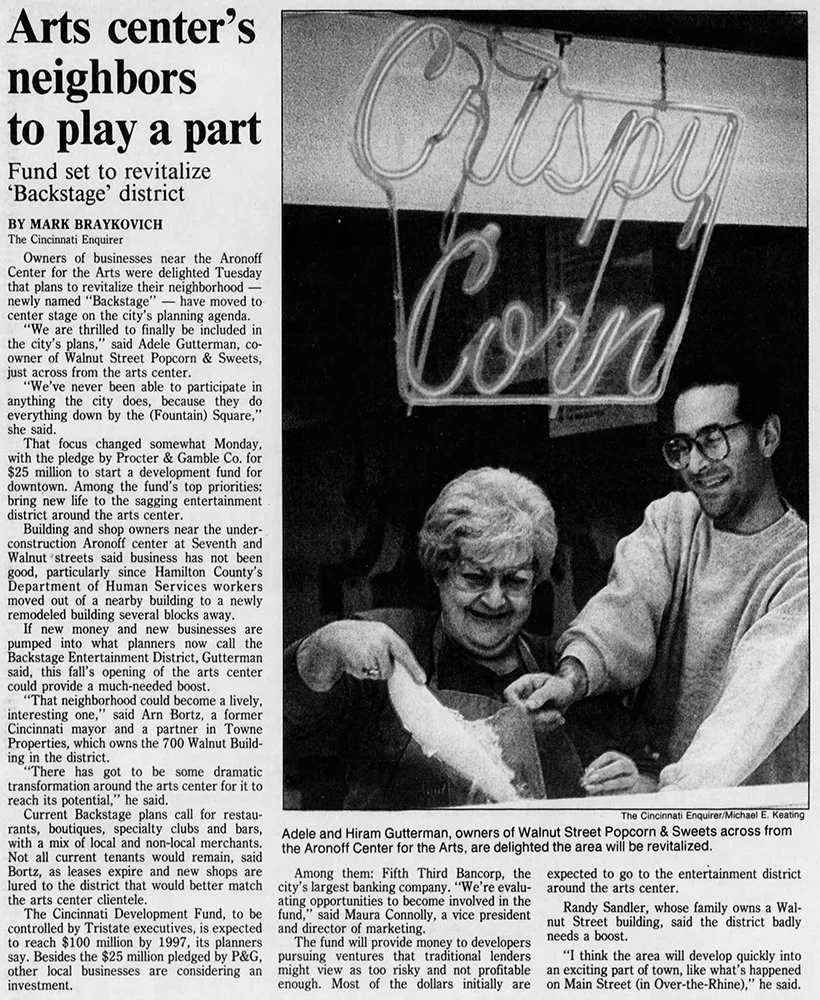
“Adele and Hiram Gutterman, owners of Walnut Street Popcorn & Sweets across the from Aronoff Center for the Arts, are delighted the area will be revitalized.” From: The Cincinnati Enquirer on Mar 8, 1995, page 54.
At the same time, a local political strategy was being formed in the hopes of accelerating development by bridging private funding gaps with public money. Money that would initially be donated through local, corporate sponsors and would ideally be recouped through residual effects of a sponsored project’s success. By March of 1995, the Cincinnati Enquirer would list the Backstage District as not just one of the first projects to receive funding from the newly established Cincinnati Equity Fund, but also the project which had the highest priority.
I’m condensing a lot of history down to a few sentences, but this public-private partnership and the aforementioned Downtown Cincinnati, Inc. all eventually morphed into what’s known today as the Cincinnati Center City Development Corporation. Though not without its critics, 3CDC is largely credited with having ushered in Cincinnati’s recent “renaissance.” Before all that, though, there was Pizzeria UNO.
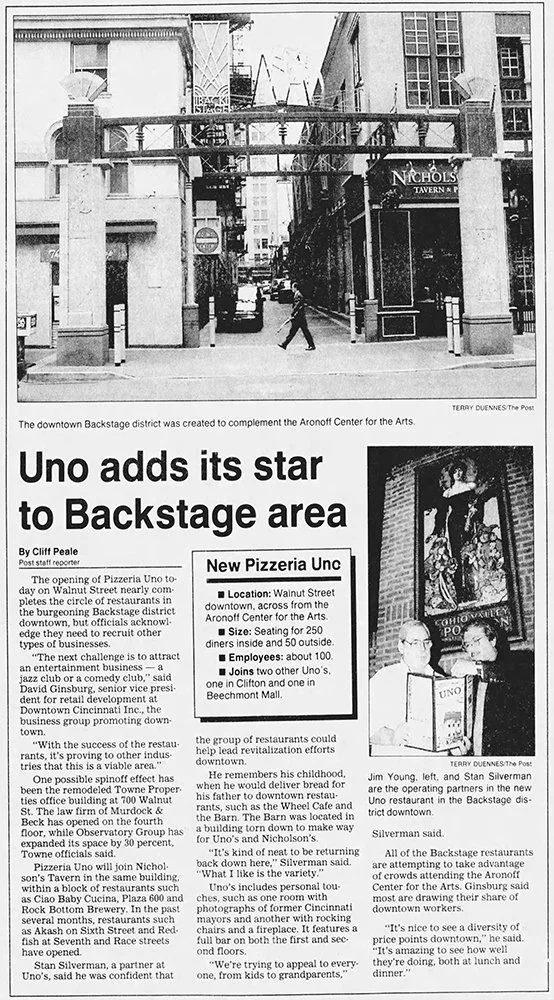
The former Walnut St. archway can be seen on page 18 of the April 6, 1998 edition of The Cincinnati Post alongside an article heralding the arrival of Pizzeria UNO.
The place may have been a chain, but to a kid from the suburbs at the turn of the “Willenium:” Chicago style deep-dish was an exotic delicacy to be enjoyed before heading over to a then brand-new Bengals stadium. The kind of downtown adventure that not only captivated me as an eleven-year-old, but caused me to dream about “big city” amenities such as Planet Hollywood, Rainforest Cafe, ESPN Zone, or maybe even all three! Surely, these would follow! Even if the home team ended up getting their teeth kicked in by the Miami Dolphins on that October 2000 afternoon.
Those chains never did arrive and even UNO wasn’t long for this market itself, but the powers guiding downtown Cincinnati’s redevelopment continued to adapt. Unfortunately for the Backstage District, however—their attention, efforts, and even success would move well beyond its borders.
That’s not to say the area didn’t get the occasional marquee moment. It’s played host to BLINK installations and even once served as a skatepark that artist Shepard Fairey spun records at. There’s also a few local Reddit users who claim to have heard bands like Better Than Ezra and Violent Femmes there (though I can’t find a record of this). And sure, perhaps the “laser ads” and mime-like, roving street performers envisioned by old newspaper articles never came to be, but there was once an attempt imitate Hollywood.
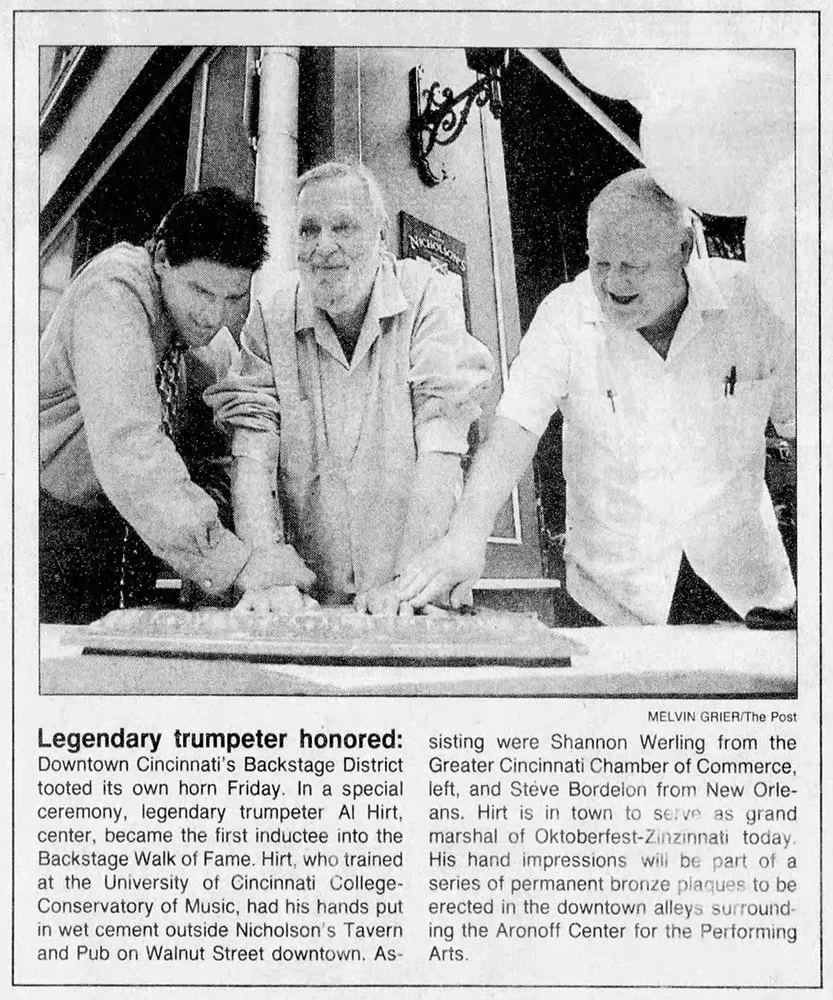
Al Hirt is inducted into the “Backstage Walk of Fame” as documented by The Cincinnati Post on September 19, 1998.
In September of 1998, musician Al Hirt became “the first inductee into the Backstage Walk of Fame.” The accomplished trumpeter who’d studied at the University of Cincinnati’s College-Conservatory of Music had his handprints imprinted in cement, but would pass on just half a year later. As far as I can tell, though, his tribute was never installed and no other individuals were ever bestowed such an honor.
I would love to know if his preserved handprints are still surviving in storage somewhere to this day.
Backstage would be bolstered in 2003 with the opening of the nearby Zaha Hadid-designed Contemporary Arts Center, but the redevelopment of Cincinnati’s urban core was rapidly spreading in all directions.
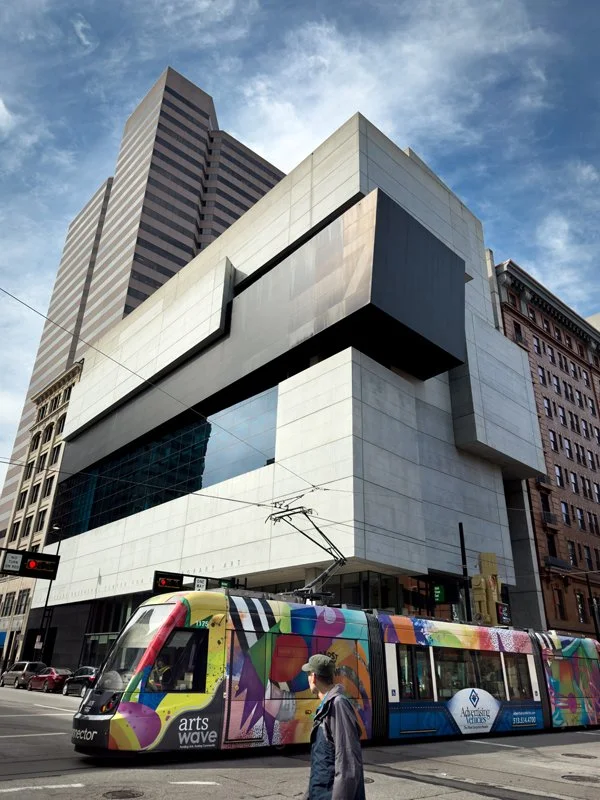
Cincinnati’s Contemporary Arts Center as seen at Walnut and 6th Streets in 2023.
The riverfront was re-envisioned, Fountain Square was renovated (twice), and Over-The-Rhine became a major focal point. While those are all civic endeavors to be celebrated, one does have to wonder if that age old adage is true:
“The more things change, the more they remain the same.”
Because now, in addition to the Backstage District, Cincinnati also has…
The “8th St. Design District”
The “Fountain District”
The “Convention District”
The “Brewery District”
Several partially respected “historic districts”
And all of that technically exists under the umbrella of the “Central Business District.”

Cincinnati: the city of loosely defined districts.
Yet, within this city of loosely defined districts, none of that perfunctory LinkedIN language or corporate cheerleading matters—because, well, all of that is more or less just known to regular folks as simply: “downtown.”
And Downtown Cincinnati is a lovely, little place with curious corners and fly-by-(late)-night milkshakes.
Update | January 11, 2026:
As it turns out, the aforementioned stone slab in the sidewalk wasn’t as worn down as I thought. Rather, it was mostly illegible due to a buildup of grime. While walking by recently after a mixture of snow and rain had come through, it appeared legible once more:
Since 2007, the content of this website (and its former life as Queen City Discovery) has been a huge labor of love.
If you’ve enjoyed stories like The Ghost Ship, abandoned amusement parks, the Cincinnati Subway, Fading Ads, or others over the years—might you consider showing some support for future projects?