The Queen City’s Brutalist Beachfront
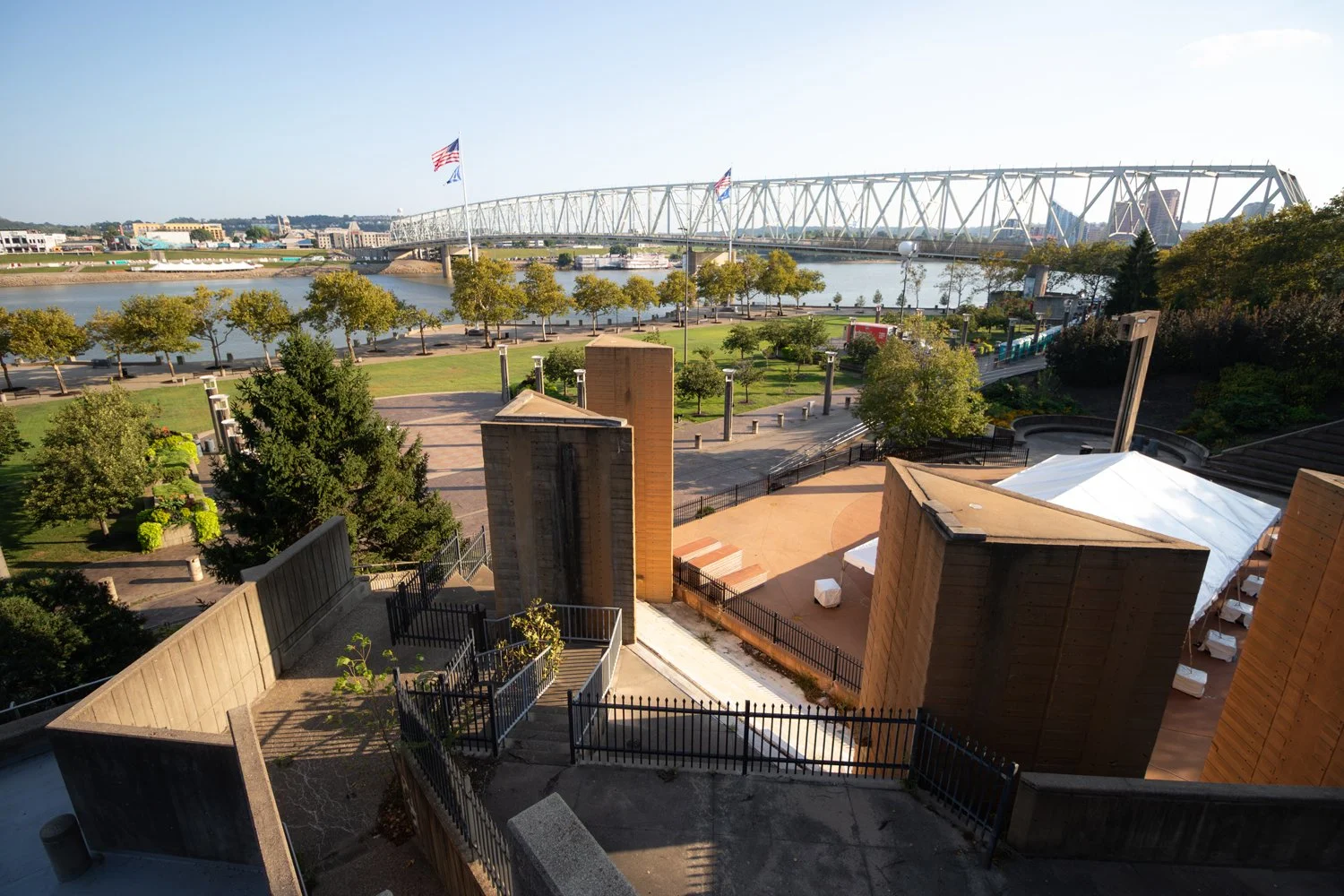
I love this part of Cincinnati.
I’ve mentioned it a few times over the years, but although my adoration extends beyond the borders of what’s often considered to simply be “Sawyer Point” — the particular section seen in these images is my favorite.
In a recent post, I wrote that the “sun-soaked, concrete surroundings call[ed] to mind scenes of Hilton Head, Myrtle Beach, Orlando, and other other nostalgic, midwestern millennial leisure destinations.”
There’s no ocean here, though, just the Ohio River.
So, even if it all looks like it’s built to withstand a hurricane, the design decisions are purely just an aesthetic preference of their era. A callback to a certain period of civic pride.
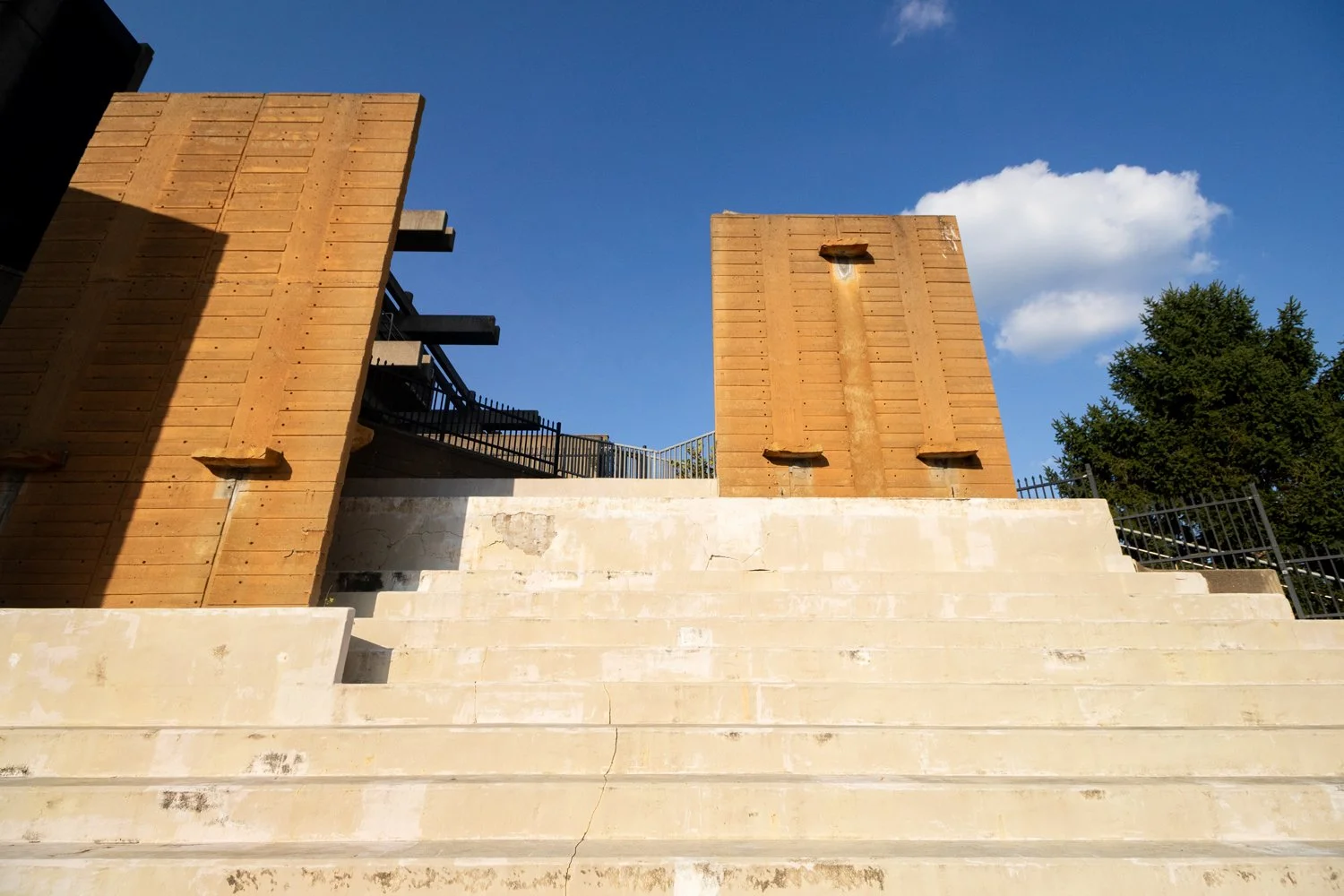
The inactive Otto Armleder Memorial Aquatic Fountain.
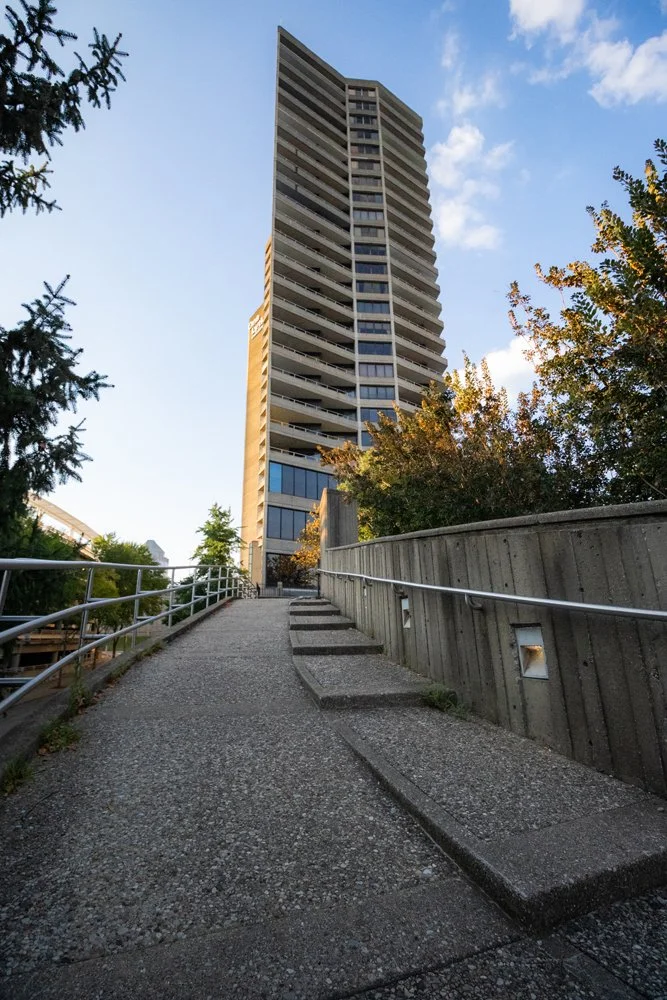
One Lytle Place.
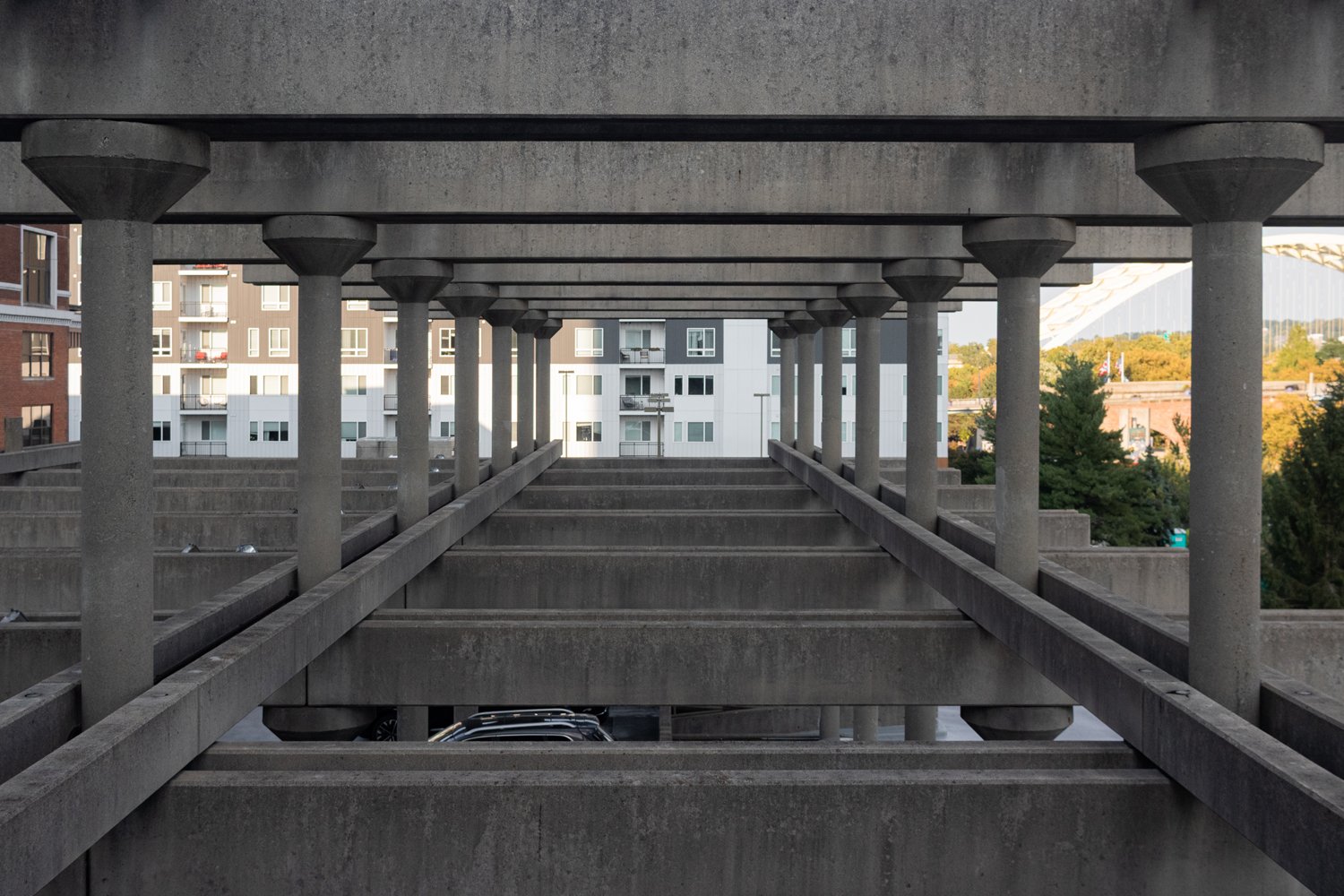
Nearby parking deck.
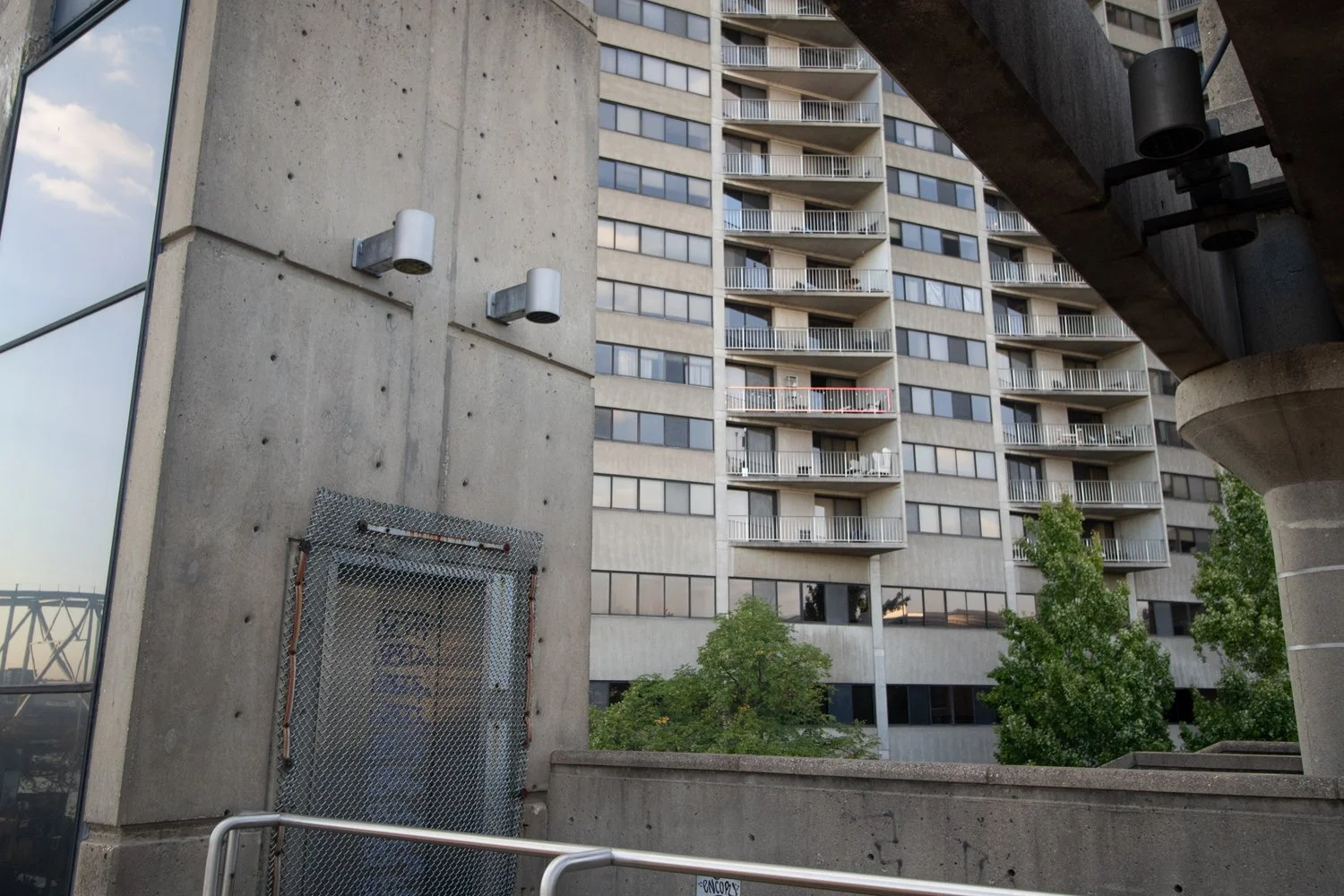
One Lytle Place and closed park elevator.
I knew this area as a kid, it’s been part of my jogging route since college, and it’s still a place I enjoy walking the dog through. Beyond my personal affinity, however, the area and its iconic residential tower have long been local landmarks.
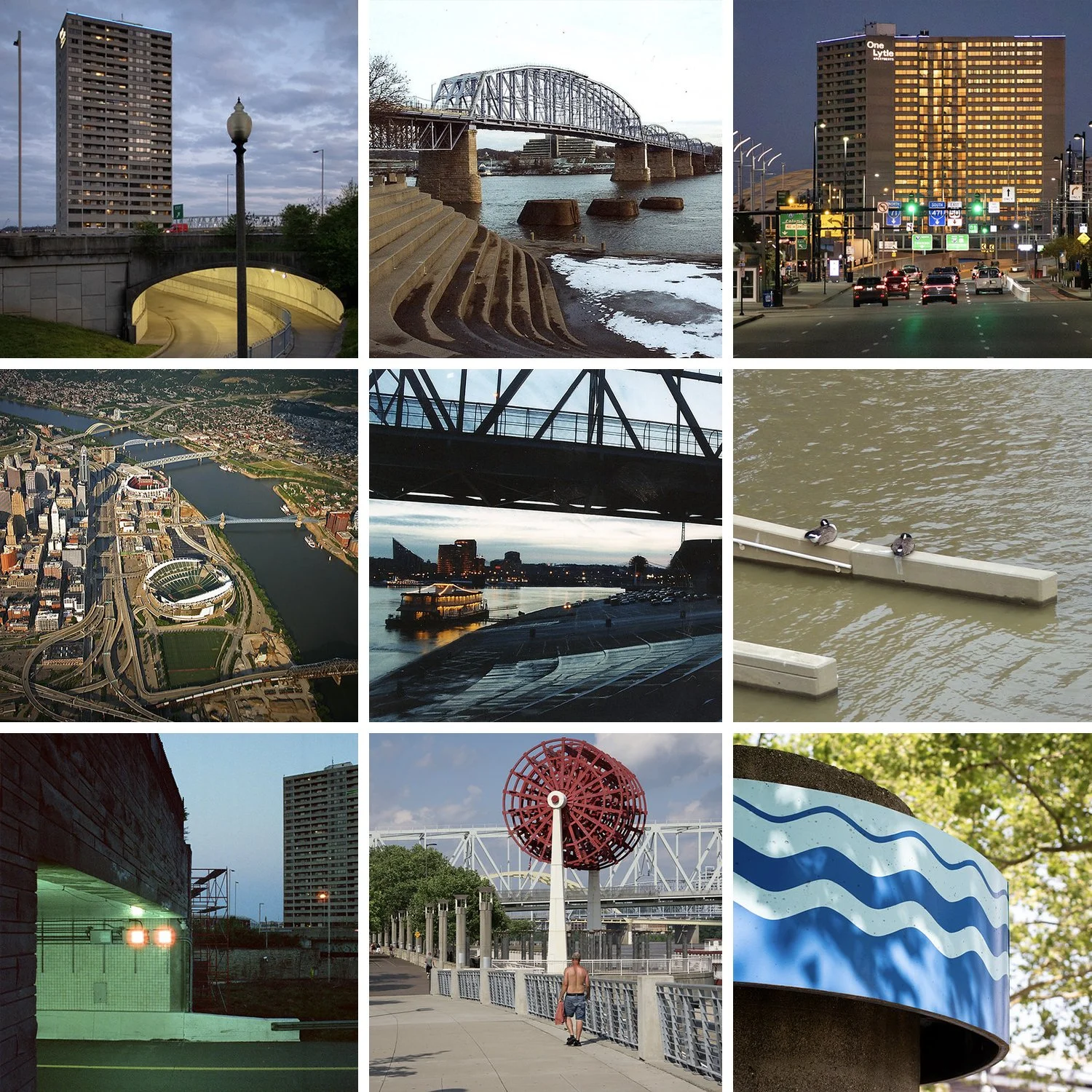
The general area as seen over the years. While working on this story, I put together a Flickr gallery of all my photographs from the riverfront going back to 2005.
I’ve photographed them both numerous times, but while recently wandering around with my friend Dave — I realized that there’s a seemingly endless curiosity to it all. This likely won’t be the last time I document the area or write about it. It’s truly fascinating to me.
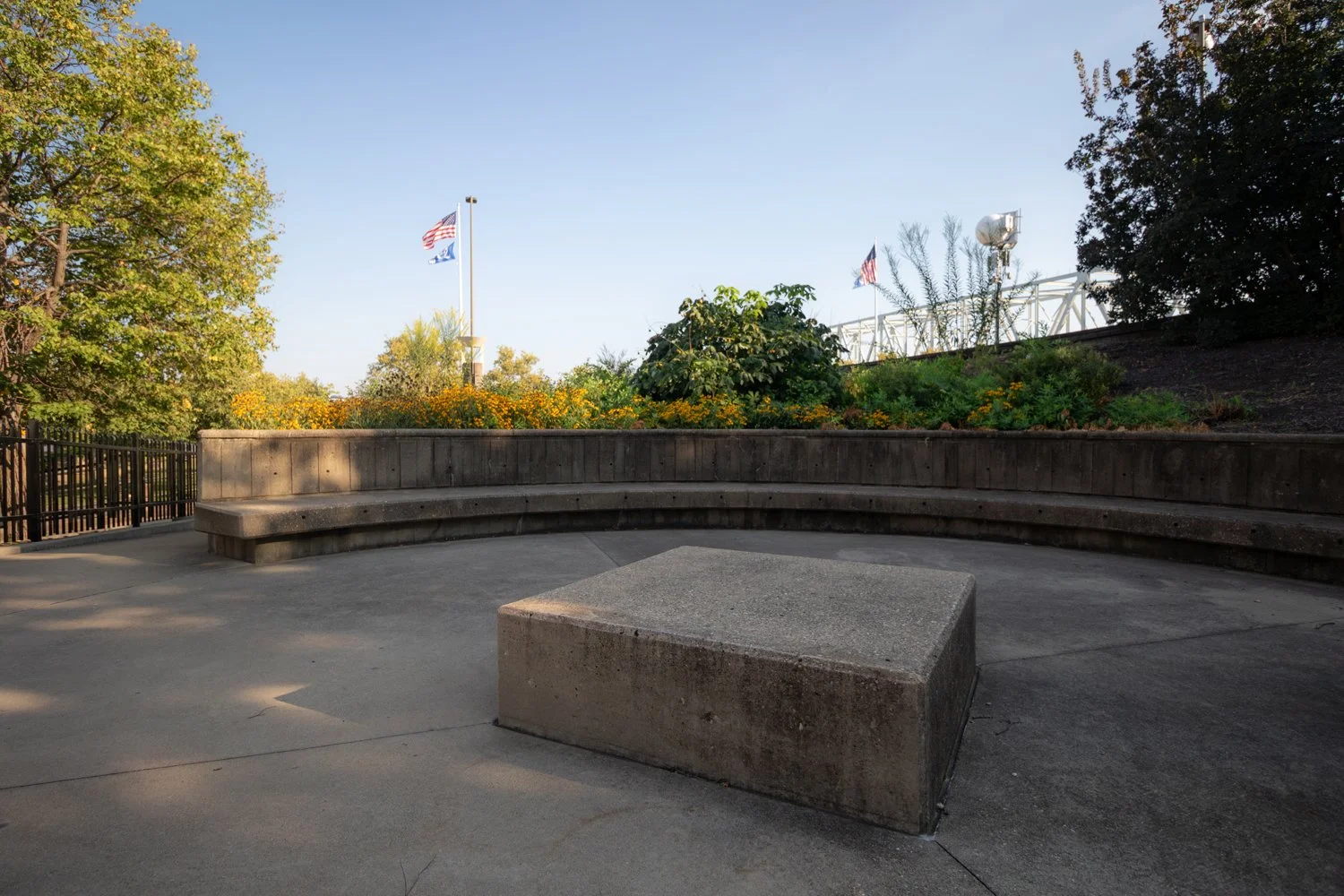
Concrete seating near the Otto Armleder Memorial Aquatic Fountain.
The scenes captured in these photographs can be found within multiple, defined locations of the same general, geographic area. Sawyer Point and Yeatman’s Cove make up just a few sections of the sprawling riverfront parks complex which also includes the beloved Serpentine Wall.
A good portion of the area was constructed in celebration of the city’s 1988 bicentennial and it includes numerous recreational amenities just steps away from downtown, Northern Kentucky, and several stadiums. It also serves as the festival grounds for the annual Riverfest, Oktoberfest, and countless other events.
Meanwhile, One Lytle Place stands above it all as a “25” (or “26” depending on the source)-story residential tower that’s been a fixture of the skyline since 1980.
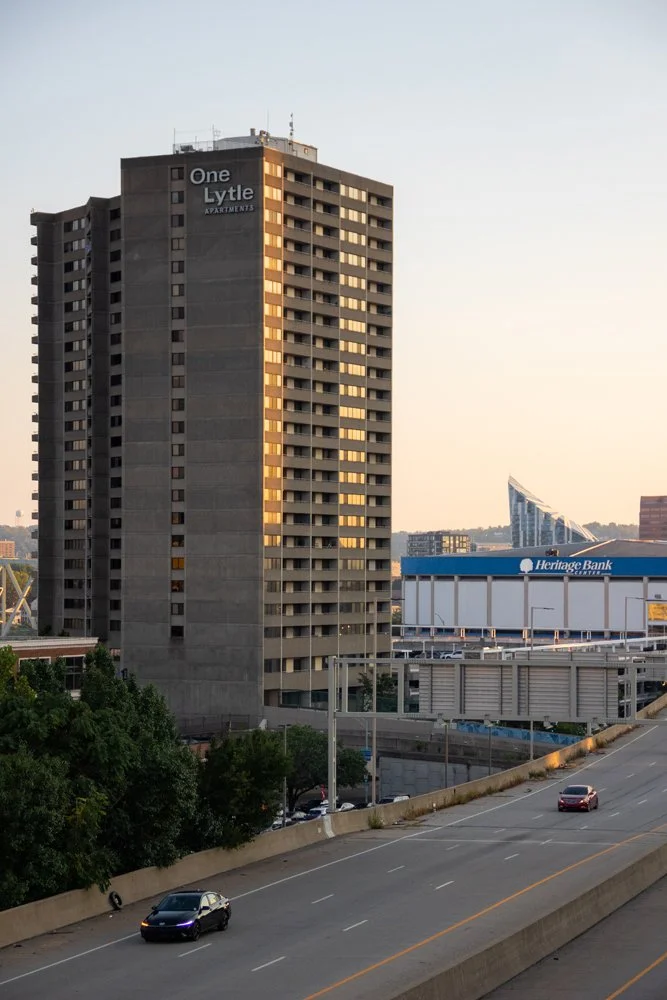
One Lytle Place tower seen from a nearby office building.
Designed by architect Louis Sauer, the high-rise is linked to the riverfront via the Otto Armleder Memorial Aquatic Fountain. The area is worn and weathered — even crumbling in certain spots — but there’s a surprising familiarity and comfort to be found amongst its gritty, gray surfaces.
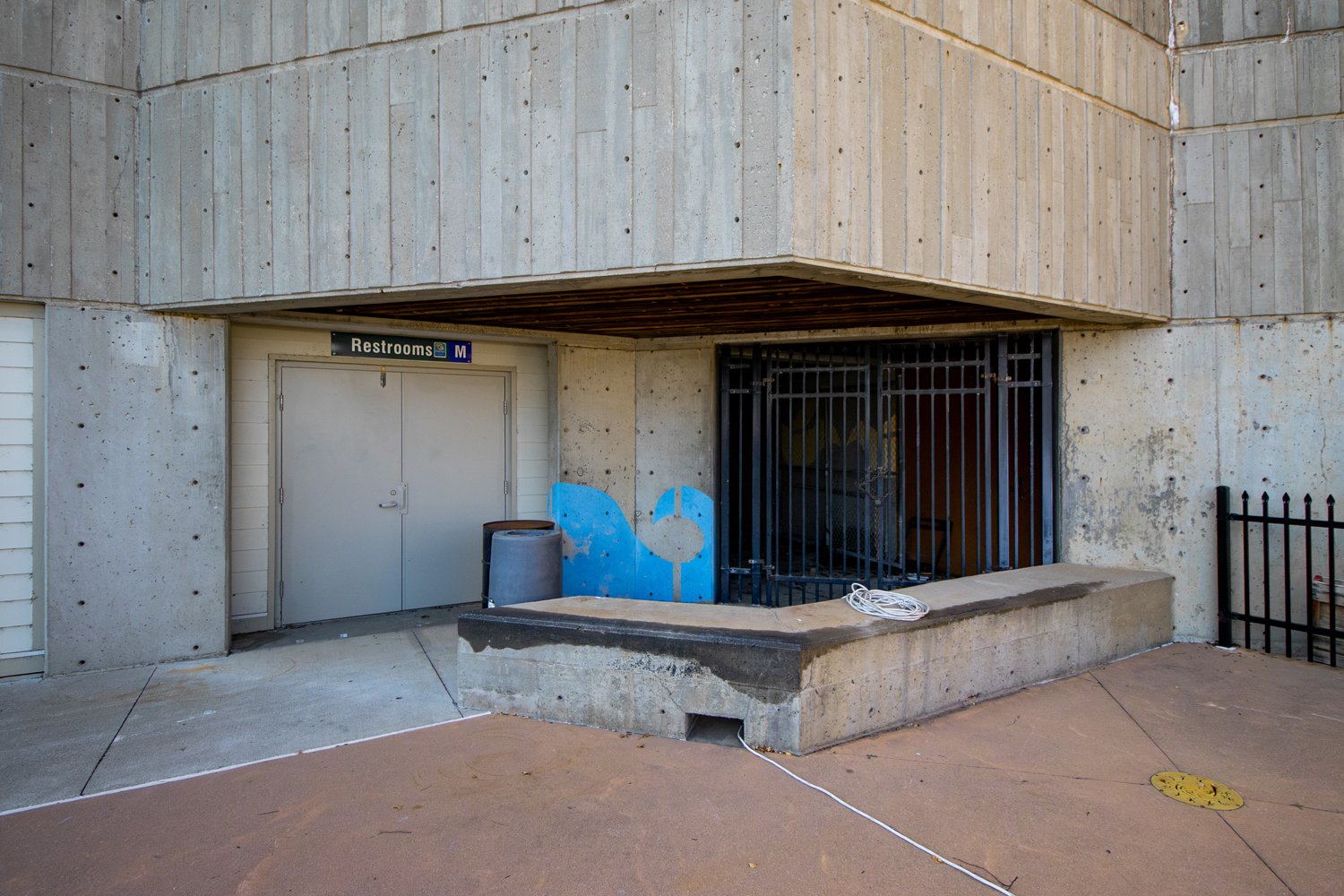
Closed areas near the Otto Armleder Memorial Aquatic Fountain.
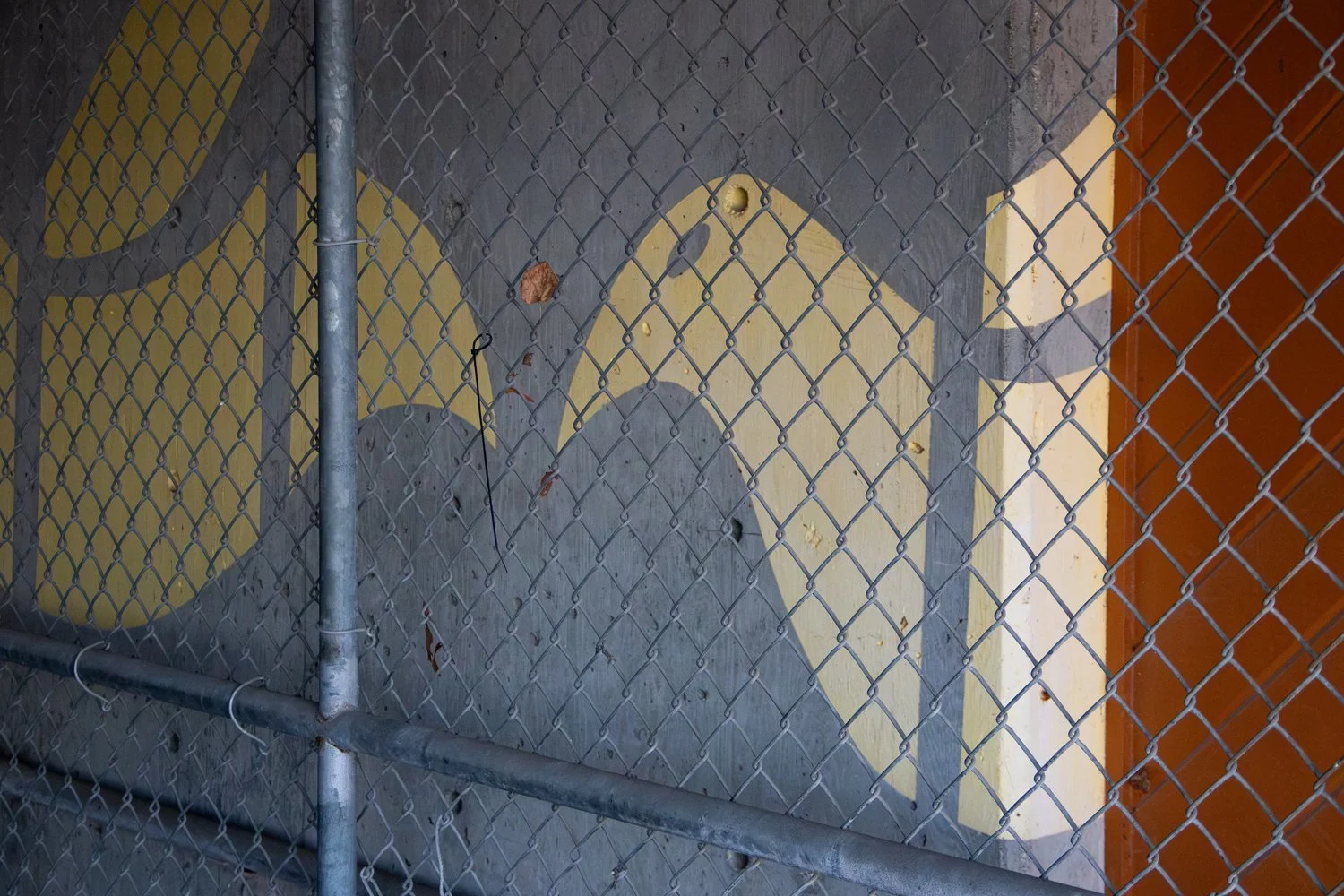
Closed areas near the Otto Armleder Memorial Aquatic Fountain.
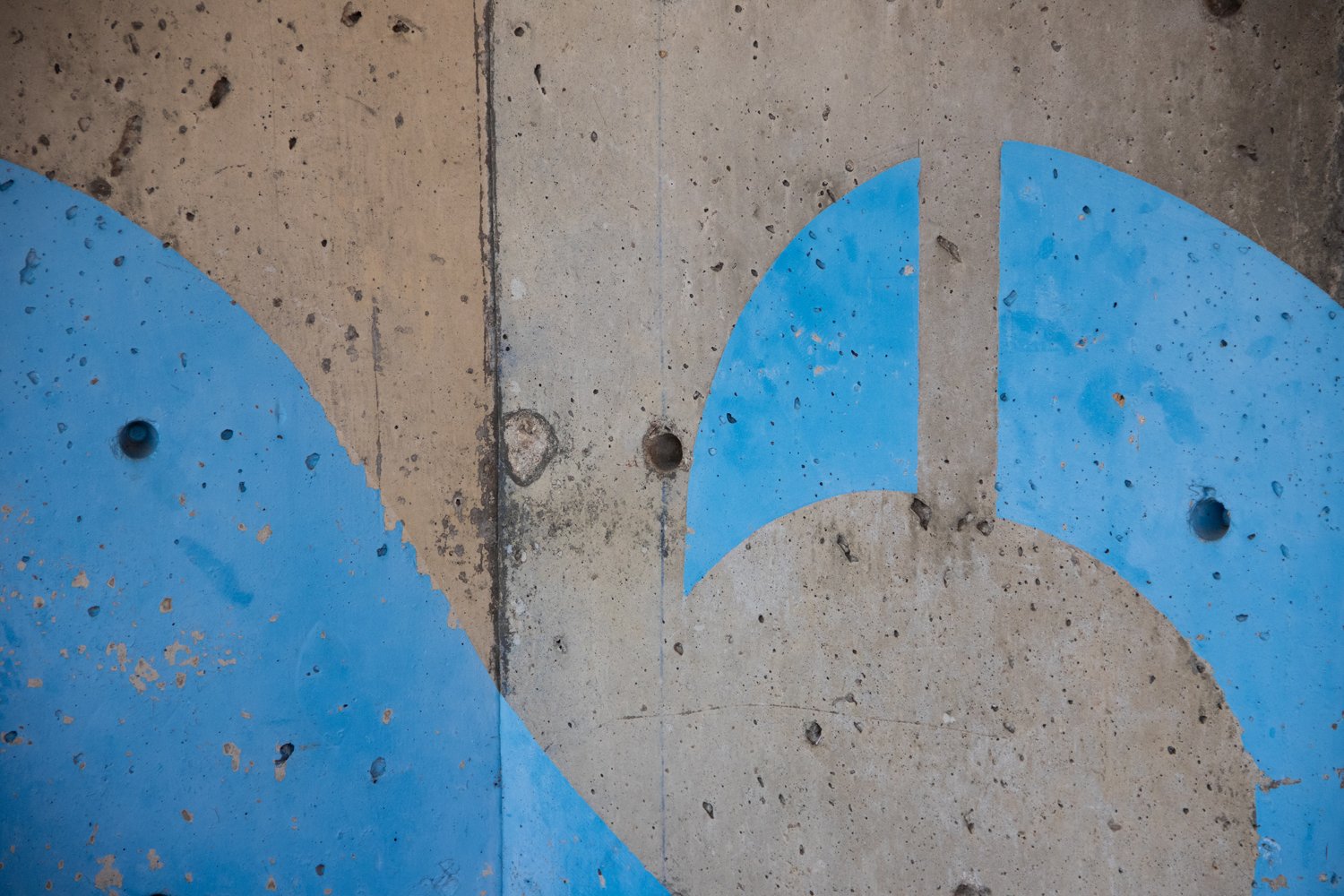
Decoration near the Otto Armleder Memorial Aquatic Fountain.
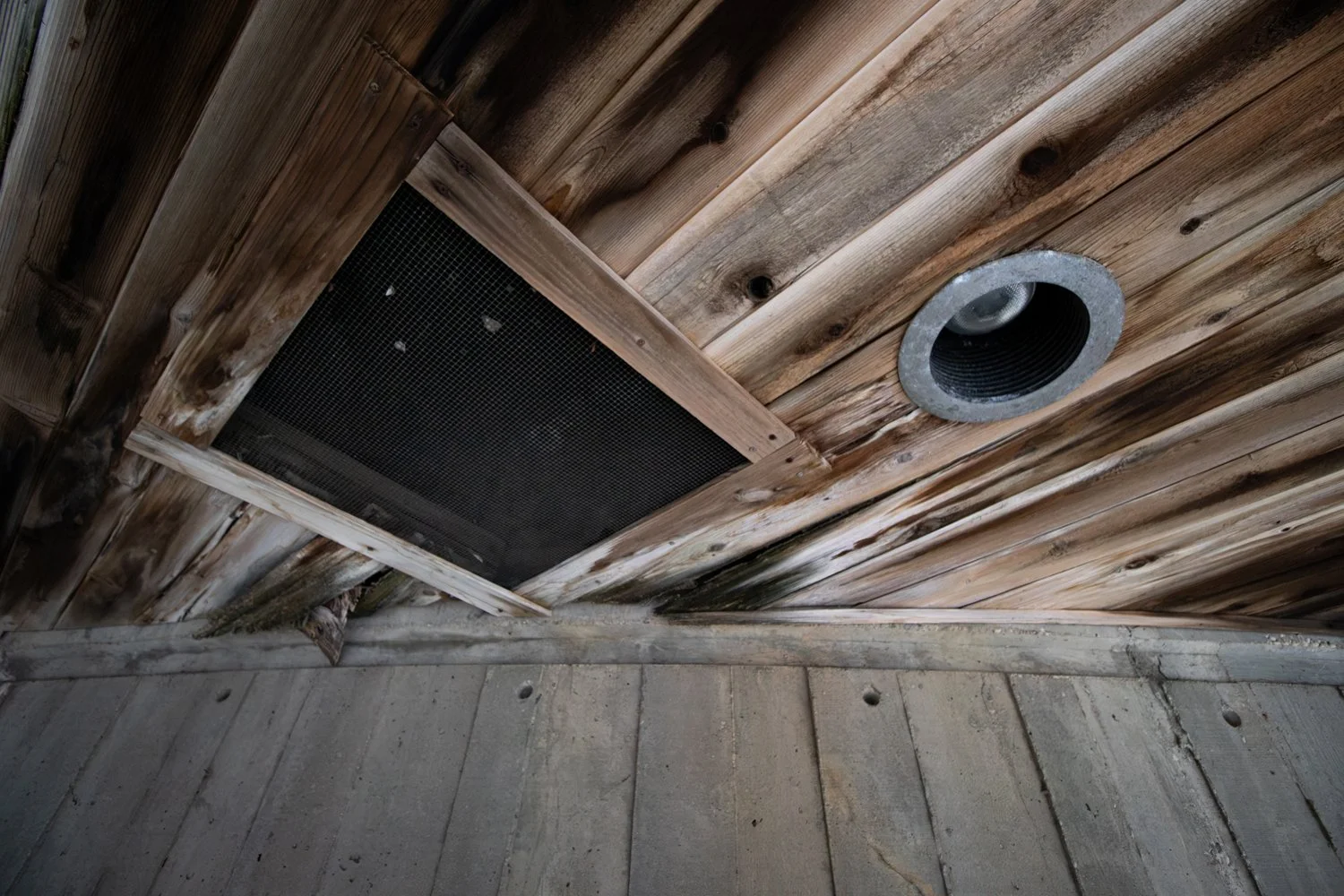
Aging infrastructure near the near the Otto Armleder Memorial Aquatic Fountain.
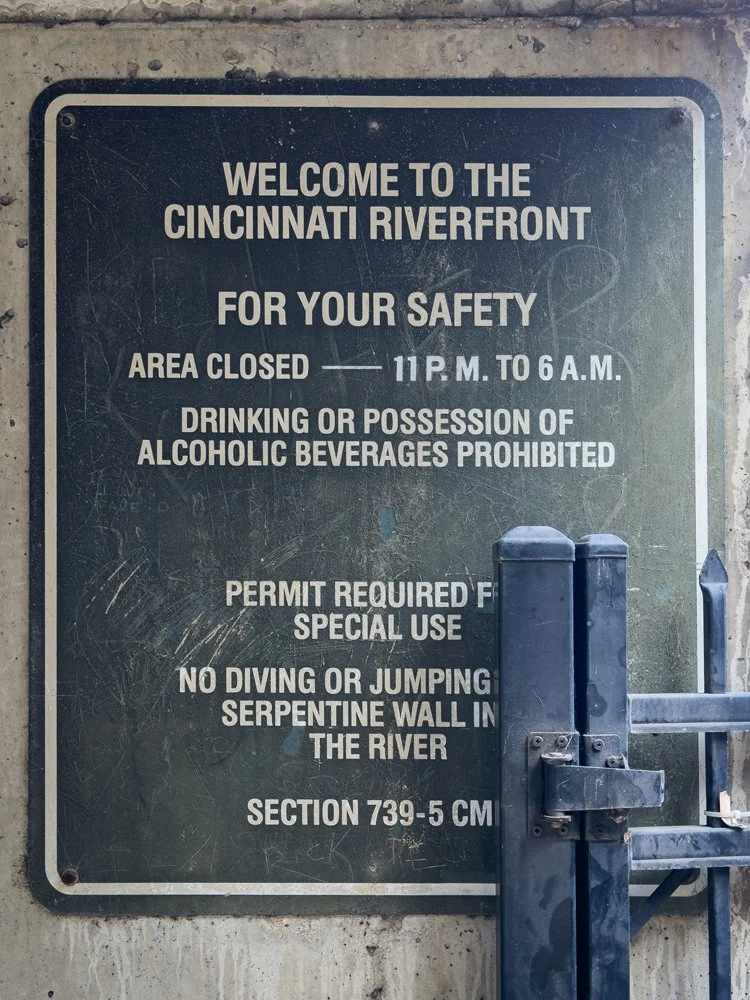
Old riverfront parks sign.
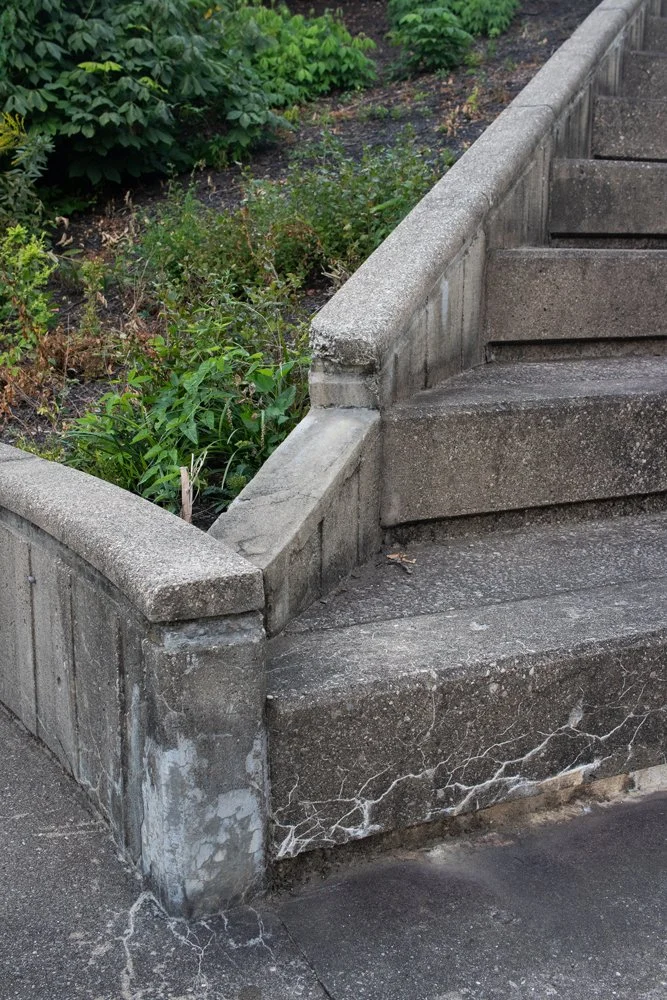
Concrete seating near the Otto Armleder Memorial Aquatic Fountain.
When this place was in its prime, the fountain was undoubtedly the main attraction. High-powered nozzles and several waterfalls poured into a comedically shallow pool. And all of it was open to the public.
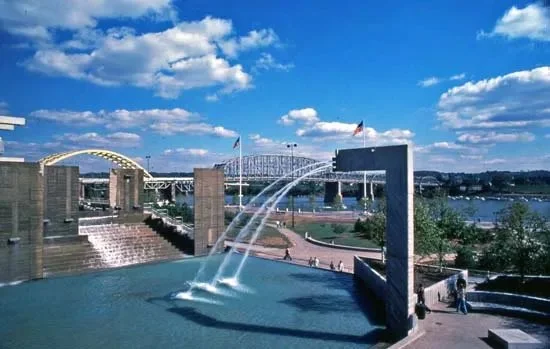
The Otto Armleder Memorial Aquatic Fountain in its prime [Britannica Kids].
I don’t remember exactly how old I was the one time I went, but I was definitely too young to already be thinking: “this seems questionable.” Meanwhile, more familiar locals will recall skinned knees and harrowing spills down slippery steps.
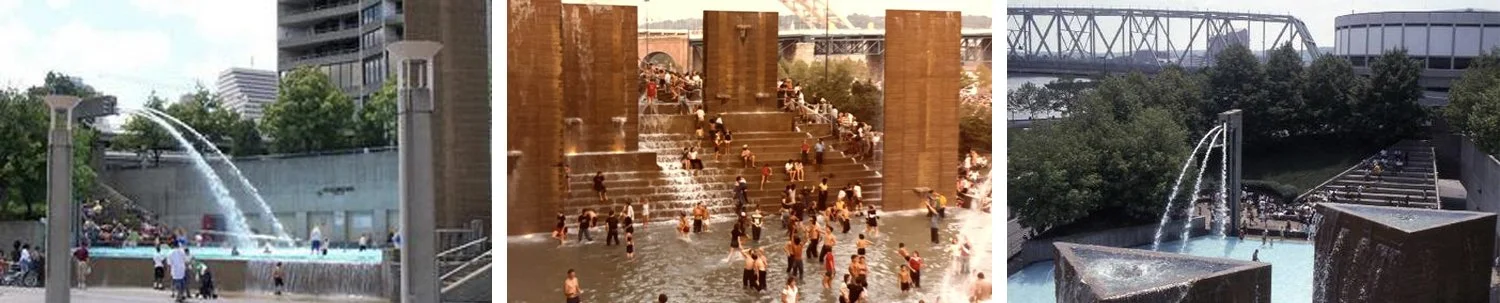
Honestly, in hindsight, I’m truly surprised that the water attraction lasted as long as it did. Regular swimming pools are one thing, but this was a whole other set of insurance liabilities.
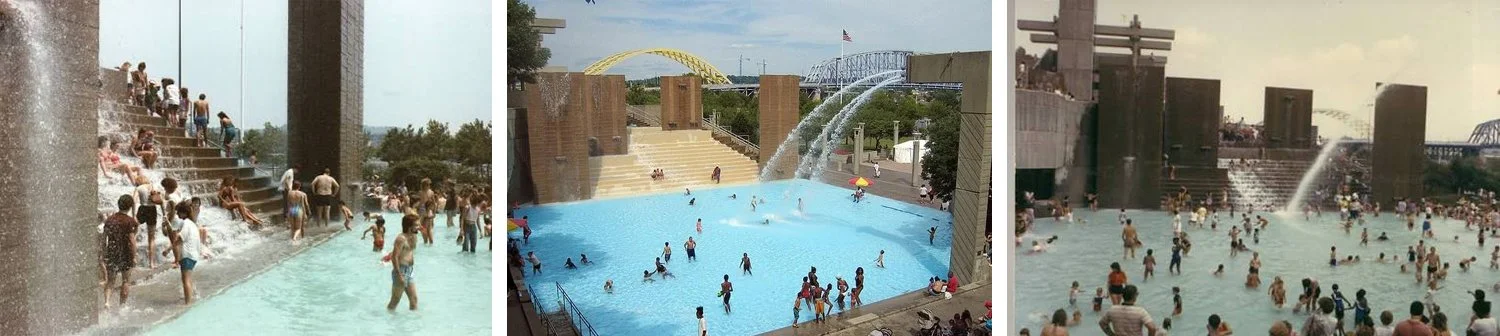
The city must’ve finally felt the same way, because despite the novelty and nostalgia — they renovated the area into a “splash pad” that didn’t require lifeguards or entice children to risk life and limb. And with more aquatic facilities, and even more parks, having been built since then — the “Otto Armleder Memorial Aquatic Fountain at the Central Riverfront” / splash pad (dedicated 2009) seems to have been forgotten.
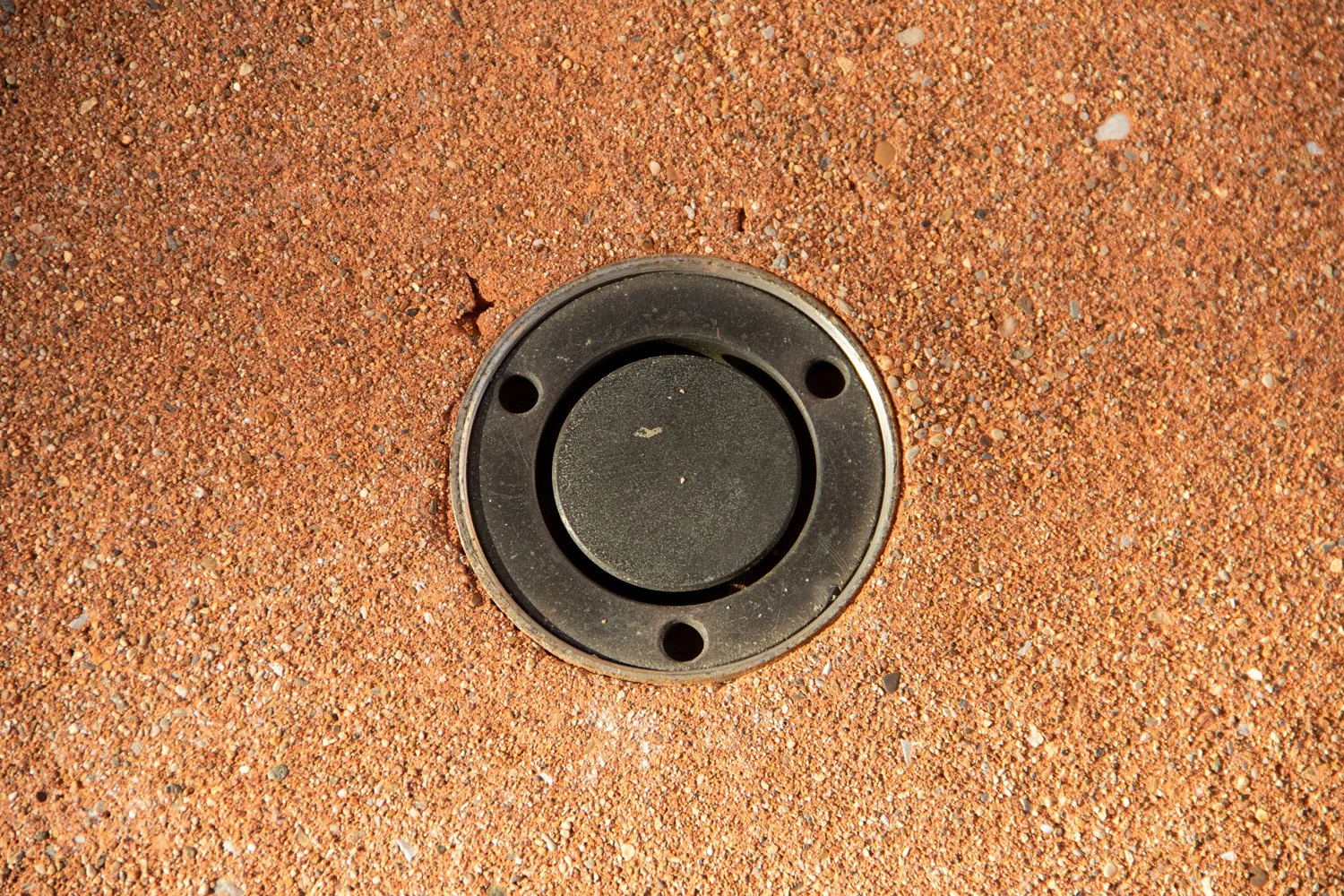
Splash pad infrastructure.
Granted, my perception is anecdotal, but I’ve been passing through this area a lot over the last decade and I feel like it’s been pretty rare to have ever seen the water flowing.
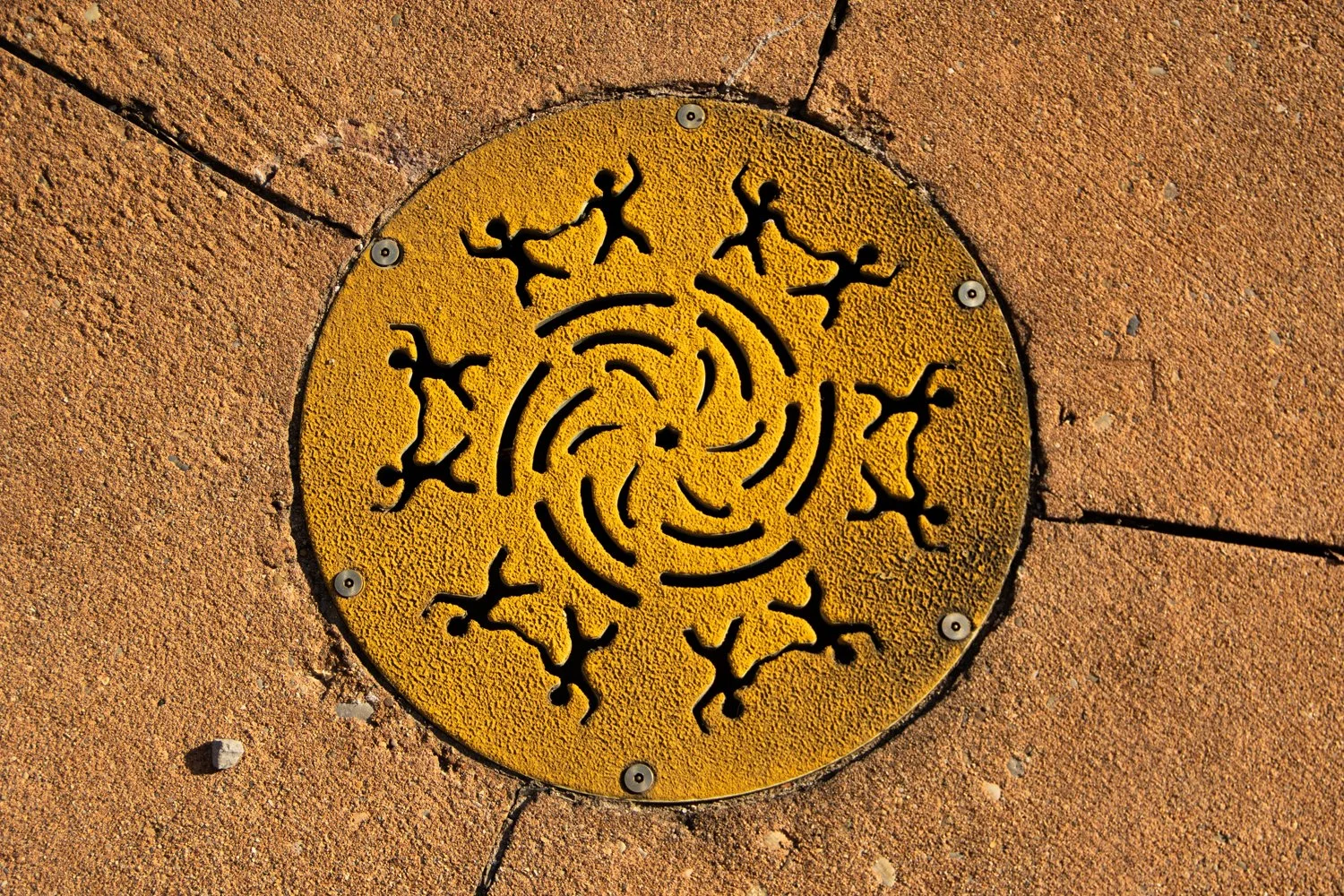
Splash pad infrastructure.
Which is a shame, because without even the most basic of public aquatic attractions, the area just looks kind of barren and bizarre. In many ways, it mirrors other local attempts to pair concrete with community activation through “urban renewal” such as Queensgate II and Circumspect.
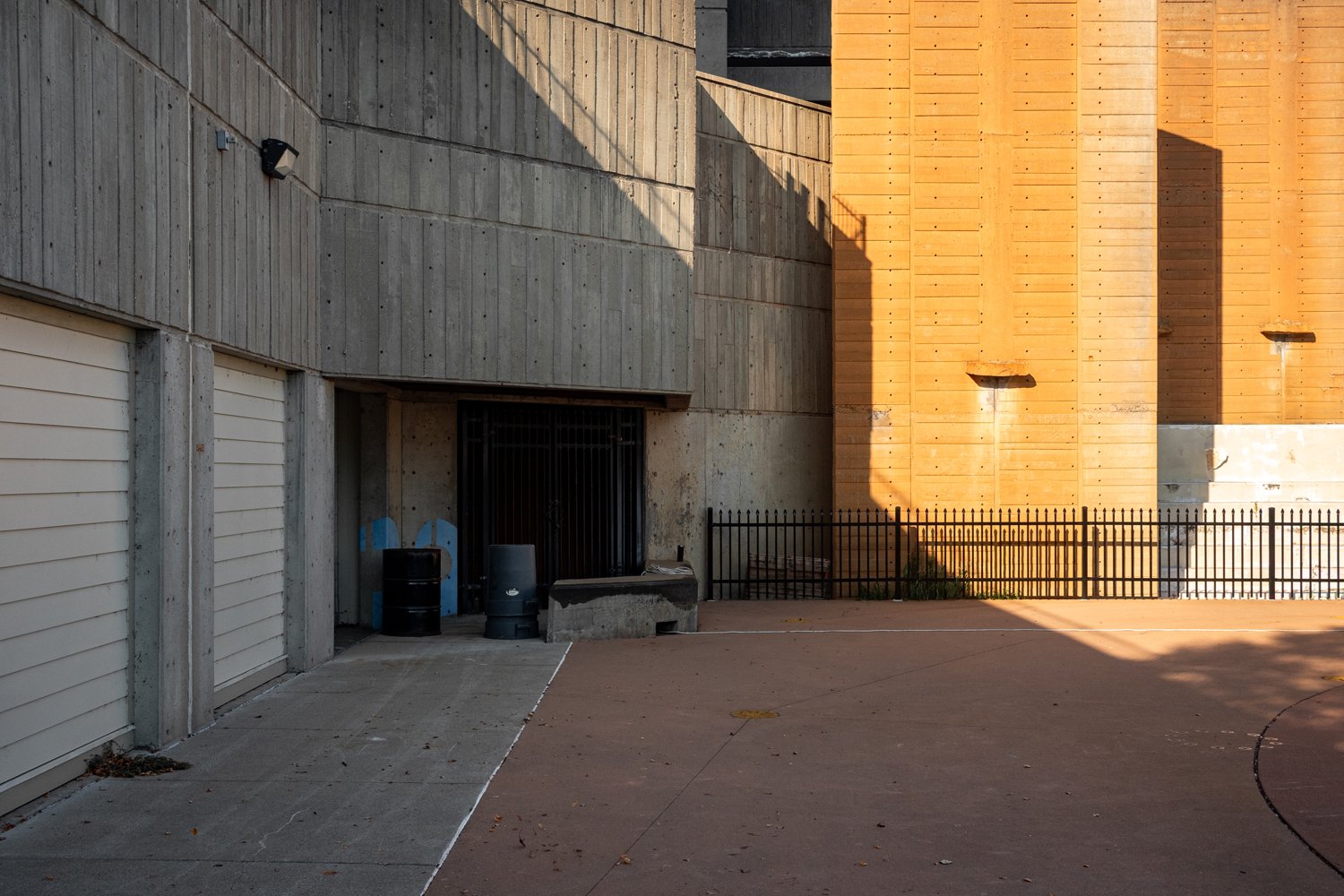
The “Otto Armleder Memorial Aquatic Fountain at the Central Riverfront” / splash pad.
The discarded interior facilities (presumably once used for lockers and concessions) have long been blocked off behind vinyl siding, and on our recent visit: the splash pad was being prepped to host a VIP tent for the upcoming Labor Day fireworks.
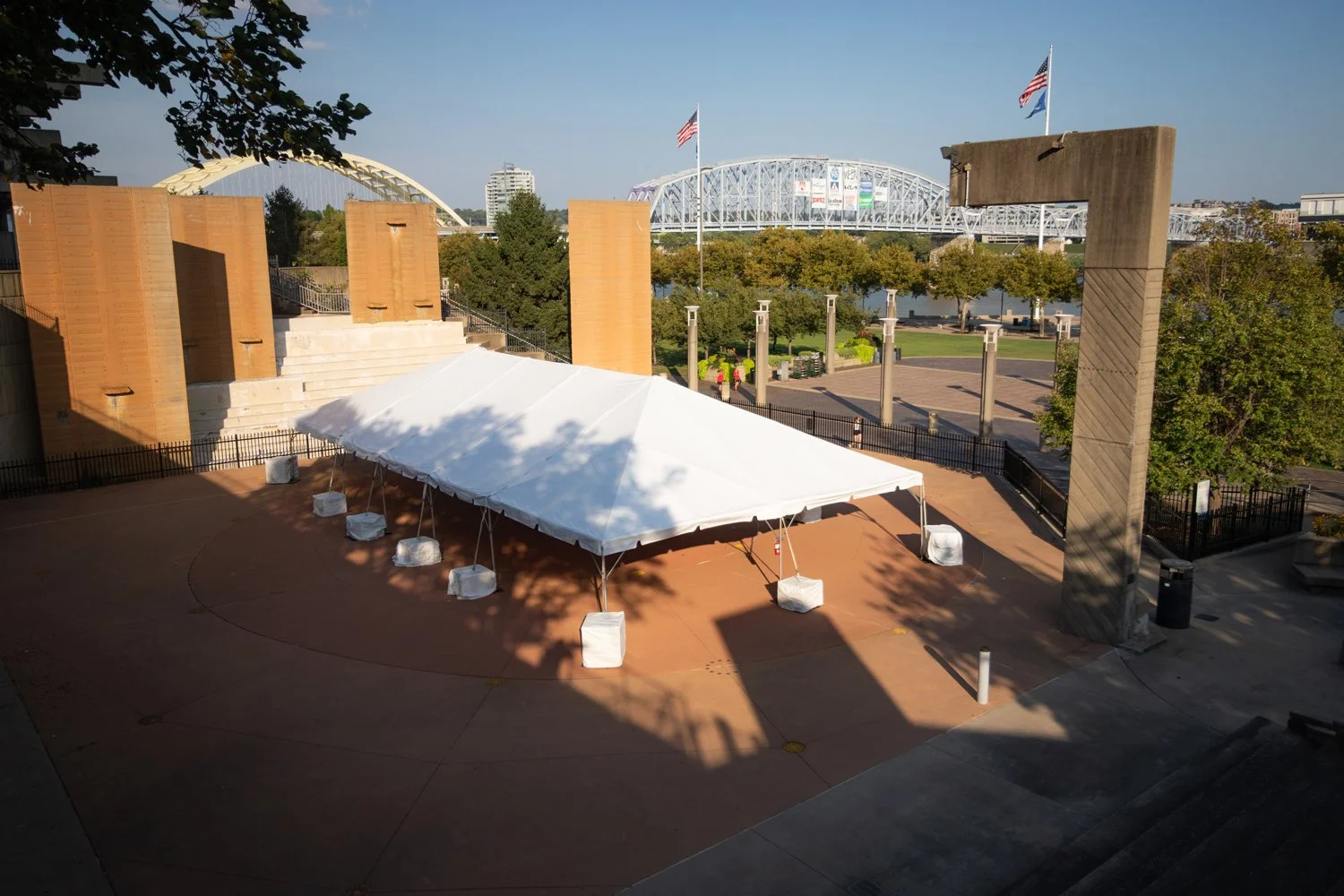
Splash pad covered with VIP fireworks tent.
A ramp and stairs sweep around the structure to connect with the upper plaza, but as long as I’ve been visiting the area — the elevator has been out of commission and sealed off behind a mesh fence. I’m not even sure if it connects all the way down to the ground/riverfront level.
The plaza above the fountain features a connection to One Lytle Place and its outdoor amenities, but those are exclusive to residents and gated-off behind a structure that was presumably intended to be a stage.
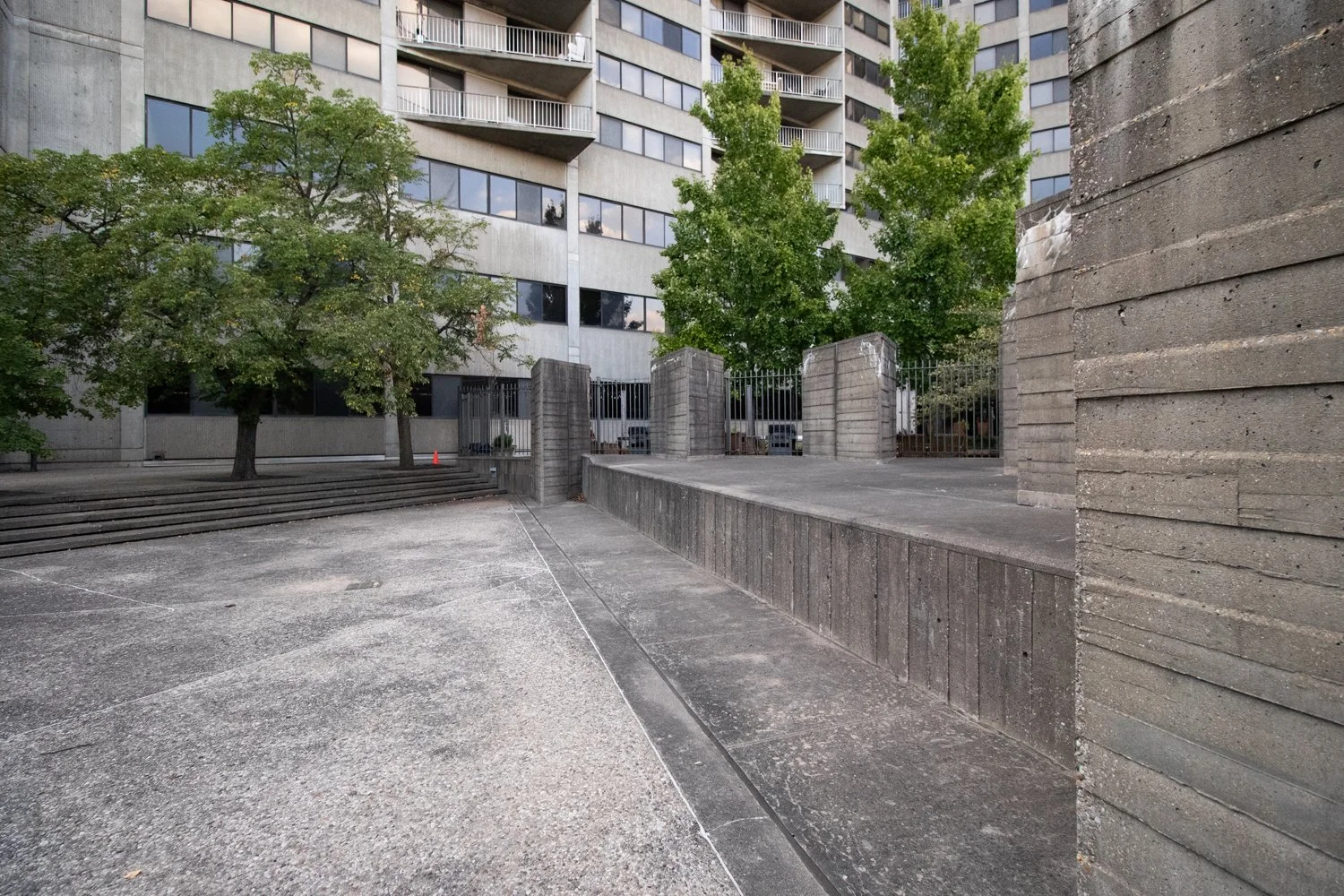
One Lytle Place “stage.”
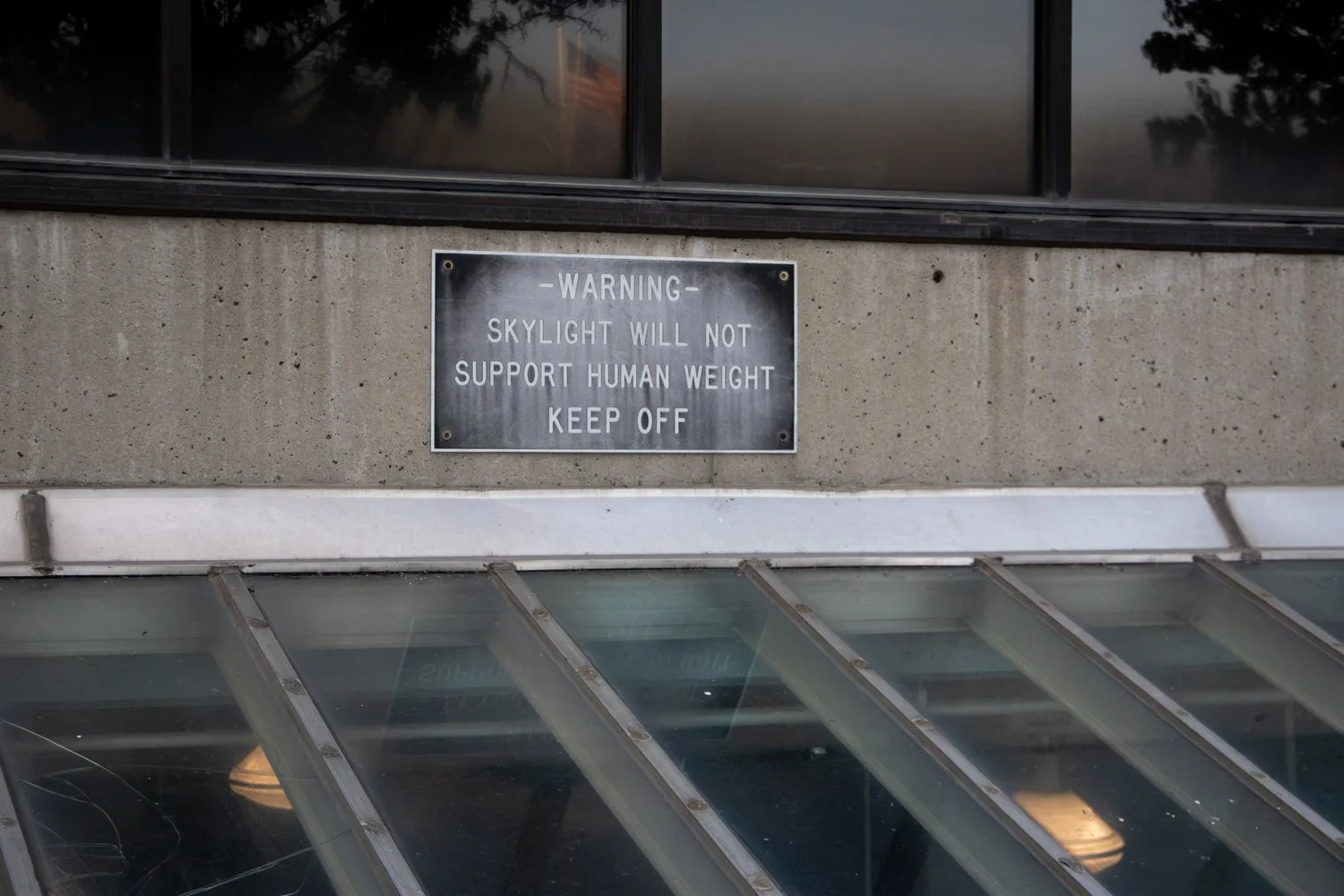
The plaza above the fountain overlooks skylights above the One Lytle Place indoor pool. The warning reads: “SKYLIGHT WIL NOT SUPPORT HUMAN WEIGHT KEEP OFF.”
Without the elevator, the only way to continue upwards is via another set of stairs that eventually connect with paths to the downtown grid via Pete Rose Way towards the ballpark or a tunnel to Lytle Park/4th street.
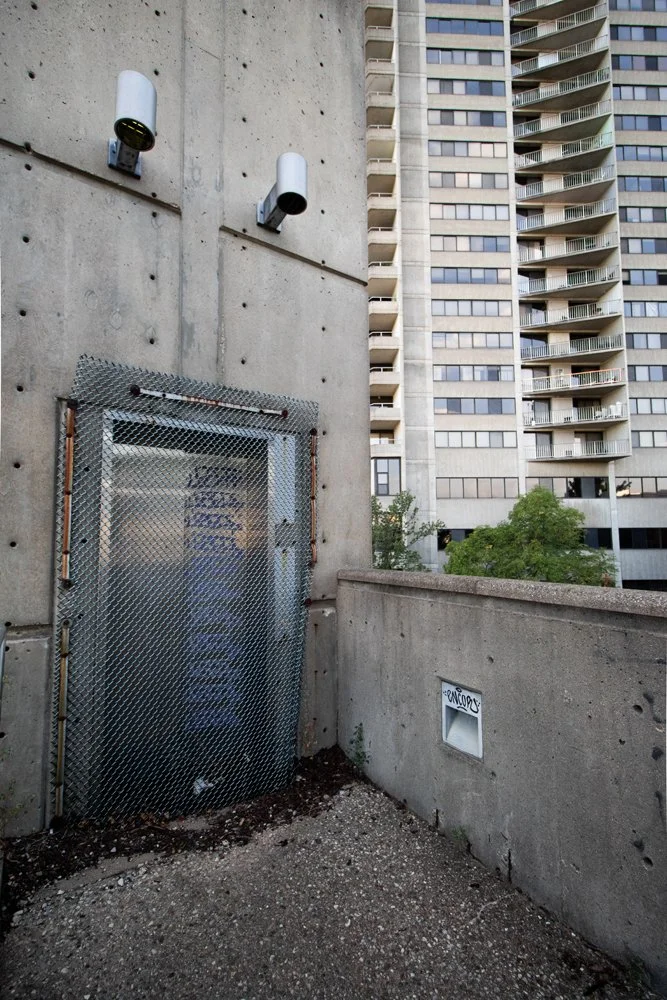
Sealed-off elevator.
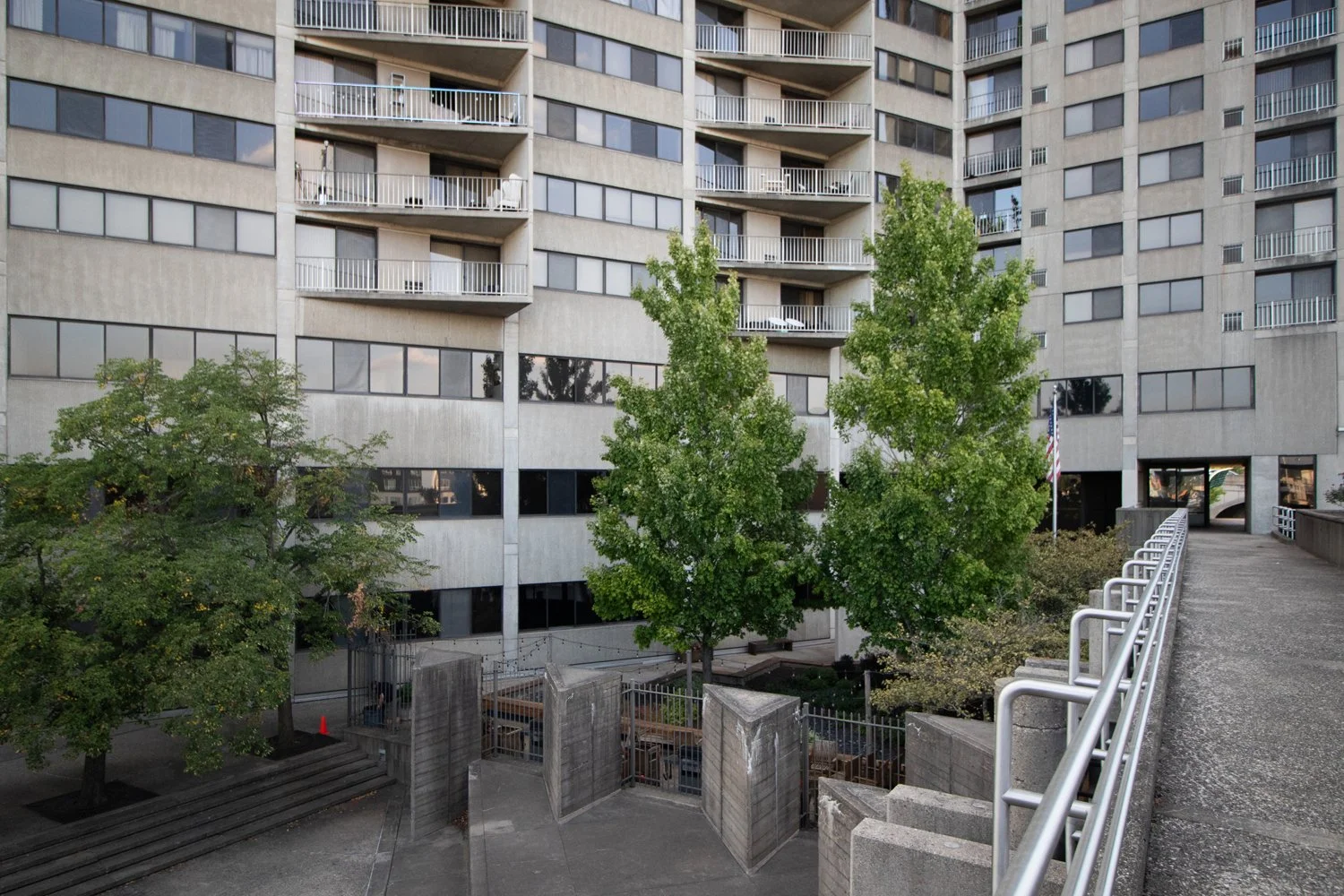
Plaza, path, stage, and One Lytle Place amenities area.
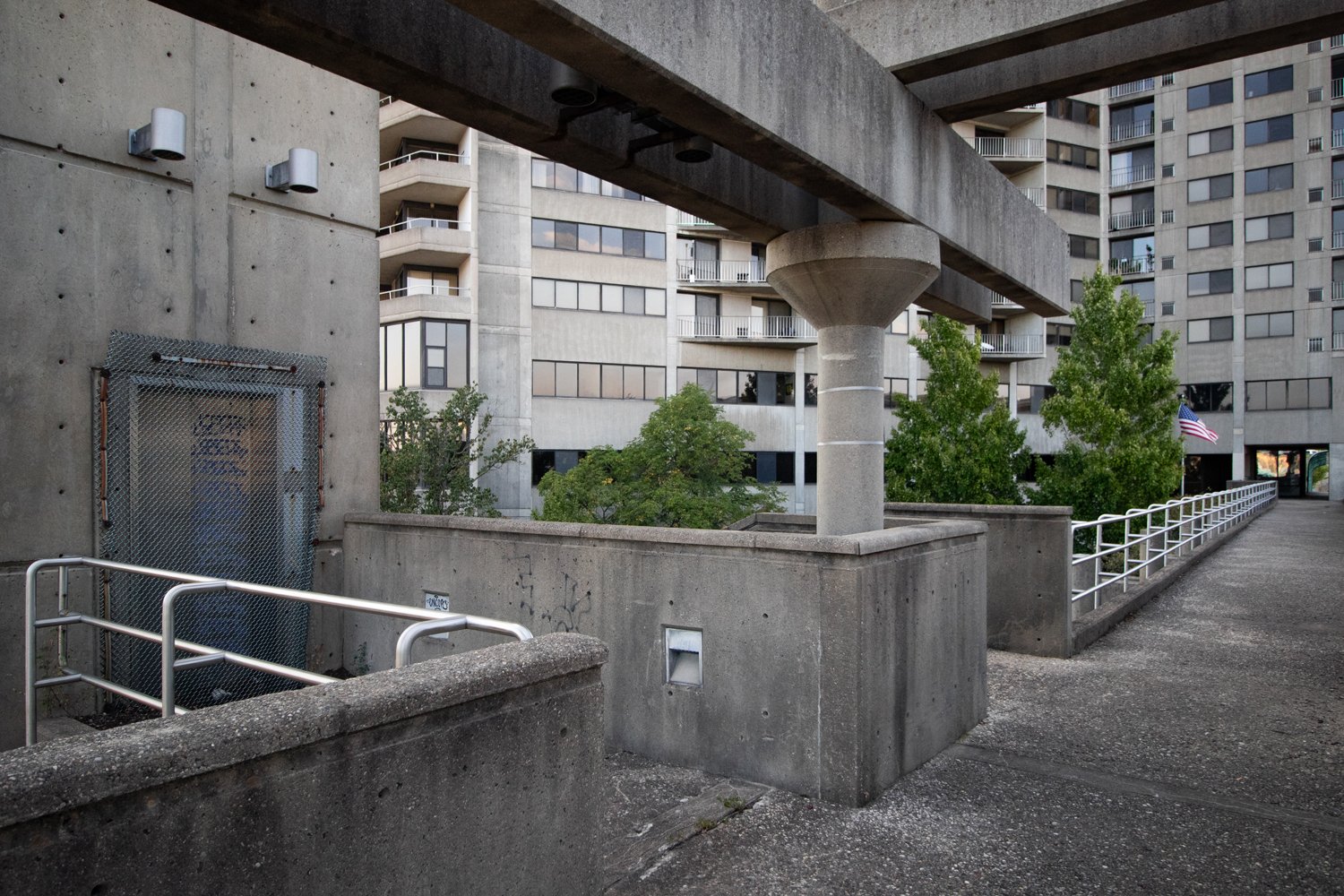
Closed elevator and pedestrian path towards downtown.
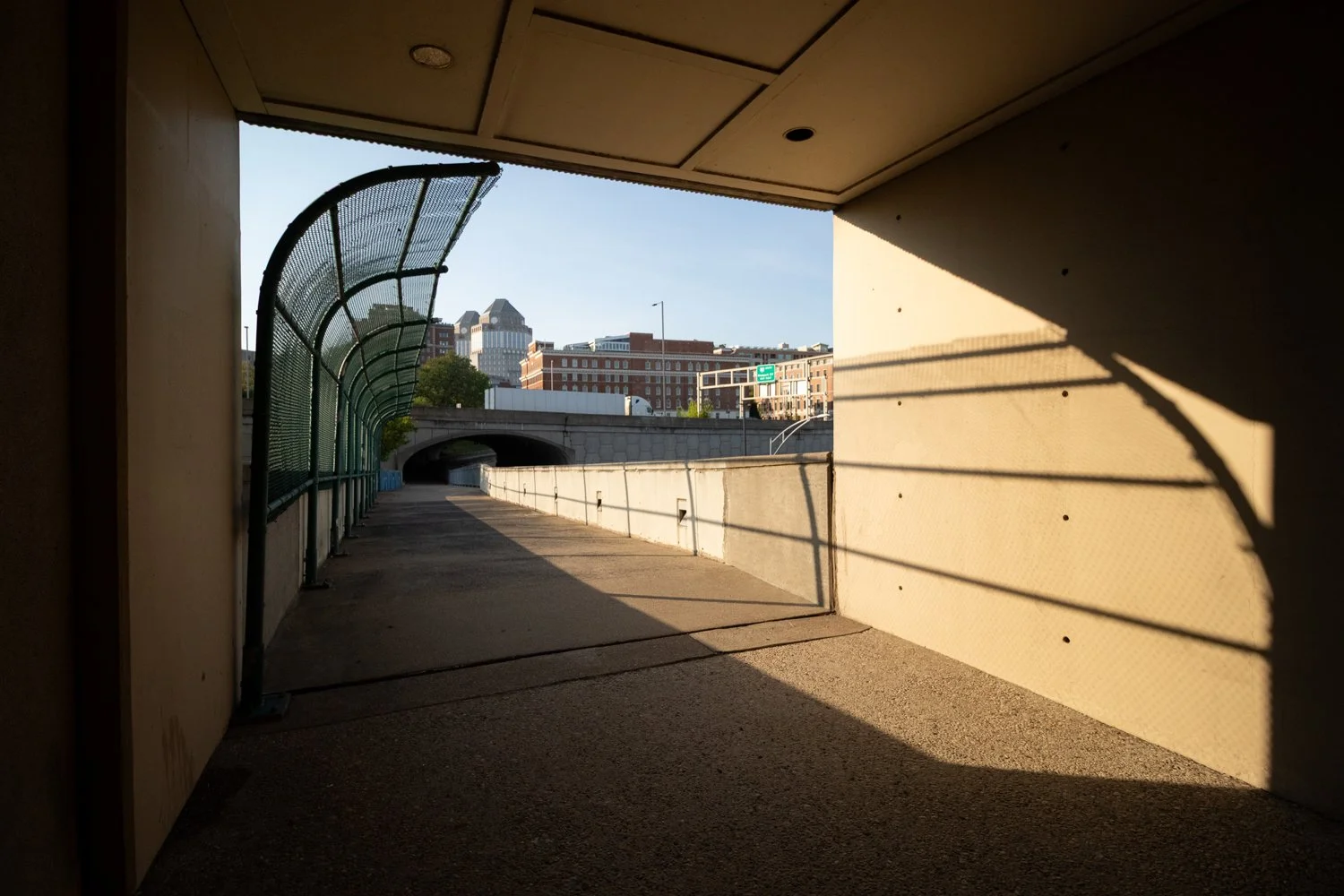
Pedestrian access towards downtown near a One Lytle Place entrance.
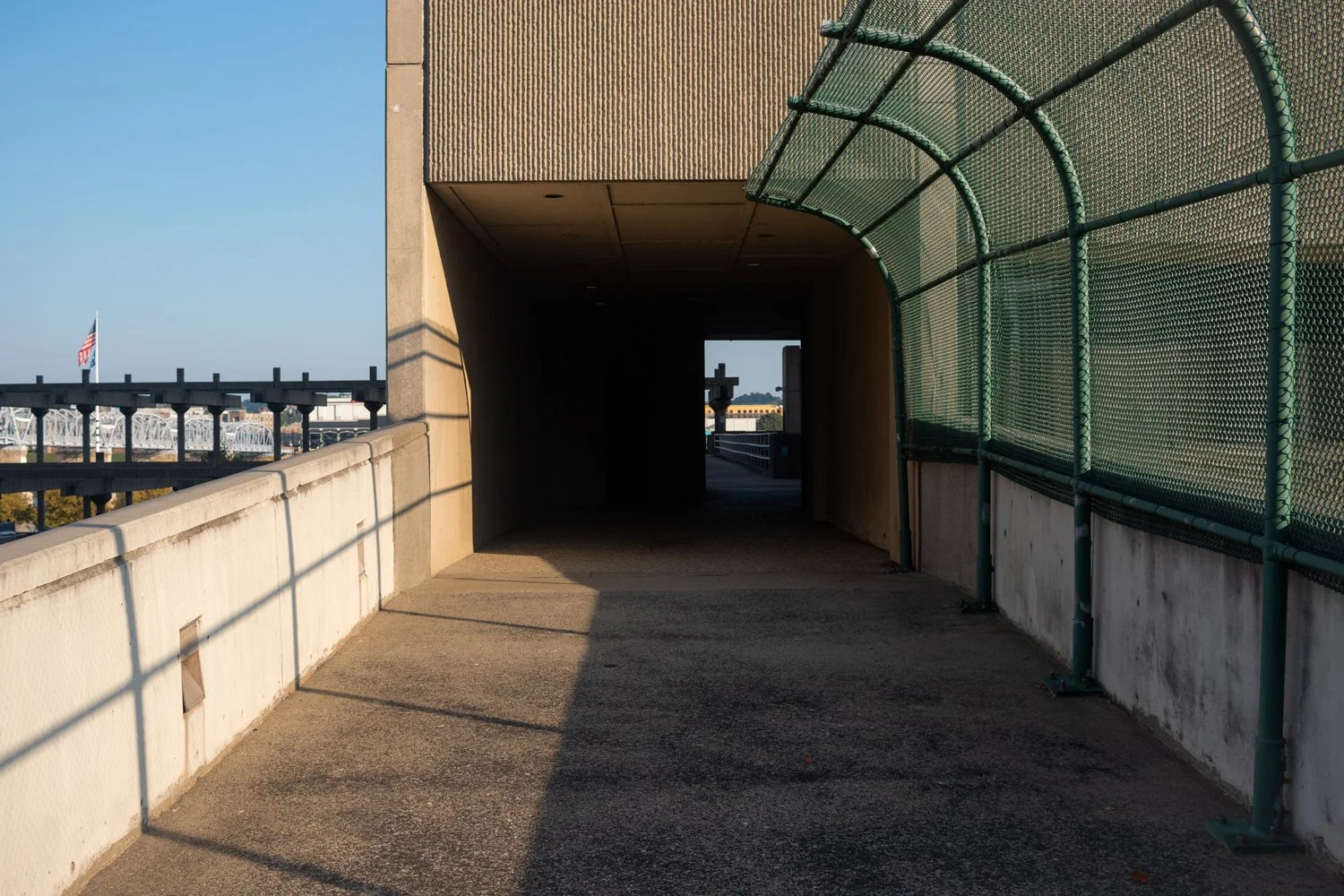
Looking towards the riverfront and a One Lytle Place entrance.
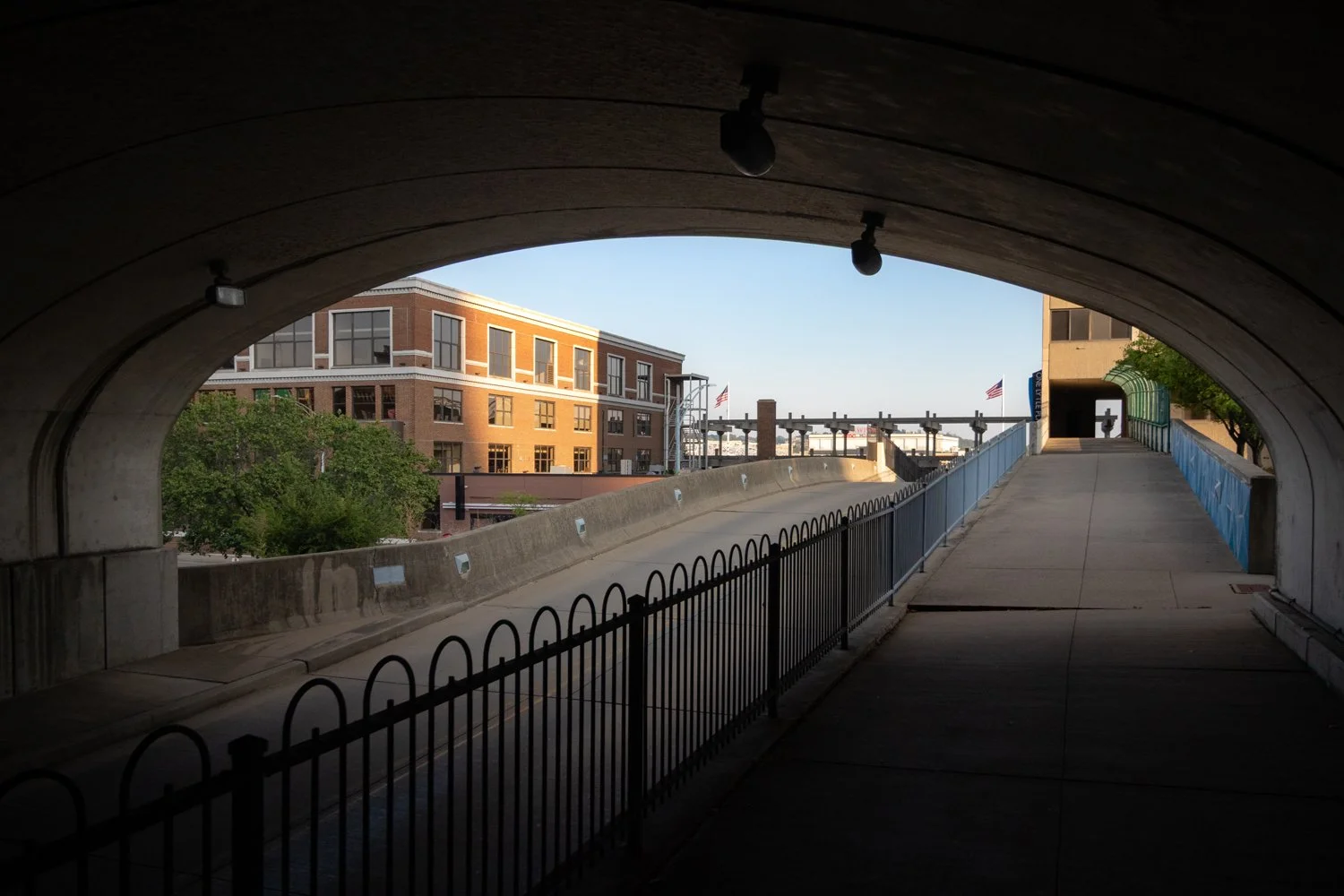
When I passed through here last month, a student from the School for Creative and Performing Arts was belting out a song, utilizing the acoustics for practice.
This “secret passage” between the city’s core and its riverfront hasn’t always been structured this way, however. Before Fort Washington Way was rebuilt in its present configuration, it looked a bit different:
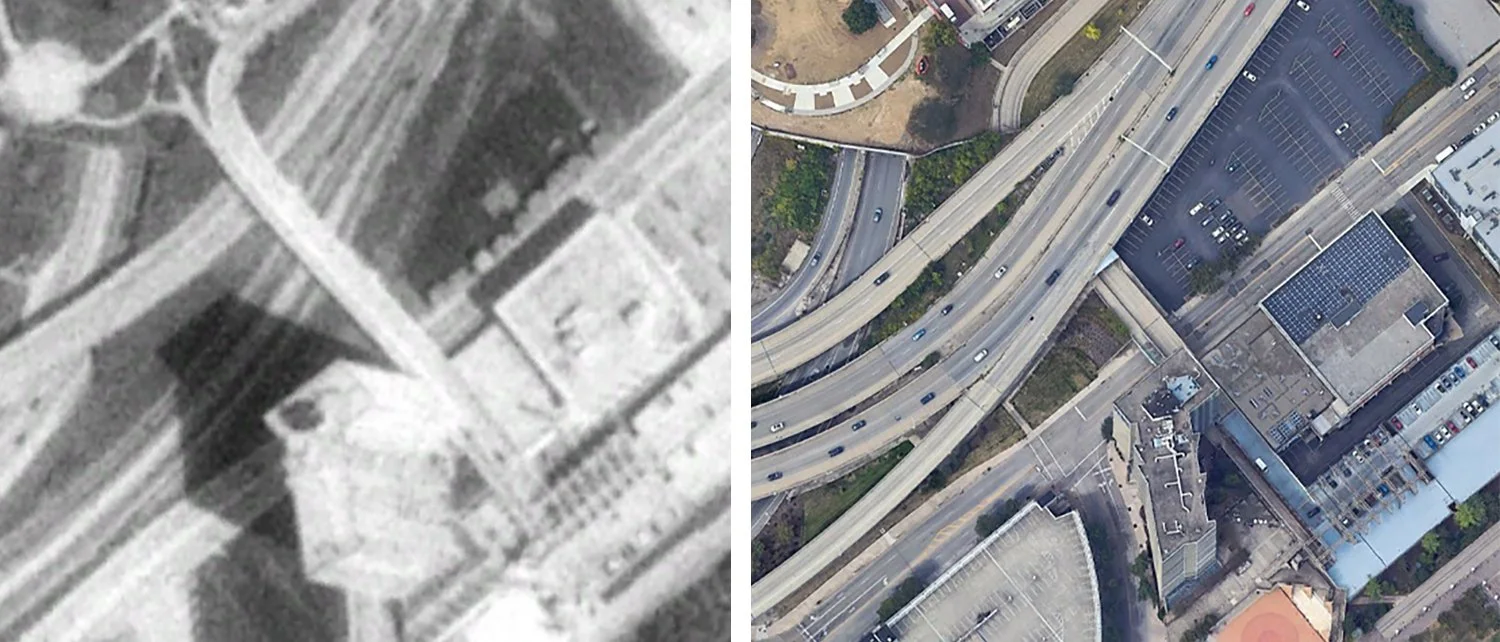
The relevant section of the Fort Washington Way interchange as seen from aerial imagery in April 1993 (left) and September 2023 (right) [Google Earth].
Which makes this plaque at the north end of the tunnel all the more interesting:
EWART W. SIMPKINSON
BRIDGE
DEDICATED JUNE 8, 1976
PRESENTED BY THE
CINCINNATUS ASSOCIATION
AND
FRIENDS OF CINCINNATI PARKS INC.
On the day of the bridge’s dedication, Ewart W. Simpkinson was described by The Cincinnati Post as “a longtime crusader for development of Cincinnati’s riverfront.”
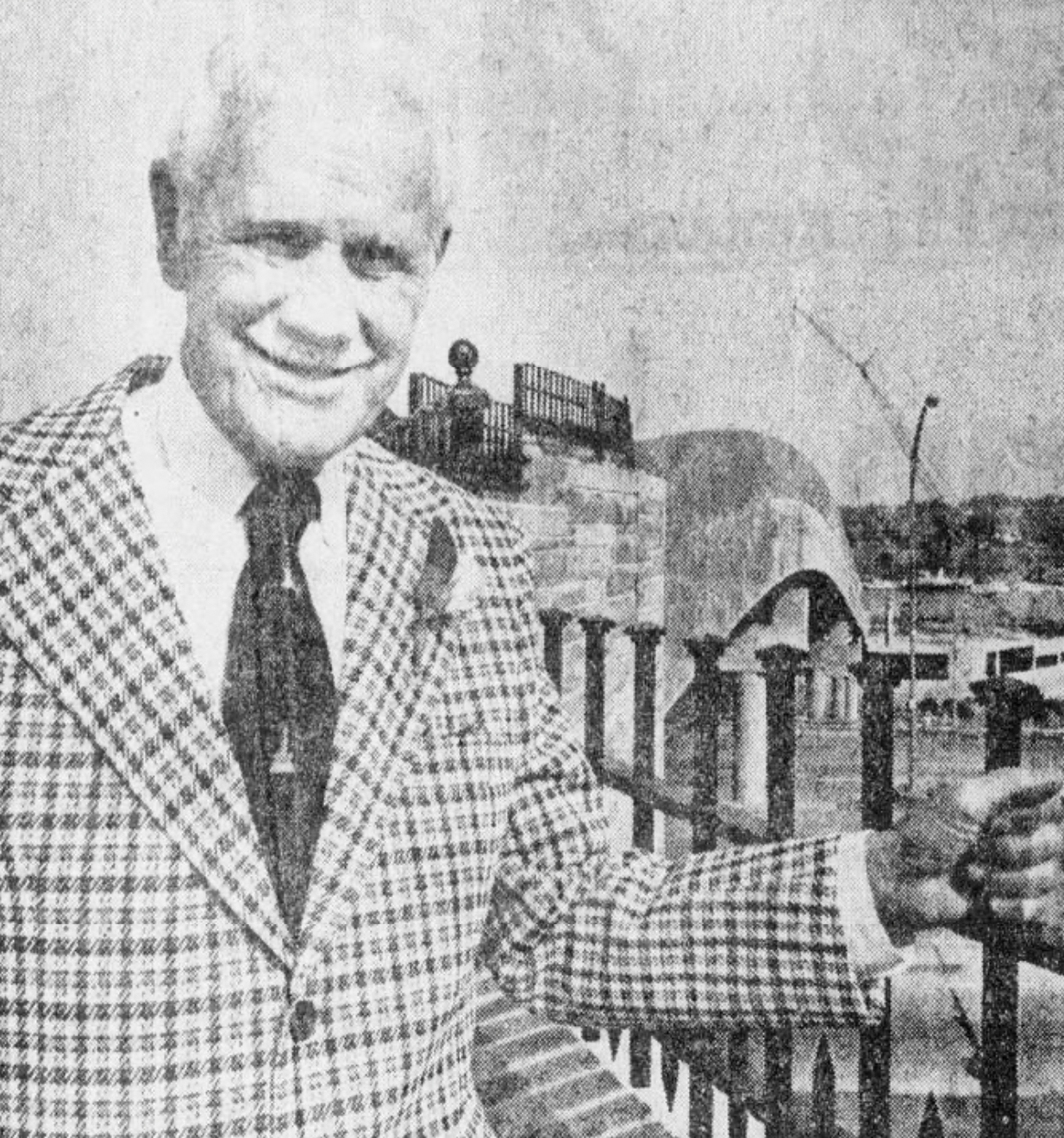
Ewart W. Simpkinson and his namesake bridge as seen in a June 9, 1976 edition of “The Cincinnati Post.”
In the paper’s portrait of Mr. Simpkinson, you can see the bridge’s original design and configuration which was erected even before the nearby One Lytle Place.
Initially, the bridge had been built over and above Fort Washington Way, but after the downtown interchange was reconfigured in the early 2000’s — it now runs under and through. The plaque is actually referencing the bridge going through the tunnel rather than the Fort Washington Way “bridge” it’s mounted onto.
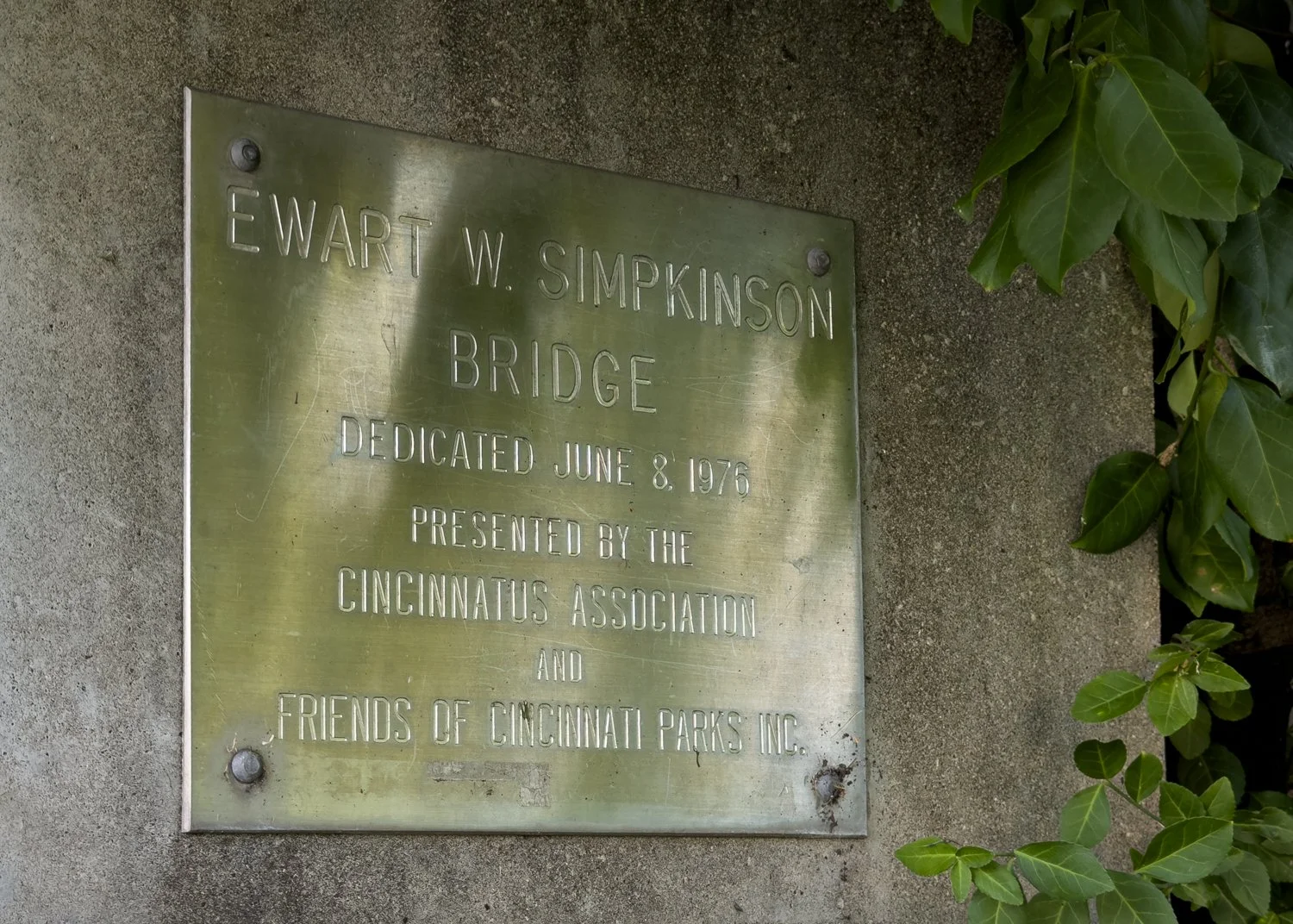
Ewart W. Simpkinson Bridge plaque mounted on the side of Fort Washington Way.
There’s so much more I want to eventually research about this area and figures like Simpkinson, as well as another individual honored with a different plaque: David Sinton.
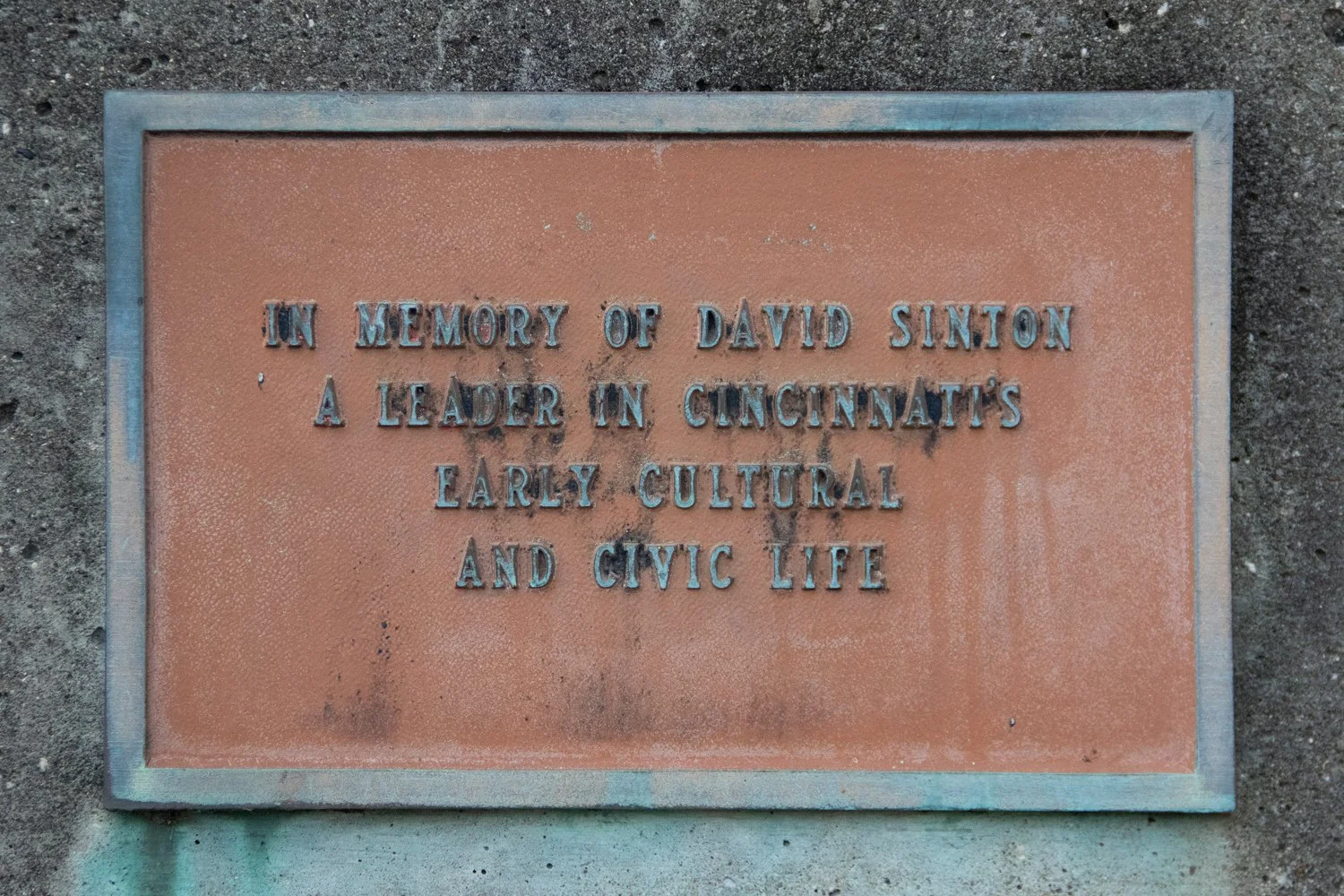
“IN MEMORY OF SAVID SINTON A LEADER IN CINCINNATI’S EARLY CULTURAL AND CIVIC LIFE.”
There’s also this plaque mounted to the old fountain which raises more questions than it answers:
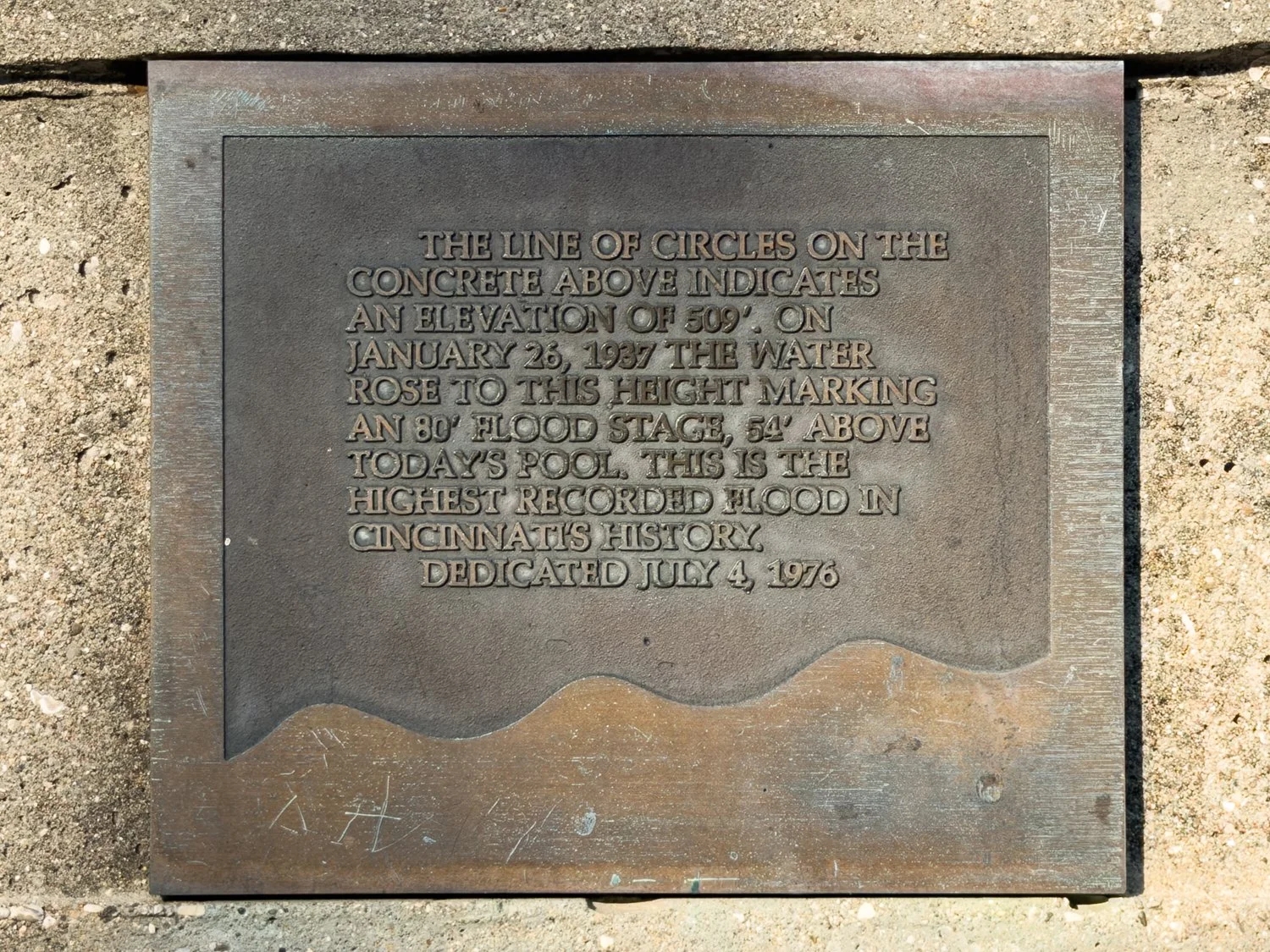
With a stated dedication of July 4, 1976, the fountain seems to predate the surrounding developments and parks by several years.
The area’s current state seems to imply a sense of urgency, however. One that calls to mind similar, now-demolished examples such as the local “Glencoe Hole” and San Francisco’s Vaillancourt Fountain (as well as the aforementioned Queensgate II and Circumspect projects).
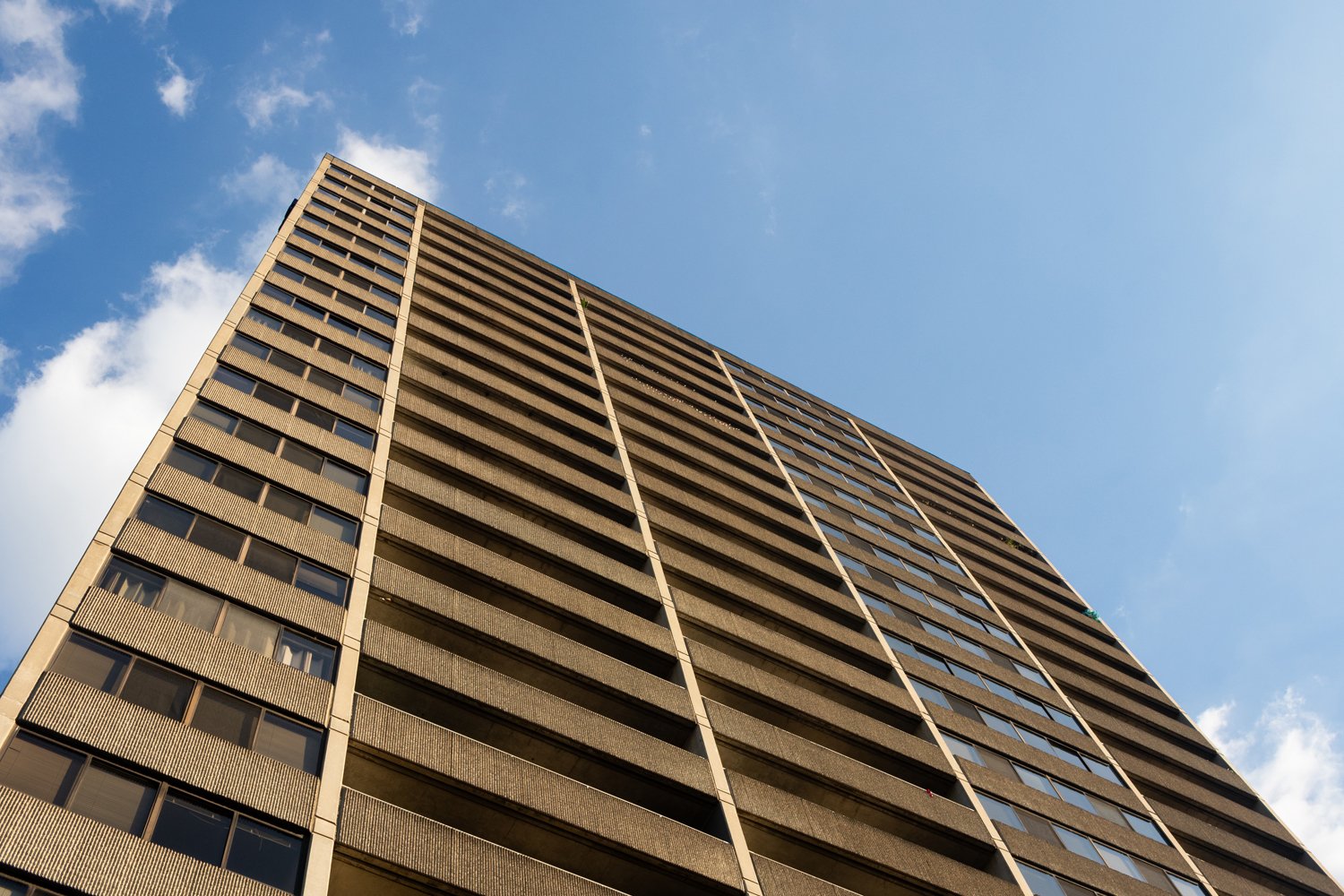
One Lytle Place.
This concrete jungle on Cincinnati’s riverfront is a distinct product of its time. One, that like its contemporaries, may not always be revered. It’s a vibe that can be described as cold, dreary, eerie, or as Dave put it while we wandered about: “Soviet.”
Though the nearby parks are manicured with lush vegetation and bright flowers, the fountain and One Lytle area is dry, faded, and rife with“stalactites” slowly dripping through the cracks of repair work. And once the leaves fall and the skies turn gray — the area will take on a whole other mood completely.
That’s when you really wonder what the future holds for the city’s brutalist landscape. Because despite any perceived faults or negative visual perceptions, this area is an ingrained piece of not just infrastructure, but local identity. And in a day and age of rising costs and cheap materials, a “refresh” could lead to the loss of something significant — honest, normal, and basic public space. A lesson now too often learned under the guise of private/public partnerships and “programming.”
So I say: long live the Queen City’s Brutalist Beachfront.
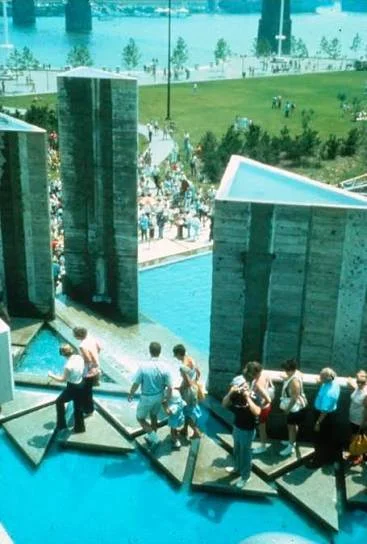
The Otto Armleder Memorial Aquatic Fountain in better days [source].
P.S. If you dig this story, you’ll enjoy this great 2018 piece on the nearby Bicentennial Commons that my friend Phil authored.
Since 2007, the content of this website (and its former life as Queen City Discovery) has been a huge labor of love.
If you’ve enjoyed stories like The Ghost Ship, abandoned amusement parks, the Cincinnati Subway, Fading Ads, or others over the years—might you consider showing some support for future projects?